
x

 Kupi tiskanino Kupi digitalno sliko
 Pošlji
 Podrobnosti o delu
 Dodaj v priljubljene
 Prenesi
 Podobni izdelki
 Rentgenski posnetek
 Predvajaj diaporama
 Surrealism
 2008
2008 143.0 x 201.0 cm
Ročno slikano olje na platnu v vaši izbiri velikosti in okvirja, izdelano po naročilu naših umetnikov.





























Izberite eno od naših vnaprej določenih velikosti, ki ustrezajo prvotnim proporcijam umetničkega dela.

Svoje dimenzije lahko vnesete tako, da se prilagodite določenemu okvirju ali prostoru. Če izbrana velikost ne ustreza razmerjem originalne slike, bomo umetniško delo obrezali ali sliko dopolnili z dodatnimi ročno naslikanimi elementi. Pred začetkom proizvodnje vam bo poslan digitalni osnutek v odobritev.
Upoštevajte, da predogled na zaslonu ne odraža dejanskega obrezovanja ali podaljšanja. Le osnutek bo natančno prikazal končno kompozicijo.
Čeprav so na voljo velikosti po meri, priporočamo izbiro dimenzije s preddefiniranega seznama, da ohranimo originalne razmere.
Svetska dostava () za 3/4 nedelje umesto uobičajenih 5 nedelja. (18 julij). Bez kompromisa po pitanju kvaliteta.


Zero
Velikost reprodukcije
Born in New York City in 1960, Jean-Michel Basquiat’s life was tragically cut short at the age of 27, yet his impact on the art world remains profound. He emerged from the vibrant and rebellious crucible of the late 1970s and early 1980s New York City – a period defined by burgeoning street art, punk rock energy, and a growing awareness of social injustice. His work wasn’t simply painting; it was an urgent, raw expression of experience, grappling with themes of race, class, power, and identity.
Basquiat's early career began not in formal studios but on the streets as “SAMO,” a graffiti artist alongside Al Diaz. Together they plastered Manhattan’s Lower East Side with enigmatic epigrams – short, provocative phrases that challenged societal norms and questioned authority. This street art foundation provided a crucial understanding of visual language and an immediate connection to the city's marginalized communities. It was during this period that Basquiat began to develop his distinctive style, incorporating text and image in ways that were both visually arresting and intellectually stimulating.
By the early 1980s, Basquiat’s work transitioned from street art to gallery exhibitions. He quickly became a central figure in the neo-expressionist movement, a reaction against the minimalist trends of the preceding decade. Unlike the cool detachment of earlier movements, neo-expressionism embraced emotional intensity and subjective experience. Basquiat's paintings were characterized by bold colors, fragmented figures, and layers of text – often incorporating historical references, personal anecdotes, and social commentary.
His artistic vocabulary was remarkably eclectic, drawing inspiration from a wide range of sources: classical art, African masks, jazz music, poetry, and the history of race in America. He frequently referenced his own heritage as a mixed-race individual, exploring themes of identity and belonging within a society grappling with its past. The influence of figures like Duke Ellington and Langston Hughes is evident in his use of rhythm and imagery.
Basquiat’s work consistently tackled complex and often uncomfortable subjects. He confronted issues of racial inequality, poverty, and the corrupting influence of power structures. His paintings frequently depicted skulls – a recurring motif symbolizing mortality and the fragility of life – alongside images of wealth, luxury, and social disparity. The juxtaposition of these elements created a powerful critique of American society.
Technically, Basquiat’s style was remarkably diverse. He employed a range of techniques, including painting, drawing, collage, and assemblage. His works often featured layers of paint applied with both precision and spontaneity, creating textured surfaces that invited close examination. He frequently incorporated text directly onto the canvas, using it not merely as decoration but as an integral part of the artwork’s meaning. The use of found objects and mixed media further enhanced the complexity and immediacy of his work.
Despite his tragically short life, Jean-Michel Basquiat achieved remarkable recognition during his lifetime. He became the youngest artist to participate in Documenta 7 in Kassel, Germany (1982), and one of the youngest to exhibit at the Whitney Biennial in New York (1982). His work was exhibited internationally, solidifying his place as a major figure in contemporary art.
Following his death from a heroin overdose in 1988, Basquiat’s market value soared. Today, his paintings are among the most valuable and sought-after works of art in the world. His legacy extends beyond the financial realm; he remains an important voice for social justice and a powerful example of how art can be used to challenge conventional thinking and provoke meaningful dialogue. His work continues to resonate with audiences today, reminding us of the urgent need for empathy, understanding, and critical engagement with the complexities of our world.

1988 - , Democratic Republic of the Congo

Explore the captivating world of Surrealism with BuyPopArt. Discover its origins, key artists like Dalí & Ernst, and enduring influence on art history. High-quality reproductions available.

Journey into the dreamlike world of Surrealism! Explore 10 masterpieces by Dali, Magritte & Miró that redefined art. Discover their stories & find museum-quality reproductions to elevate your home decor on BuyPopArt.com.
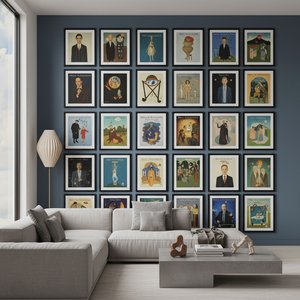
Odkrijte 25 mojstrovin René Magritta – ikonične slike surrealizma, polne sanjskih vizij in simbolizma. Umetniški tisk vrhunske kakovosti za vaš dom! Kupite reprodukcije slik na BuyPopArt.com

Odkrijte 25 mojstrovin Paula Kleeja – od ekspresionizma do abstraktnih kompozicij. Preberite zgodbe za vsako sliko, tehniko in navdih. Reprodukcije slik visoke kakovosti za vaš dom na BuyPopArt.com! Raziskajte celotno zbirko online.

Discover the art of cross-cultural interior design with BuyPopArt.com. Explore museum-quality reproductions & expert guidance to create a globally inspired, sophisticated home. Shop now!


Bodite na sešte, s najnovejšimi novicami iz sveta umetnosti, ekskluzivnimi ponudbami in idejami za dekoracijo.
Povejte nam o svojem projektu in naši strokovnjaki za umetnost vam bodo pripravili 3 prilagojene predloge umetniških del.
Naj vam izberemo 3 možnosti – popolnoma brezplačno!


 Deli
Deli

 Razviljaj več







 Možnost stekla je na voljo le za velikosti pod 110 cm


