Giclée ali platnati odtis muzejske kakovosti z hitro proizvodnjo in prilagodljivimi možnostmi končne obdelave. ( Kupi ročno naslikano sliko Kupi digitalno sliko)





























Izberite eno od naših vnaprej določenih velikosti, ki ustrezajo prvotnim proporcijam umetničkega dela.

Svoje dimenzije lahko vnesete sami, da bodo ustrezne za določen okvir ali prostor. Če izbrana velikost ne bo skladna z razmerji izvirne slike, bomo umetniško delo orezali ali podaljšali s pomočjo ogledalnega odraza ali barvno polnega roba. Pred začetkom proizvodnje vam bomo poslali digitalni predogled za potrditev.
Upoštevajte, da predogled na zaslonu ne prikazuje dejanskega orezovanja ali podaljševanja. Le digitalni predogled bo natančno prikazal končno kompozicijo.
Čeprav so na voljo prilagojene velikosti, priporočamo izbiro dimenzije s predhodno določenega seznama, da ohranite prvotna razmerja.
Globalna dostava () v 2 tednih namesto standardnih 4/5 tednov. (14 avgust)


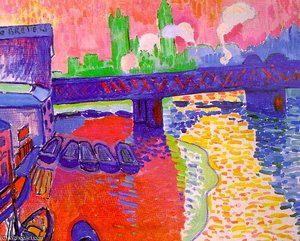
Charing Cross Bridge
Velikost reprodukcije
André Derain's Charing Cross Bridge (1906) isn't merely a depiction of a London thoroughfare; it’s a visceral explosion of color and emotion, a cornerstone of the revolutionary Fauvist movement. Painted during a pivotal moment in art history – a time when Impressionism was yielding to bolder, more subjective expression – this work captures the dynamism of urban life with an intensity rarely seen before. The painting, currently residing within the esteemed collection at the Musée d'Orsay in Paris, offers a captivating glimpse into the artistic fervor that defined early 20th-century modernism.
Born in 1880 in Chatou, France, André Derain’s journey began independently before his fateful encounter with Henri Matisse. This meeting ignited a collaborative spirit that would profoundly shape the development of Fauvism. The movement emerged as a direct response to Impressionism's focus on capturing fleeting moments of light and atmosphere. While Impressionists sought to represent optical reality, the Fauves – meaning “wild beasts” – deliberately distorted color to convey emotion and subjective experience. Derain’s Charing Cross Bridge exemplifies this approach; the colors aren’t intended to accurately depict the scene but rather to evoke a feeling of energy, movement, and perhaps even a sense of unease.
Derain's compositional choices amplify the painting's emotional impact. The bridge itself acts as a strong diagonal element, guiding the viewer’s eye through the scene. The placement of figures – strategically positioned to create depth and perspective – further enhances this dynamic flow. The artist’s brushwork is particularly noteworthy; it’s loose, gestural, and deliberately unrefined, contributing to the painting's raw energy. Notice how he uses thick impasto—layers of paint applied with considerable texture—to build up form and intensify color. This technique adds a tactile quality to the work, inviting viewers to engage with the surface on a deeper level.
Beyond its technical brilliance, Charing Cross Bridge carries symbolic weight. The bustling scene represents the rapid pace of industrialization and urbanization that was transforming Europe at the turn of the century. Derain’s influence extended far beyond his own time; he played a crucial role in shaping the course of modern art, inspiring subsequent generations of artists like Pablo Picasso and Georges Braque. His work remains a testament to the power of color and emotion in artistic expression, solidifying its place as a landmark achievement within the history of modern art.

1880 - 1954 , Francija

Discover the secret to depth with BuyPopArt.com's premium textured giclée prints. Elevate your collection with archival-quality reproductions that mimic the impasto texture of original oil paintings for a stunning 3D effect.

Master the art of decorating with impact. Our expert guide decodes Giclée prints, exploring archival quality, pigment-based inks, and how to choose between high-fidelity reproductions and hand-painted oils for a bold, museum-grade aesthetic in your space.


Bodite na sešte, s najnovejšimi novicami iz sveta umetnosti, ekskluzivnimi ponudbami in idejami za dekoracijo.
Povejte nam o svojem projektu in naši strokovnjaki za umetnost vam bodo pripravili 3 prilagojene predloge umetniških del.
Naj vam izberemo 3 možnosti – popolnoma brezplačno!


 Predogled
 Pošlji
 Deli
Deli
 Podrobnosti o delu

 Prenesi
 Podobni izdelki
 Rentgenski posnetek
 Predvajaj diaporama


 Razviljaj več







 Možnost stekla je na voljo le za velikosti pod 110 cm