

 TemperaWallArtCubist Expressionism
 1914Modern
 46.0 x 58.0 cm
Giclée ali platnati odtis muzejske kakovosti z hitro proizvodnjo in prilagodljivimi možnostmi končne obdelave. ( Kupi ročno naslikano sliko Kupi digitalno sliko)





























Izberite eno od naših vnaprej določenih velikosti, ki ustrezajo prvotnim proporcijam umetničkega dela.

Svoje dimenzije lahko vnesete sami, da bodo ustrezne za določen okvir ali prostor. Če izbrana velikost ne bo skladna z razmerji izvirne slike, bomo umetniško delo orezali ali podaljšali s pomočjo ogledalnega odraza ali barvno polnega roba. Pred začetkom proizvodnje vam bomo poslali digitalni predogled za potrditev.
Upoštevajte, da predogled na zaslonu ne prikazuje dejanskega orezovanja ali podaljševanja. Le digitalni predogled bo natančno prikazal končno kompozicijo.
Čeprav so na voljo prilagojene velikosti, priporočamo izbiro dimenzije s predhodno določenega seznama, da ohranite prvotna razmerja.
Globalna dostava () v 2 tednih namesto standardnih 4/5 tednov. (21 avgust)


Small Composition III
Velikost reprodukcije
In the pantheon of German Expressionism, few works capture the raw, pulsating energy of the early twentieth century quite like Franz Marc’s “Small Composition III.” Painted in 1914, on the precipice of a world about to be transformed by the shadows of war, this masterpiece serves as a profound testament to the artist's quest for spiritual purity. Unlike the Impressionists, who sought to document the fleeting dance of light upon a surface, Marc turned his gaze inward. He utilized the canvas not as a mirror to reality, but as a window into the soul, employing a language of abstraction to communicate truths that words often fail to grasp. Through this work, we encounter a moment of intense chromatic harmony, where the boundaries between object and emotion begin to dissolve.
The visual journey begins with an arresting, dominant crimson background—a sea of deep red that immediately envelops the viewer in a sense of primal passion and vital force. This is not merely a backdrop; it is the very heartbeat of the composition. Scattered across this fiery expanse is a rhythmic arrangement of organic forms: apples, oranges, and bananas. While these elements may appear as simple still-life subjects at first glance, they are transformed by Marc’s hand into geometric symbols of life and fertility. The way these shapes interact with the red void creates a dynamic tension, a celestial dance where the weight of the fruit is balanced by the ethereal lightness of the surrounding space.
To appreciate the depth of “Small Composition III,” one must look closely at the meticulous application of tempera paint. Marc’s choice of medium was deliberate, as tempera offers a unique luminosity and a matte, velvety texture that allows colors to appear both saturated and incredibly pure. The artist employed a sophisticated layering technique, building up hues of yellow, orange, and deep red to create a sense of internal glow. This meticulousness results in a surface that feels alive, where the light seems to emanate from within the pigment itself rather than reflecting off it.
The influence of Cubism is subtly woven into the fabric of the piece, visible in the fractured planes and the simplified, almost architectural, arrangement of the fruit. However, Marc avoids the coldness often associated with purely geometric abstraction. Instead, he infuses these shapes with a sense of organic movement. The composition is governed by an underlying mathematical harmony that feels natural rather than forced, guiding the eye in a continuous loop across the canvas. For the collector or interior designer, this creates a piece that is both intellectually stimulating and visually soothing—a focal point that commands attention through its structural integrity and vibrant warmth.
Beyond its formal beauty, “Small Composition III” carries an emotional weight that remains profoundly relevant. As a founding member of Der Blaue Reiter (The Blue Rider), Marc sought to find a universal spiritual language through color. In this painting, the interplay of warm tones evokes a sense of optimism and the enduring cycle of nature. It is a work that celebrates existence in its most fundamental, colorful form. For those looking to curate a space with meaning, this artwork offers more than just decoration; it provides an atmosphere of contemplative energy.
Whether placed in a contemporary gallery setting or as a bold statement piece in a sophisticated residential interior, a high-quality reproduction of this work brings the transformative power of German Expressionism into the home. It invites viewers to pause, to look past the surface, and to reconnect with the primal, beautiful rhythms of the natural world that Marc so passionately sought to immortalize.
Der Blaue Reiter
Franz Marc, nemški slikar, risar in grafik, * 8. februar 1880, München, Nemško cesarstvo (zdaj Nemčija), † 4. marec 1916, Braquis, Francija.
Velja za enega najpomembnejših ekspresionističnih slikarjev v Nemčiji. Ob Vasiliju Kandinskim je bil soustanovitelj uredniške skupine Der Blaue Reiter, ki je svojo prvo razstavo odprla v Münchnu 18. decembra 1911. Blaue Reiter je nastal iz Novega münchenskega združenja umetnikov, katerega član je bil Marc kratek čas.
Marc je imel zamisel o študiju klasične filologije ali teologije kot njegov starejši brat Paul - kot je v pismu leta 1897 povedal pastorju Ottu Schlierju, katerega tečaji birme so nanj naredili trajen vtis.
Marc je študiral umetnostno-teoretične spise za almanah Der Blaue Reiter in druge publikacije.
Franz Marc se je rodil 8. februarja 1880 kot drugi sin družine Marc na Schillerstrasse 35 v Münchnu. Njegov oče Wilhelm Marc, ki je sprva končal pravo, preden je študiral slikarstvo na Akademiji za likovno umetnost v Münchnu, je bil krajinski in žanrski slikar.
Izhajal iz bavarske uradniške družine. Njegova mati Sophie, rojena Maurice, je prišla iz Alzacije in je otroštvo preživela v francosko govoreči Švici, kjer je obiskovala strogi kalvinistički internat.
Njegovi predniki bili aristokrati, z prijatelji med umetniki kot tudi ljudmi znanstvenimi.
Marc je študiral literaturo in filozofijo, zlasti delo Thomasa Carlyla in Friedricha Nietzscheja. Zaradi težav v mladosti je bila njegova vera zelo kritična do Münchnega mladostnega gibanja in mesta življenja.
Njegov brat Paul je študiral klasično filologijo kot njegov starejši brat Paul - kot je v pismu leta 1897 povedal pastorju Ottu Schlierju, katerega tečaji birme so nanj naredili trajen vtis.
Njegova zgodnja dela še v naturalističnem slogu akademizma, vendar se po obisku Pariza leta 1907 pod vplivom Gauguina in van Gogha posvetil postimpresionizmu. Marc je študiral umetnostno-teoretične spise za almanah Der Blaue Reiter in druge publikacije.
Marc je ustanovni član skupine Der Blaue Reiter (Modri jezdec) v Münchnu leta 1911. Blaue Reiter je nastal iz Novega münchenskega združenja umetnikov, katerega član je bil Marc kratek čas.
Marc je ustvarjal umetnostno-teoretične spise za almanah Der Blaue Reiter in druge publikacije.
Marc je ustvarjal umetnostno-teoretične spise za almanah Der Blaue Reiter in druge publikacije.
Marc je umrl 4. marca 1916, v času Prve svetovne vojne, kar je bila tragedija za svet umetnosti.
Njegovo delo še vedno resonira danes, zavzdihnjuje generacije umetnikov in očarati občinstvo z globoko emotivnostjo in duhovno vrednostjo. Marc je znan kot pionir nemške ekspresionistične umetnosti.
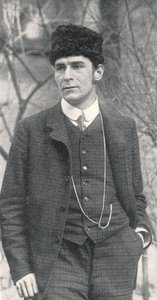
1880 - 1916 , Nemčija

Discover the power of Neo-Abstract art. Explore how bold geometric forms and high-impact visual energy are redefining modern design. Learn to curate sophisticated, high-energy spaces with the latest trends in contemporary abstraction and structural color.

Discover the high-impact world of Geometric Abstraction. From Cubist roots to modern urban trends, explore how bold shapes and colors redefine contemporary design. Elevate your space with expert art insights and custom-made abstract masterpieces.

Master the high-impact world of contemporary abstraction. Discover how bold colors, textures, and modern movements like Abstract Expressionism can transform your space with premium, high-energy art curated for the design-conscious professional.


Bodite na sešte, s najnovejšimi novicami iz sveta umetnosti, ekskluzivnimi ponudbami in idejami za dekoracijo.
Povejte nam o svojem projektu in naši strokovnjaki za umetnost vam bodo pripravili 3 prilagojene predloge umetniških del.
Naj vam izberemo 3 možnosti – popolnoma brezplačno!


 Predogled
 Pošlji
 Deli
Deli
 Podrobnosti o delu

 Prenesi
 Podobni izdelki
 Rentgenski posnetek
 Predvajaj diaporama
 Razviljaj več







 Možnost stekla je na voljo le za velikosti pod 110 cm


