Giclée ali platnati odtis muzejske kakovosti z hitro proizvodnjo in prilagodljivimi možnostmi končne obdelave. ( Kupi ročno naslikano sliko Kupi digitalno sliko)





























Izberite eno od naših vnaprej določenih velikosti, ki ustrezajo prvotnim proporcijam umetničkega dela.

Svoje dimenzije lahko vnesete sami, da bodo ustrezne za določen okvir ali prostor. Če izbrana velikost ne bo skladna z razmerji izvirne slike, bomo umetniško delo orezali ali podaljšali s pomočjo ogledalnega odraza ali barvno polnega roba. Pred začetkom proizvodnje vam bomo poslali digitalni predogled za potrditev.
Upoštevajte, da predogled na zaslonu ne prikazuje dejanskega orezovanja ali podaljševanja. Le digitalni predogled bo natančno prikazal končno kompozicijo.
Čeprav so na voljo prilagojene velikosti, priporočamo izbiro dimenzije s predhodno določenega seznama, da ohranite prvotna razmerja.
Globalna dostava () v 2 tednih namesto standardnih 4/5 tednov. (17 avgust)


Desnudo
Velikost reprodukcije
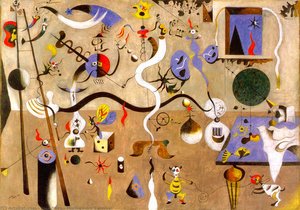
Joan Miró's "Desnudo" (Naked), painted in 1926, isn’t merely a depiction of the human form; it’s an immersion into a surrealist dreamscape—a vibrant testament to the Catalan artist’s unique vision and his profound engagement with the subconscious. This captivating work, rendered primarily in bold blocks of red, yellow, green, and beige against a stark black backdrop, immediately draws the viewer into a world where familiar forms are playfully distorted and imbued with symbolic weight. It's a piece that whispers of fertility, memory, and the boundless potential of imagination, echoing the spirit of early Surrealism while retaining Miró’s distinctly personal style.
The composition itself is deliberately asymmetrical, guiding the eye through a carefully orchestrated arrangement of abstract shapes. A stylized female figure dominates the left side, her form suggestive yet ambiguous—a potent symbol that could represent femininity, creativity, or perhaps simply the raw energy of life itself. Scattered around this central element are a series of intriguing motifs: a vibrant green shape reminiscent of a fruit or leaf, a striking red circle punctuated by yellow tendrils, and a pear-like form adding to the organic chaos. A subtle, dashed horizontal line bisects the canvas, providing a structural anchor within the otherwise fluid arrangement, preventing the piece from dissolving entirely into pure abstraction. This deliberate balance between order and disorder is characteristic of Miró’s approach – he sought to capture the essence of both logic and intuition.
Miró's masterful use of color is central to the painting’s impact. The limited palette—primarily reds, yellows, greens, and beiges—is applied with a remarkable directness; there’s little blending or softening of edges. Instead, each shape exists as a distinct entity, radiating its own internal glow against the enveloping darkness. This technique creates a powerful visual texture, emphasizing the materiality of the paint itself and lending the work a graphic, almost childlike quality. The sparing use of lines—primarily in the form of the dashed horizontal line and the outlines of the shapes—further contributes to the painting’s abstract feel, reinforcing its sense of immediacy and spontaneity.
“Desnudo” firmly places itself within the context of early 20th-century Surrealism, drawing inspiration from artists like Joan Miró himself. However, it’s crucial to recognize that Miró developed a highly individual style, deeply rooted in his Catalan heritage. The organic forms—resembling natural elements but rendered with an element of dreamlike distortion—evoke the rugged landscapes and folklore of Catalonia, a region he consistently revisited throughout his career. The influence of Gaudí's architectural innovations is also subtly present, particularly in the flowing curves and biomorphic shapes that populate the composition. The painting feels both intensely personal and deeply connected to its cultural origins.
Beyond its formal qualities, “Desnudo” resonates with a profound sense of dreamlike wonder and playful abstraction. The scattered shapes can be interpreted as fragments of memory, echoes of the subconscious, or perhaps even representations of primal instincts. The central figure’s ambiguous nature invites multiple readings—a symbol of fertility, creativity, or simply the mystery of human existence. Ultimately, Miró's work resists easy interpretation, encouraging viewers to engage with the painting on a deeply personal level and to construct their own meaning within its evocative space. “Desnudo” is not just a painting; it’s an invitation to step into a world where logic dissolves and imagination reigns supreme.
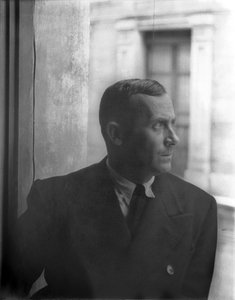
1893 - 1983 , Španija

Master the high-impact world of contemporary abstraction. Discover how bold colors, textures, and modern movements like Abstract Expressionism can transform your space with premium, high-energy art curated for the design-conscious professional.

Dive into the high-energy world of Lyrical Abstraction. Explore how bold colors, fluid motion, and emotional depth define this modern masterpiece movement. Discover iconic artists and learn to bring this vibrant, soulful energy into your contemporary space.

Discover the power of Neo-Abstract art. Explore how bold geometric forms and high-impact visual energy are redefining modern design. Learn to curate sophisticated, high-energy spaces with the latest trends in contemporary abstraction and structural color.


Bodite na sešte, s najnovejšimi novicami iz sveta umetnosti, ekskluzivnimi ponudbami in idejami za dekoracijo.
Povejte nam o svojem projektu in naši strokovnjaki za umetnost vam bodo pripravili 3 prilagojene predloge umetniških del.
Naj vam izberemo 3 možnosti – popolnoma brezplačno!


 Predogled
 Pošlji
 Deli
Deli
 Podrobnosti o delu

 Prenesi
 Podobni izdelki
 Rentgenski posnetek
 Predvajaj diaporama

 Razviljaj več







 Možnost stekla je na voljo le za velikosti pod 110 cm