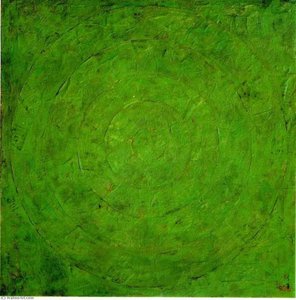
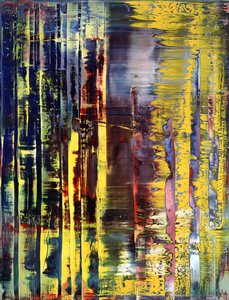
Abstract Expressionism
 1994
1994 1469.0 x 1666.0 cm
 National Museum of Singapore
Kupite digitalno sliko visoke ločljivosti z izboljšano kakovostjo, ki je precej boljša od spletnega predogleda.
Vsaka datoteka je pod natančnim nadzorom naših strokovnjakov, ki uporabljajo napredna orodja in strokovno ročno obdelavo. Zagotovimo, da ima vsaka slika izjemno jasnost, natančnost barv in fine podrobnosti.
Končna datoteka je po e-pošti dostavljena v 72 urah, optimizirana za takojšnjo uporabo v profesionalnem, uredniškem in tiskarskem okolju. To je kakovost, ki ji zaupajo vrhunska oblikovalna studia, založniki in galerije.
Prenesite datoteko visoke ločljivosti za osebno uporabo, tiskanje in kreativne projekte. ( Kupi tisk Kupi ročno naslikano sliko)
Ko izberete BuyPopArt.com, ne prejmete le slike – prejmete digitalno umetniško delo, ki je profesionalno urejeno, izdelano z natančnostostjo in zavestno zagotovljeno z garancijo za zadovoljstvo. Tukaj je vse, kar samodejno prejmete z vašim naročilom:

Vaša digitalna slika visoke ločljivosti bo na vaš e-naslov poslana v roku 72 ur od zaklopa naročila – pripravljena za takojšnjo uporabo.

Vaše umetniško delo je strokovno optimizirano z uporabo naprednih orodij umetne inteligence in ročne obdelave, kar zagotavlja največjo stopnjo podrobnosti, jasnosti in barvne natančnosti.

Ste zaradi nespremietne napake izgubili ali izbrisali svojo datoteko? Ni težav – vam jo bomo ponovno poslali kadar koli in brezplačno.

Uživajte v svojem umetniškem delu takoj, brez carin, davkov ali stroškov dostave – digitalni prenosi so vedno brezdavčni.

Z uporabo profesionalnih orodij in upravljanja barv zagotavljamo, da vaša digitalna slika čim bolj natančno odraža prvotne barve.

Če niste zadovoljni s svojo digitalno sliko, jo bomo uredili ali vam v 60 dneh povrnili 100% denarja – brez kakršnih koli vprašanj.

Niste zadovoljni? Zagovрите popoln povračilo sredstev v 60 dneh po prejemu digitalne datoteke – brez kakršnih koli vprašanj.

Kupite 3 slike, prihranite 10% - Kupite 5 slik, prihranite 15% - Kupite 10+ slik, prihranite 20%. Odlično za kreativne projekte, galerije in agencije.
Born in Birmingham, Alabama, on October 17, 1955, Kerry James Marshall’s life and artistic journey are inextricably linked to the experiences of being Black in America – specifically, the legacy of the Great Migration and the realities of urban life in the mid-20th century. Raised in Los Angeles’ South Central neighborhood, a region grappling with racial tensions and economic hardship, Marshall developed an acute awareness of visual representation and its limitations. His childhood was marked by exposure to both the vibrant culture of Black communities and the stark inequalities that defined his surroundings. This formative environment profoundly shaped his artistic vision, driving him to challenge conventional notions of art history and create a space for marginalized voices.
Marshall’s early education laid the groundwork for his future success. He honed his skills at the Otis Art Institute of Los Angeles County, where he studied under Charles White, a prominent social realist painter who instilled in him a deep appreciation for figurative representation and its potential to address social issues. White's mentorship proved crucial, providing Marshall with the technical foundation and philosophical guidance necessary to embark on his ambitious artistic project: to redress the historical absence of Black figures within Western art’s canon. As he himself stated, “I want to make visible what has been invisible.”
Marshall's most celebrated work revolves around a deliberate and complex strategy – what he termed a "counter-archive." Rejecting the traditional narratives of art history that largely ignored or misrepresented Black subjects, Marshall began creating paintings depicting scenes from African American life in the 1980s. These weren’t simply portraits; they were meticulously researched compositions drawing heavily on historical painting techniques—particularly those of the Old Masters—but applied to contemporary Black figures and settings. He studied Renaissance frescoes, Baroque altarpieces, and classical mythology, painstakingly replicating their compositional structures, lighting schemes, and color palettes.
This appropriation wasn’t intended as a simple imitation. Instead, Marshall used these established visual languages to expose the inherent biases within them. By placing Black figures within these familiar frameworks—a pose reminiscent of Titian's *Venus of Urbino*, a scene echoing Rembrandt’s *The Night Watch*—he highlighted the ways in which art history had systematically excluded and misrepresented Black experiences. His paintings are not merely representations; they are critical interventions, demanding recognition and challenging viewers to confront their own assumptions about representation and power.
Marshall’s work is deeply rooted in themes of identity, race, and social justice. He frequently depicts Black men engaged in everyday activities—fishing, working, playing—often within the context of urban landscapes. These scenes are imbued with a quiet dignity and resilience, reflecting the strength and complexity of Black culture. His subject matter draws heavily from his own upbringing in Los Angeles, particularly the experiences of growing up near the Black Panther Party headquarters in Watts.
Beyond painting, Marshall’s artistic practice extends to drawing, sculpture, and public art installations. He has also explored printmaking as a means of disseminating his ideas and engaging with broader audiences. The influence of figures like Charles White, Jacob Lawrence, and Romare Bearden is evident in his work, but Marshall ultimately forged his own distinctive voice—one that is both historically informed and profoundly contemporary.
Kerry James Marshall’s impact on the art world is undeniable. His work has been exhibited extensively at major museums and galleries around the globe, including the Museum of Contemporary Art Chicago, The Metropolitan Museum of Art, and the Royal Academy of Arts in London. He was awarded a MacArthur Fellowship in 1991, recognizing his exceptional creativity and contributions to the arts. In 2017, he was included on *Time* magazine’s annual list of the 100 most influential people in the world – a testament to the profound impact of his artistic vision.
Marshall's retrospective exhibition, *Kerry James Marshall: Mastry*, curated by Lisa Dennison at the Museum of Contemporary Art Chicago in 2016, was widely hailed as a landmark event. It offered a comprehensive overview of his career and solidified his position as one of the most important artists of our time. His work continues to inspire dialogue about representation, identity, and the power of art to challenge social injustice. Kerry James Marshall passed away on March 30, 2007, leaving behind a rich and enduring legacy that will continue to resonate for generations to come.

1955 - 2007 , Malaysia


Bodite na sešte, s najnovejšimi novicami iz sveta umetnosti, ekskluzivnimi ponudbami in idejami za dekoracijo.
Povejte nam o svojem projektu in naši strokovnjaki za umetnost vam bodo pripravili 3 prilagojene predloge umetniških del.
Naj vam izberemo 3 možnosti – popolnoma brezplačno!


 Predogled
 Pošlji
 Deli
Deli
 Podrobnosti o delu

 Prenesi
 Podobni izdelki
 Rentgenski posnetek
 Predvajaj diaporama
 Razviljaj več