Ročno slikano olje na platnu v vaši izbiri velikosti in okvirja, izdelano po naročilu naših umetnikov. ( Kupi tisk Kupi digitalno sliko)
Izberite eno od naših vnaprej določenih velikosti, ki ustrezajo prvotnim proporcijam umetničkega dela.

Svoje dimenzije lahko vnesete tako, da se prilagodite določenemu okvirju ali prostoru. Če izbrana velikost ne ustreza razmerjem originalne slike, bomo umetniško delo obrezali ali sliko dopolnili z dodatnimi ročno naslikanimi elementi. Pred začetkom proizvodnje vam bo poslan digitalni osnutek v odobritev.
Upoštevajte, da predogled na zaslonu ne odraža dejanskega obrezovanja ali podaljšanja. Le osnutek bo natančno prikazal končno kompozicijo.
Čeprav so na voljo velikosti po meri, priporočamo izbiro dimenzije s preddefiniranega seznama, da ohranimo originalne razmere.
Svetska dostava () za 3/4 nedelje umesto uobičajenih 5 nedelja. (16 avgust). Bez kompromisa po pitanju kvaliteta.


Cantileve
Velikost reprodukcije
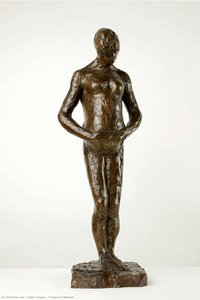
Nancy Graves’s 1983 sculpture, “Cantileve,” isn't merely a three-dimensional form; it’s an invitation to contemplate the delicate balance between stability and suspension. This piece, rendered in meticulous detail through woven materials – likely incorporating wire, fabric strips, and perhaps even yarn – immediately draws the eye upward with its central, cantilevered element. It resembles a stylized plant reaching for the light, or a coral formation emerging from the depths of an ocean, evoking both natural wonder and a subtle sense of unease. The work’s placement within the frame—a generous expanse of space above and around it—further emphasizes this feeling of poised tension, suggesting a structure perpetually on the verge of shifting.
“Cantileve” firmly resides within the realm of Post-Minimalism, a movement that emerged in the late 1960s and early 70s as an evolution from the stark geometric forms of Minimalism. Graves, like her contemporaries, rejected the purely objective approach of earlier minimalist sculpture, instead embracing a more expressive language rooted in organic forms and subtle gestures. The piece’s asymmetrical composition—a deliberate departure from the rigid symmetry often associated with Minimalist works—introduces dynamism and visual interest. The influence of artists like Brice Marden and Richard Serra is palpable, particularly in the way Graves manipulates line and space to create a complex interplay between solidity and fragility.
The color palette of “Cantileve” is remarkably restrained yet profoundly evocative. Dominating earth tones—ochres, browns, purples, and hints of blue—create a sense of groundedness and connection to the natural world. However, these muted hues are punctuated by distinct patches and strands of color within the woven structure, suggesting layers of texture and complexity. The deliberate avoidance of smooth blending creates a tactile quality, inviting viewers to imagine the rough surfaces and intricate details of the materials themselves. The varying textures—the slightly coarse weave alongside the smoother wooden base—add another layer of visual richness.
Linearity is paramount in “Cantileve.” Thin, wiry lines form the very skeleton of the sculpture, creating a sense of both fragility and intricate design. These lines intertwine and overlap, generating complex patterns that draw the eye through the piece’s structure. The prominent use of curved lines—particularly within the central stem—further enhances the organic feel, suggesting growth, movement, and a subtle dance between stability and instability. The sculpture's overall form is defined by these carefully orchestrated lines, creating a visual architecture that is both captivating and subtly unsettling.
Beyond its formal qualities, “Cantileve” carries significant symbolic weight. The cantilevered element—extending outward with seemingly little support—represents a delicate balance between stability and suspension, mirroring the precariousness of life itself. The intricate weaving suggests interconnectedness and interdependence, hinting at the complex relationships within natural systems. Ultimately, the sculpture evokes a sense of quiet contemplation – an invitation to pause, observe, and consider the beauty and fragility of the world around us. It’s a testament to Graves's ability to transform simple materials into profound expressions of artistic vision.


Master the high-impact world of contemporary abstraction. Discover how bold colors, textures, and modern movements like Abstract Expressionism can transform your space with premium, high-energy art curated for the design-conscious professional.

Dive into the high-energy world of Lyrical Abstraction. Explore how bold colors, fluid motion, and emotional depth define this modern masterpiece movement. Discover iconic artists and learn to bring this vibrant, soulful energy into your contemporary space.

Discover the power of Neo-Abstract art. Explore how bold geometric forms and high-impact visual energy are redefining modern design. Learn to curate sophisticated, high-energy spaces with the latest trends in contemporary abstraction and structural color.


Bodite na sešte, s najnovejšimi novicami iz sveta umetnosti, ekskluzivnimi ponudbami in idejami za dekoracijo.
Povejte nam o svojem projektu in naši strokovnjaki za umetnost vam bodo pripravili 3 prilagojene predloge umetniških del.
Naj vam izberemo 3 možnosti – popolnoma brezplačno!


 Pošlji
 Deli
Deli
 Podrobnosti o delu

 Prenesi
 Podobni izdelki
 Predvajaj diaporama


 Razviljaj več




































 Možnost stekla je na voljo le za velikosti pod 110 cm


![Caricia Ígnea [fire Caress] — Julia Francesca Barretto Baldivia](/media/artworks/images/thumbnails/6c/70/6c7045bf52fe4f36bc31a9d9b88b425a.jpg)