Ročno slikano olje na platnu v vaši izbiri velikosti in okvirja, izdelano po naročilu naših umetnikov. ( Kupi tisk Kupi digitalno sliko)





























Izberite eno od naših vnaprej določenih velikosti, ki ustrezajo prvotnim proporcijam umetničkega dela.

Svoje dimenzije lahko vnesete tako, da se prilagodite določenemu okvirju ali prostoru. Če izbrana velikost ne ustreza razmerjem originalne slike, bomo umetniško delo obrezali ali sliko dopolnili z dodatnimi ročno naslikanimi elementi. Pred začetkom proizvodnje vam bo poslan digitalni osnutek v odobritev.
Upoštevajte, da predogled na zaslonu ne odraža dejanskega obrezovanja ali podaljšanja. Le osnutek bo natančno prikazal končno kompozicijo.
Čeprav so na voljo velikosti po meri, priporočamo izbiro dimenzije s preddefiniranega seznama, da ohranimo originalne razmere.
Svetska dostava () za 3/4 nedelje umesto uobičajenih 5 nedelja. (18 avgust). Bez kompromisa po pitanju kvaliteta.


Composition with a Skull
Velikost reprodukcije
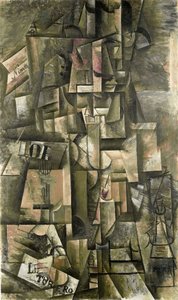
Pablo Picasso’s "Composition with a Skull," created between 1912 and 1914 during his Synthetic Cubism period, is more than just a still life; it's a profound exploration of mortality, memory, and the evolving language of art. This work exemplifies Picasso's revolutionary approach to representation, breaking down traditional forms into fragmented geometric shapes while retaining an underlying sense of meaning and emotional resonance.
"Composition with a Skull" is a quintessential example of Synthetic Cubism. Unlike the earlier Analytical Cubism which focused on dissecting objects from multiple viewpoints, Synthetic Cubism saw Picasso and Braque incorporating collage elements – newspaper clippings, wallpaper fragments – alongside painted forms to create layered compositions. While this particular piece doesn't feature overt collage, it embodies the spirit of Synthetic Cubism through its flattened perspective, overlapping planes, and simplified shapes. The skull itself is not rendered realistically but rather constructed from geometric components—triangles, circles, and rectangles—creating a stylized yet recognizable image. The muted color palette – primarily browns, blacks, whites, and touches of ochre – contributes to the painting’s somber mood and reinforces its thematic focus on transience.
Created in the years leading up to World War I, "Composition with a Skull" reflects the anxieties and uncertainties of the era. The early 20th century was a period of rapid social and technological change, marked by both optimism and profound unease. The skull, a traditional symbol of mortality, takes on added significance within this context, perhaps representing the fragility of life in an increasingly unstable world. Picasso’s artistic experimentation during this time mirrored broader cultural shifts away from traditional values and towards new forms of expression that challenged conventional notions of beauty and representation.
The central motif of the skull is undeniably laden with symbolic weight. It serves as a memento mori—a reminder of death's inevitability—a common theme in art history. However, Picasso’s Cubist treatment transforms this traditional symbol into something more complex and ambiguous. The surrounding objects – musical instruments (possibly a guitar), playing cards, and what appears to be a framed picture – suggest themes of leisure, entertainment, and perhaps even memory or illusion. The fragmented nature of the composition itself can be interpreted as a metaphor for the fractured experience of modern life, where reality is often perceived through multiple perspectives and mediated by cultural constructs.
"Composition with a Skull" evokes a range of emotions—a sense of melancholy, contemplation, and perhaps even unease. The painting’s stark geometric forms and muted colors create a visually arresting image that demands attention while simultaneously conveying a feeling of quiet introspection. Despite its somber subject matter, the work is also intellectually stimulating, inviting viewers to engage with Picasso's innovative approach to representation and to consider the deeper philosophical questions it raises about life, death, and the nature of art itself.

1881 - 1973 , Španija

Discover the power of Neo-Abstract art. Explore how bold geometric forms and high-impact visual energy are redefining modern design. Learn to curate sophisticated, high-energy spaces with the latest trends in contemporary abstraction and structural color.

Discover the high-impact world of Geometric Abstraction. From Cubist roots to modern urban trends, explore how bold shapes and colors redefine contemporary design. Elevate your space with expert art insights and custom-made abstract masterpieces.


Bodite na sešte, s najnovejšimi novicami iz sveta umetnosti, ekskluzivnimi ponudbami in idejami za dekoracijo.
Povejte nam o svojem projektu in naši strokovnjaki za umetnost vam bodo pripravili 3 prilagojene predloge umetniških del.
Naj vam izberemo 3 možnosti – popolnoma brezplačno!


 Predogled
 Pošlji
 Deli
Deli
 Podrobnosti o delu

 Prenesi
 Podobni izdelki
 Rentgenski posnetek
 Predvajaj diaporama

 Razviljaj več







 Možnost stekla je na voljo le za velikosti pod 110 cm