Olje na platnuStenska umetnostCubism
 1916Moderna doba
 53.0 x 64.0 cm
Ročno slikano olje na platnu v vaši izbiri velikosti in okvirja, izdelano po naročilu naših umetnikov. ( Kupi tisk Kupi digitalno sliko)





























Izberite eno od naših vnaprej določenih velikosti, ki ustrezajo prvotnim proporcijam umetničkega dela.

Svoje dimenzije lahko vnesete tako, da se prilagodite določenemu okvirju ali prostoru. Če izbrana velikost ne ustreza razmerjem originalne slike, bomo umetniško delo obrezali ali sliko dopolnili z dodatnimi ročno naslikanimi elementi. Pred začetkom proizvodnje vam bo poslan digitalni osnutek v odobritev.
Upoštevajte, da predogled na zaslonu ne odraža dejanskega obrezovanja ali podaljšanja. Le osnutek bo natančno prikazal končno kompozicijo.
Čeprav so na voljo velikosti po meri, priporočamo izbiro dimenzije s preddefiniranega seznama, da ohranimo originalne razmere.
Svetska dostava () za 3/4 nedelje umesto uobičajenih 5 nedelja. (19 avgust). Bez kompromisa po pitanju kvaliteta.


The guitar
Velikost reprodukcije
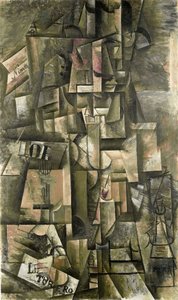
Pablo Picasso’s “The Guitar,” painted in 1916 during his pivotal period of Synthetic Cubism, isn't merely a depiction of an instrument; it’s a profound exploration of perception, space, and the very nature of representation. This artwork, brimming with energy and intellectual challenge, represents a radical departure from the analytical investigations that preceded it, offering instead a vibrant synthesis of geometric forms and fragmented perspectives – a true testament to Picasso's revolutionary vision.
To understand “The Guitar,” we must first grasp the context of Synthetic Cubism. Emerging around 1912 as a reaction against the painstaking dissection of Analytic Cubism, this movement sought to build images from simplified shapes and bold planes. Crucially, it embraced *papier collé* – the technique of gluing pieces of paper directly onto the canvas – introducing a new layer of texture and visual complexity. Picasso’s “The Guitar” is a prime example of this shift; he doesn't attempt to create a realistic guitar, but rather constructs an abstracted version from interlocking geometric forms, inviting the viewer to actively participate in reconstructing the image.
The composition itself is a captivating puzzle. Picasso presents three distinct views of the guitar simultaneously – the strings vibrating with potential energy, the solid body radiating strength, and the elegant neck reaching towards the viewer – all interwoven within a rigorously geometric framework. The painting’s palette – dominated by intense reds, stark whites, and grounding blacks – amplifies this sense of dynamism. A small circle strategically placed near the center disrupts the angularity, acting as an unexpected focal point that further enhances the artwork's visual tension. Noticeable brushstrokes contribute to a textured surface, revealing Picasso’s deliberate hand in shaping this complex composition.
Beyond its formal brilliance, “The Guitar” resonates with deeper symbolic meaning. The guitar itself is universally associated with music, creativity, and self-expression – powerful themes that immediately engage the viewer's imagination. The fragmented representation can be interpreted as a deconstruction of form, challenging traditional notions of perspective and inviting us to consider the subjective nature of perception. There’s an undeniable sense of movement and intellectual curiosity within this artwork; it compels us to look beyond the surface and contemplate the underlying principles of artistic creation. It's a visual invitation to explore the relationship between sound and sight, form and emotion.
"The Guitar" stands as a cornerstone of modern art, profoundly influencing subsequent movements like Orphism, Futurism, and Constructivism. Picasso’s bold experimentation with geometric abstraction and multiple perspectives paved the way for countless artists to challenge conventional artistic boundaries. This painting is not just a beautiful object; it's a vital link in the chain of artistic innovation – a testament to Picasso’s enduring legacy as one of the 20th century’s most influential figures.

1881 - 1973 , Španija

Master the complexities of Cubism with our expert guide. Explore the revolutionary techniques of Picasso, from Analytical to Synthetic Cubism, and learn how to curate these powerful, fragmented perspectives for your private collection.

Explore the profound evolution of Synthetic Cubism. From Picasso’s innovative collages to Braque’s geometric mastery, discover how this movement redefined modern art through texture and form. A definitive guide for discerning collectors and art history enthusiasts.


Bodite na sešte, s najnovejšimi novicami iz sveta umetnosti, ekskluzivnimi ponudbami in idejami za dekoracijo.
Povejte nam o svojem projektu in naši strokovnjaki za umetnost vam bodo pripravili 3 prilagojene predloge umetniških del.
Naj vam izberemo 3 možnosti – popolnoma brezplačno!


 Predogled
 Pošlji
 Deli
Deli
 Podrobnosti o delu

 Prenesi
 Podobni izdelki
 Rentgenski posnetek
 Predvajaj diaporama
 Razviljaj več







 Možnost stekla je na voljo le za velikosti pod 110 cm