Olje na platnuStenska umetnostPost-Impressionist
 189319. stoletje
 97.0 x 130.0 cm
 Muzej d'Orsay
Ročno slikano olje na platnu v vaši izbiri velikosti in okvirja, izdelano po naročilu naših umetnikov. ( Kupi tisk Kupi digitalno sliko)





























Izberite eno od naših vnaprej določenih velikosti, ki ustrezajo prvotnim proporcijam umetničkega dela.

Svoje dimenzije lahko vnesete tako, da se prilagodite določenemu okvirju ali prostoru. Če izbrana velikost ne ustreza razmerjem originalne slike, bomo umetniško delo obrezali ali sliko dopolnili z dodatnimi ročno naslikanimi elementi. Pred začetkom proizvodnje vam bo poslan digitalni osnutek v odobritev.
Upoštevajte, da predogled na zaslonu ne odraža dejanskega obrezovanja ali podaljšanja. Le osnutek bo natančno prikazal končno kompozicijo.
Čeprav so na voljo velikosti po meri, priporočamo izbiro dimenzije s preddefiniranega seznama, da ohranimo originalne razmere.
Svetska dostava () za 3/4 nedelje umesto uobičajenih 5 nedelja. (18 avgust). Bez kompromisa po pitanju kvaliteta.


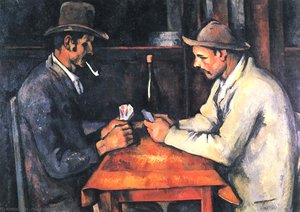
Četrta igralca
Velikost reprodukcije
Paul Cézanne’s “The Card Players,” completed in 1893, stands as an emblem of the burgeoning Post-Impressionist movement—a pivotal moment where Impressionism's fleeting impressions yielded to a deeper exploration of artistic structure. More than just a depiction of men engrossed in a game, it embodies Cézanne’s audacious challenge to academic conventions and his unwavering pursuit of capturing the essence of reality through innovative techniques.
Cézanne's revolutionary approach to perspective—rejecting linear convergence in favor of flattened planes—represents a radical departure from traditional artistic conventions. This decision wasn’t merely stylistic; it stemmed from Cézanne’s conviction that visual perception operates on fundamentally different principles than those articulated by Euclid and other mathematicians.
He meticulously analyzed the underlying structure of objects, reducing them to simplified geometric forms—cubes, cylinders, and spheres—that constitute their essential essence. This method foreshadowed Cubism, cementing Cézanne’s legacy as “the father of us all” among artists like Picasso and Matisse.
The painting's palette is dominated by earthy tones—browns, greys, and muted greens—creating a harmonious visual atmosphere that evokes a sense of quiet dignity. Cézanne skillfully modulated color to convey depth and volume—a technique that anticipates the advancements of Futurism and Expressionism.
Furthermore, Cézanne’s masterful use of impasto—thickly applied paint—generates remarkable textural surfaces that engage the viewer's senses. Visible brushstrokes are interwoven with careful attention to detail—revealing Cézanne’s meticulous process and emphasizing the materiality of pigment itself.
"The Card Players" continues to captivate audiences worldwide, serving as an enduring testament to Cézanne’s artistic genius. Its influence extends far beyond the realm of painting—inspiring artists across disciplines—from sculpture to architecture—to embrace innovative techniques and explore new modes of representation.
Cézanne's unwavering commitment to capturing the essence of reality—rather than merely reproducing its surface appearance—established a paradigm for modern art—challenging academic conventions and paving the way for groundbreaking artistic movements.
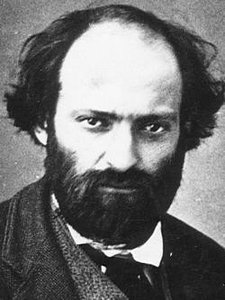
1839 - 1906 , Francija

Explore the profound evolution of art from Impressionism to Post-Impressionism. Discover how masters like Van Gogh revolutionized color and emotion, shaping modern art history through structural innovation and expressive technique.


Bodite na sešte, s najnovejšimi novicami iz sveta umetnosti, ekskluzivnimi ponudbami in idejami za dekoracijo.
Povejte nam o svojem projektu in naši strokovnjaki za umetnost vam bodo pripravili 3 prilagojene predloge umetniških del.
Naj vam izberemo 3 možnosti – popolnoma brezplačno!


 Predogled
 Pošlji
 Deli
Deli
 Podrobnosti o delu

 Prenesi
 Podobni izdelki
 Rentgenski posnetek
 Predvajaj diaporama
 Razviljaj več







 Možnost stekla je na voljo le za velikosti pod 110 cm