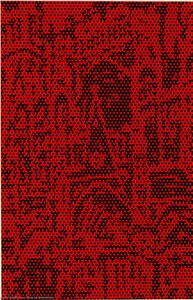
220.0 x 116.0 cm
 Viafarini
Kupite digitalno sliko visoke ločljivosti z izboljšano kakovostjo, ki je precej boljša od spletnega predogleda.
Vsaka datoteka je pod natančnim nadzorom naših strokovnjakov, ki uporabljajo napredna orodja in strokovno ročno obdelavo. Zagotovimo, da ima vsaka slika izjemno jasnost, natančnost barv in fine podrobnosti.
Končna datoteka je po e-pošti dostavljena v 72 urah, optimizirana za takojšnjo uporabo v profesionalnem, uredniškem in tiskarskem okolju. To je kakovost, ki ji zaupajo vrhunska oblikovalna studia, založniki in galerije.
Prenesite datoteko visoke ločljivosti za osebno uporabo, tiskanje in kreativne projekte. ( Kupi tisk Kupi ročno naslikano sliko)
Ko izberete BuyPopArt.com, ne prejmete le slike – prejmete digitalno umetniško delo, ki je profesionalno urejeno, izdelano z natančnostostjo in zavestno zagotovljeno z garancijo za zadovoljstvo. Tukaj je vse, kar samodejno prejmete z vašim naročilom:

Vaša digitalna slika visoke ločljivosti bo na vaš e-naslov poslana v roku 72 ur od zaklopa naročila – pripravljena za takojšnjo uporabo.

Vaše umetniško delo je strokovno optimizirano z uporabo naprednih orodij umetne inteligence in ročne obdelave, kar zagotavlja največjo stopnjo podrobnosti, jasnosti in barvne natančnosti.

Ste zaradi nespremietne napake izgubili ali izbrisali svojo datoteko? Ni težav – vam jo bomo ponovno poslali kadar koli in brezplačno.

Uživajte v svojem umetniškem delu takoj, brez carin, davkov ali stroškov dostave – digitalni prenosi so vedno brezdavčni.

Z uporabo profesionalnih orodij in upravljanja barv zagotavljamo, da vaša digitalna slika čim bolj natančno odraža prvotne barve.

Če niste zadovoljni s svojo digitalno sliko, jo bomo uredili ali vam v 60 dneh povrnili 100% denarja – brez kakršnih koli vprašanj.

Niste zadovoljni? Zagovрите popoln povračilo sredstev v 60 dneh po prejemu digitalne datoteke – brez kakršnih koli vprašanj.

Kupite 3 slike, prihranite 10% - Kupite 5 slik, prihranite 15% - Kupite 10+ slik, prihranite 20%. Odlično za kreativne projekte, galerije in agencije.
In the quiet intersection where light meets shadow, and where the visible dissolves into the invisible, lies the profound creative universe of Silvio Wolf Busch. Born in Milan in 1952, an artist whose work serves as a bridge between the tangible world and the ephemeral realms of memory and perception, Wolf Busch has spent a lifetime investigating the very essence of the image. His journey is not merely one of technical mastery but a philosophical quest to understand how we witness time. By blending the rigorous discipline of photography with the expansive possibilities of installation art, he invites his audience to step beyond the frame and inhabit a space where presence and absence coexist in a delicate, haunting dance.
The foundations of his intellectual approach were laid in the classrooms of Italy, where he immersed himself in the study of Philosophy and Psychology. This academic grounding provided him with the conceptual tools to treat the photographic medium not as a tool for documentation, but as a vessel for metaphor. Seeking to refine his technical language, he moved to London, studying at the London College of Printing. It was here that he earned his Higher Diploma in Advanced Photography, a period that allowed him to marry his deep-seated interest in human consciousness with the structural complexities of lens-based art. This dual identity—as both thinker and maker—is what allows his work to transcend simple representation, turning every photograph into a site of psychological inquiry.
To understand the soul of Wolf Busch’s work, one must look toward the legacy of Spatialism. Growing up in the shadow of Milanese masters like Lucio Fontana, the artist was profoundly moved by the movement's ambition to break the two-dimensional constraints of the canvas. Just as Fontana used perforations and cuts to introduce a new dimension of space, Wolf Busch utilizes the photographic medium to explore voids, openings, and the "elsewhere." His early explorations focused on the limits of the photographic plane, often creating large-format works and polyptychs that challenged the traditional, narrative expectations of photography. He moved away from the idea of the photograph as a testimonial record, instead seeking a subjective reality where light could obscure as much as it revealed.
This fascination with the threshold—the boundary between what is seen and what is felt—became the hallmark of his evolving style. In his celebrated "Icons of Light" series, for instance, he utilized reflected light to wipe out imagery, leaving behind an evocative emptiness that provoked a deep desire in the viewer to see beyond the instant of blindness. Through this technique, he transformed the act of looking into an act of meditation, forcing the spectator to confront the absence of the subject as a powerful form of presence in itself.
As his career progressed from the mid-1980s onward, Wolf Busch’s artistic vocabulary expanded far beyond the borders of the printed photograph. He began to integrate moving images, projections, light, and sound into complex, site-specific installations. These multi-media projects are designed to engage with the architectural and social history of their locations, turning galleries and public spaces into living, breathing ecosystems of sensory experience. His work does not merely sit upon a wall; it inhabits a room, responding to the cultural personality of the space and establishing a symbolic relationship with its history.
The significance of his contribution to contemporary art is reflected in his global footprint and academic influence:
Today, living and working between the vibrant art scenes of Milan and New York, Silvio Wolf Busch continues to push the boundaries of what it means to perceive. His work remains a testament to the power of the image to act as a threshold—a place where we can encounter the simultaneous existence of the past and the present, the here and the elsewhere, and the beautiful mystery of the unseen.

1952 - , Italy


Bodite na sešte, s najnovejšimi novicami iz sveta umetnosti, ekskluzivnimi ponudbami in idejami za dekoracijo.
Povejte nam o svojem projektu in naši strokovnjaki za umetnost vam bodo pripravili 3 prilagojene predloge umetniških del.
Naj vam izberemo 3 možnosti – popolnoma brezplačno!


 Predogled
 Pošlji
 Deli
Deli
 Podrobnosti o delu

 Prenesi
 Podobni izdelki
 Rentgenski posnetek
 Predvajaj diaporama
 Razviljaj več