Ručno oslikano uljanim bojama na platnu u dimenzijama i okviru po vašem izboru, izrađeno po porudžbini od strane naših umetnika. ( Kupi print Kupi digitalnu sliku)





























Izaberite jednu od naših unapred definisanih veličina koje odgovaraju originalnim proporcijama umetničkog dela.

Можете унети сопствене димензије како бисте прилагодили дело одређеном оквиру или простору. Ако одабрана величина не одговара пропорцијама оригинала, слика ће бити исечена или проширена додатним елементима који се ручно насликавају. Дигитални prikaz ће вам бити послат на одобрење пре почетка производње.
Имајте на уму да преглед на екрану не одражава стварно исецање или проширење. Само приказ (mockup) ће тачно приказати коначну композицију.
Иако су доступне прилагођене величине, препоручујемо да одаберете димензију из дефинисане листе како бисте сачували оригиналне пропорције.
Isporuka širom sveta () za 3/4 nedelje umesto uobičajenih 5 nedelja. (14 август). Bez kompromisa po pitanju kvaliteta.


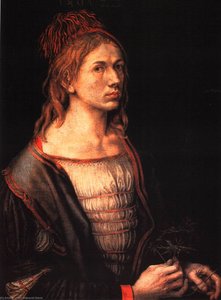
Samoportret
Dimenzije reprodukcije
Albrecht Dürer's Self-Portrait at 26, completed in 1498, stands as an unparalleled achievement of Northern Renaissance art—a testament to meticulous observation and profound psychological insight. More than just a likeness of the artist himself, it’s a carefully constructed symbol reflecting Dürer’s intellectual ambitions and artistic identity during a pivotal moment in European history.
The Museo Nacional del Prado in Madrid houses this iconic masterpiece, allowing visitors to experience firsthand the brilliance of Dürer's artistry. Its enduring appeal lies not only in its technical virtuosity but also in its ability to convey a complex tapestry of emotions—a quiet dignity mingled with intellectual ambition and an unwavering belief in the power of observation.
Dürer’s meticulous attention to detail—from the rendering of his hair to the subtle shading on his face—demonstrates the humanist preoccupation with capturing the human form accurately. This approach contrasts sharply with medieval portraiture, which often prioritized spiritual symbolism over realistic representation.
As noted in scholarly analyses, Dürer’s use of a window is deliberately symbolic—representing not merely a view of the outside world but also an invitation to contemplate higher truths. This compositional choice reflects the Renaissance humanist belief that knowledge and contemplation could lead to moral improvement.
Albrecht Dürer’s Self-Portrait remains a cornerstone of Northern Renaissance art, influencing generations of artists who followed him. Its enduring fascination stems from its ability to capture the essence of human experience—a quiet dignity infused with intellectual curiosity and an unwavering commitment to artistic excellence.

1471 - 1528 , Италија
Explore 25 iconic artworks by Albrecht Dürer, a master of the German Renaissance. Discover the stories behind Melencolia I, Knight Death and Devil & more. Find museum-quality art reproductions for your home at BuyPopArt.com.

Explore the life & art of Albrecht Dürer, a pivotal German Renaissance master. Discover his groundbreaking printmaking techniques, iconic self-portraits, and lasting influence on Western art history. A deep dive into innovation & symbolism.

Otkrijte 25 remek-dela Britanskog muzeja u Londonu! Istražite priče iza slika, skulptura i antikvitetnih blaga. Inspiracija za dekoraciju enterijera & reprodukcije vrhunskog kvaliteta na BuyPopArt.com.

Explore the fascinating history of self-portraiture from Renaissance masters like Dürer & Rembrandt to modern interpretations. Discover the psychological insights and artistic techniques behind these iconic works. Expert analysis for art enthusiasts.

Otkrijte 10 remek dela Severne Renesanse koja su obeležila epohu! Jan van Eyck, Dürer i Bruegel – istražite priče iza ovih umetničkih majstorstava. Inspiracija za vaš dom i vrhunske reprodukcije na BuyPopArt.com!


Budite u toku sa najnovijim vestima o umetnosti, ekskluzivnim ponudama i idejama za dekoraciju.
Recite nam o vašem projektu i naši stručnjaci za umetnost će vam pružiti 3 personalizovana predloga umetničkih dela.
Dozvolite nam da odaberemo 3 opcije specijalno za Vas - Besplatno!


 Pregledaj u prostoru
 Pošalji
 Podeli
 Detalji o delu

 Преузми
 Slični predmeti
 Rendgenski snimak
 Slajdovi

 Pročitaj više







 Opcija sa staklom dostupna je samo za dimenzije manje od 110 cm