

Ručno oslikano uljanim bojama na platnu u dimenzijama i okviru po vašem izboru, izrađeno po porudžbini od strane naših umetnika. ( Kupi print Kupi digitalnu sliku)





























Izaberite jednu od naših unapred definisanih veličina koje odgovaraju originalnim proporcijama umetničkog dela.

Можете унети сопствене димензије како бисте прилагодили дело одређеном оквиру или простору. Ако одабрана величина не одговара пропорцијама оригинала, слика ће бити исечена или проширена додатним елементима који се ручно насликавају. Дигитални prikaz ће вам бити послат на одобрење пре почетка производње.
Имајте на уму да преглед на екрану не одражава стварно исецање или проширење. Само приказ (mockup) ће тачно приказати коначну композицију.
Иако су доступне прилагођене величине, препоручујемо да одаберете димензију из дефинисане листе како бисте сачували оригиналне пропорције.
Isporuka širom sveta () za 3/4 nedelje umesto uobičajenih 5 nedelja. (14 август). Bez kompromisa po pitanju kvaliteta.


Глава
Dimenzije reprodukcije
Deimantas Narkevičius, srpski umetnički filozof i jedan od najpoznatijih predstavnika moderne srpske umetnosti, svojim jedinstvenim pristupom filmu i skulpturi ostavio je nezaboravno mesto u svetu umetnosti. Ovaj litovski umetnik poznat je po svojoj sposobnosti da oslika složenost istorijskih događaja kroz umetnički jezik koji izaziva emocije i podstiče razmišljanje.
Narkevičijev rad fokusira se na istraživanje međunarodnog konteksta umetnosti, posebno na umetnost jugooslovenske ere. Najpoznatiji je svoj dokumentarni film “Memorija Ehoa” koji prikazuje istorijski trenutak stvaranja monumenta Karla Marxa u Černici tokom godine kada je umetnik Deimantas Narkevičius rekonstruisao proces njegovog nastanka uz pomoć istorijskih fotografija koje su napravljene za potrebe Državne televizije Jugoslavije. Fotografije prikazuju monumentalnu, nepotpunu marmuru bustu Karla Marxa u Černici tokom godine kada je umetnik Deimantas Narkevičius rekonstruisao proces njegovog nastanka uz pomoć istorijskih fotografija koje su napravljene za potrebe Državne televizije Jugoslavije. Sve fotografije korišćene su prvobitno proizvedene u SRD za informacije i propagandu.
Kompozicija slike dominira velikom, nepotpunom marmuru bustom Karla Marxa koji zauzima većinu kadra. Fotografija prikazuje monumentalnu, nepotpunu marmuru bustu Karla Marxa u Černici tokom godine kada je umetnik Deimantas Narkevičius rekonstruisao proces njegovog nastanka uz pomoć istorijskih fotografija koje su napravljene za potrebe Državne televizije Jugoslavije. Sve fotografije korišćene su prvobitno proizvedene u SRD za informacije i propagandu. Pozadina je opuštena i prikazuje konstrukciju koja simbolizuje težnju ka stvaranju velikih umetničkih dela.
Detalji slike ukazuju na pažnju prema teksturi materijala – vidljive iskripa i nepravilnosti marmura stvaraju osećaj dodira koji dodatno uveća emotivnu vrednost umetnosti. Fotografija prikazuje monumentalnu, nepotpunu marmuru bustu Karla Marxa u Černici tokom godine kada je umetnik Deimantas Narkevičius rekonstruisao proces njegovog nastanka uz pomoć istorijskih fotografija koje su napravljene za potrebe Državne televizije Jugoslavije. Sve fotografije korišćene su prvobitno proizvedene u SRD za informacije i propagandu. Fotografija prikazuje monumentalnu, nepotpunu marmuru bustu Karla Marxa u Černici tokom godine kada je umetnik Deimantas Narkevičius rekonstruisao proces njegovog nastanka uz pomoć istorijskih fotografija koje su napravljene za potrebe Državne televizije Jugoslavije. Sve fotografije korišćene su prvobitno proizvedene u SRD za informacije i propagandu.
Ovaj umetnički dokumentum predstavlja vrednu priliku da se upozna istorijski kontekst stvaranja monumenta Karla Marxa i umetnički stil koji je karakterističan za rad Deimanta Narkevičiusa. Reprodukcija ovog dela će doneti umetničku lepotu u vaš prostor!In the quiet, evocative landscapes of Lithuania, where the echoes of a complex Soviet past still linger in the architecture and the atmosphere, the work of Deimantas Narkevičius emerges as a profound meditation on time itself. Born in 1964 in Utena, Narkevičius began his artistic journey not with the lens of a camera, but with the tactile discipline of a sculptor. This foundational training at the Vilnius Art Institute instilled in him a unique sensitivity to form, space, and materiality—a sensibility that would later breathe life into his cinematic explorations. While many artists use film merely as a medium for documentation, Narkevičius treats the moving image as a sculptural element, carving out narratives from the raw materials of historical footage, found photographs, and the heavy silence of abandoned industrial sites.
His transition from the physical weight of sculpture to the ephemeral nature of video and film was not a departure, but an evolution. As Lithuania navigated the turbulent disintegration of the Soviet Union and its subsequent rebirth as a democratic state, Narkeyičius found himself at the intersection of personal recollection and political upheaval. He became a chronicler of the "rupture"—that delicate, often painful space between what was lived and what is remembered. His work does not simply present history; it interrogates the very mechanisms by which we construct myths from reality, using techniques such as voice-overs, interviews, and carefully staged re-enactments to blur the lines between documentary truth and cinematic imagination.
The brilliance of Narkevičius’s practice lies in his ability to transform historical trauma into a poetic inquiry. He often directs his gaze toward the remnants of the Soviet era—monumental structures, decommissioned missile bases, and industrial hubs like the town of Elektrėnai. In works such as Energy Lithuania, he explores the symbiotic relationship between human vitality and the mechanical energy of power plants, treating these sites not merely as relics of a failed ideology, but as melancholic monuments to an era of vanished utopias. Through his lens, the decay of an industrial landscape becomes a metaphor for the fragility of political structures and the enduring persistence of cultural identity.
Influenced by the atmospheric depth of filmmakers like Andrei Tarkovsky and the structural experimentation of Peter Watkins, Narkevičius employs a visual language that is both intimate and expansive. He frequently utilizes close-ups to capture the nuances of human expression, grounding his larger political critiques in the lived experiences of individuals. This approach allows him to navigate the tension between the macro-history of nations and the micro-histories of the soul. His films act as a bridge, connecting the viewer to a past that may feel unrecognizable, yet remains fundamentally intertwined with the present through the persistent pull of collective memory.
The international recognition of Deimantas Narkevičius has solidified his position as one of the most significant voices in contemporary moving-image art. His presence on the global stage is marked by participation in the world's most prestigious cultural institutions, where his work challenges audiences to confront the fluidity of truth. His achievements include:
Ultimately, the significance of Narkevičius’s oeuvre lies in its refusal to offer easy answers. He does not seek to provide a definitive record of history, but rather to highlight the cracks and shadows where memory resides. By treating history as both material and methodology, he invites us to witness the ongoing process of creation—the way we constantly mold our past to make sense of our present. His work remains a vital, haunting testament to the power of art to navigate the complexities of time, identity, and the enduring human spirit.

1964 - , Lithuania

Савети стручњака за интеграцију монументалних уметничких репродукција у луксузне ентеријере. Дизајн, пропорције, боје и квалитет – трансформишите ваш простор уз BuyPopArt.

Explore the rich history of allegory in Western art! Discover hidden meanings in masterpieces from Giotto to Bosch & beyond. Expert insights for collectors and enthusiasts at BuyPopArt.

Explore the life & art of Karl Bryullov, a pivotal figure in Russian Romanticism. Discover his iconic paintings like 'The Last Day of Pompeii' and delve into his lasting influence on 19th-century art history.

Istražite bogatu istoriju bronze i tehnike livenja skulptura. Saveti za kolekcionare, investiciono vrednovanje i savremene interpretacije aluminijumske bronze. BuyPopArt – stručnjaci za umetnost.
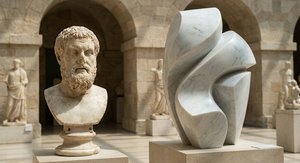
Explore the captivating history of marble sculpture from ancient Greece to modern art. Discover renowned artists like Canova & Michelangelo, carving techniques, and investment insights at BuyPopArt.


Budite u toku sa najnovijim vestima o umetnosti, ekskluzivnim ponudama i idejama za dekoraciju.
Recite nam o vašem projektu i naši stručnjaci za umetnost će vam pružiti 3 personalizovana predloga umetničkih dela.
Dozvolite nam da odaberemo 3 opcije specijalno za Vas - Besplatno!


 Pregledaj u prostoru
 Pošalji
 Podeli
 Detalji o delu

 Преузми
 Slični predmeti
 Rendgenski snimak
 Slajdovi

 Pročitaj više







 Opcija sa staklom dostupna je samo za dimenzije manje od 110 cm


