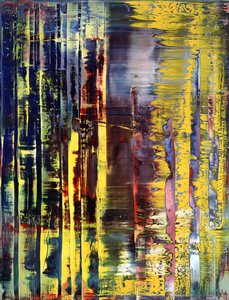
Ručno oslikano uljanim bojama na platnu u dimenzijama i okviru po vašem izboru, izrađeno po porudžbini od strane naših umetnika. ( Kupi print Kupi digitalnu sliku)
Izaberite jednu od naših unapred definisanih veličina koje odgovaraju originalnim proporcijama umetničkog dela.

Можете унети сопствене димензије како бисте прилагодили дело одређеном оквиру или простору. Ако одабрана величина не одговара пропорцијама оригинала, слика ће бити исечена или проширена додатним елементима који се ручно насликавају. Дигитални prikaz ће вам бити послат на одобрење пре почетка производње.
Имајте на уму да преглед на екрану не одражава стварно исецање или проширење. Само приказ (mockup) ће тачно приказати коначну композицију.
Иако су доступне прилагођене величине, препоручујемо да одаберете димензију из дефинисане листе како бисте сачували оригиналне пропорције.
Isporuka širom sveta () za 3/4 nedelje umesto uobičajenih 5 nedelja. (16 август). Bez kompromisa po pitanju kvaliteta.


Portrait in Green
Dimenzije reprodukcije
Born Lena Krassner on October 27, 1908, in the vibrant streets of Brooklyn, New York, the woman who would become Lee Krasner emerged as a transformative force within the landscape of American modernism. Her journey was never merely one of following established paths, but rather of carving out new, visceral territories through paint and movement. From her early days at Washington Irving High School for Girls, where a focused course in visual arts first ignited her creative spirit, to her rigorous training at Cooper Union’s Women's Art School, Krasner possessed a foundational discipline that would later serve as the bedrock for her most radical experiments. Her education was marked by a relentless pursuit of mastery, eventually leading her to the National Academy of Design between 1928 and 1932, where she studied under the legendary Hans Hofmann. It was through Hofmann’s guidance that Krasner began to internalize the principles of spontaneity and expressive gesture, elements that would become the heartbeat of her mature style.
The trajectory of Krasner's career is inextricably linked to the seismic shifts of the mid-2ണ്ട century art world, a period defined by the rise of Abstract Expressionism. While history often attempts to frame her through the lens of her marriage to Jackson Pollock, such a narrow view obscures the profound individual brilliance she maintained throughout her life. Her relationship with Pollock placed her at the very epicenter of the New York School, yet Krasner consistently resisted being relegated to a secondary role. Instead, she utilized the era's intense energy to push the boundaries of abstraction, integrating influences from European Modernism—specifically the structural complexities of Cubism and the psychological depths of Surrealism—into a uniquely American vernacular. Her work became a dialogue between control and chaos, where the structured logic of her early training met the unbridled emotion of the post-war era.
To stand before a Krasner canvas is to witness a rhythmic dance of medium and motion. Her technique is famously characterized by a gestural approach, where rapid, energetic brushstrokes and layered textures create a sense of living, breathing composition. She did not merely paint subjects; she painted the very act of creation itself. In works such as Combat, one can observe a vibrant, almost floral abstraction that utilizes layered printmaking techniques to achieve a profound depth of color. Her palette was often bold and unapologetic, capable of shifting from the somber, brooding tones of her more introspective periods to the explosive, luminous hues found in her later, more celebratory works like Another Storm.
The evolution of her style can be seen as a continuous cycle of destruction and rebirth. Krasner was known for her "collage" method, where she would often take elements of her previous, discarded paintings and reincorporate them into new compositions. This process allowed her to physically grapple with her own artistic history, recycling the past to fuel the future. This cyclical nature of her work mirrors the organic rhythms of life, making her art feel deeply connected to the natural world even in its most abstract forms. Her ability to balance dynamic compositions with a sense of underlying structural integrity remains one of her greatest technical achievements.
The historical significance of Lee Krasner extends far beyond the canvases she left behind; she was a pioneer who helped redefine the possibilities of abstraction. As a woman navigating the male-dominated art scene of the 20th century, her resilience and refusal to be overshadowed by her contemporaries made her a symbol of artistic autonomy. Her contributions helped cement New York City as the global capital of modern art, providing a bridge between the structured traditions of the early century and the raw, emotive power of the post-war avant-garde.
Today, Krasner is celebrated not just as a figure of a specific movement, but as an artist whose work possesses a timeless, universal resonance. Her legacy is defined by several key pillars:
Lee Krasner remains a titan of 20th-century art, an artist whose life was as much a masterpiece of endurance and evolution as the paintings that now reside in the world's most prestigious museums.

1908 - 1984 , United States of America

Master the high-impact world of contemporary abstraction. Discover how bold colors, textures, and modern movements like Abstract Expressionism can transform your space with premium, high-energy art curated for the design-conscious professional.

Dive into the raw power of Abstract Expressionism. Explore the high-octane energy of action painting and color field mastery. Discover how these bold, visceral movements redefine modern interiors with high-impact, premium abstract art for the contemporary collector.

Discover the power of Neo-Abstract art. Explore how bold geometric forms and high-impact visual energy are redefining modern design. Learn to curate sophisticated, high-energy spaces with the latest trends in contemporary abstraction and structural color.


Budite u toku sa najnovijim vestima o umetnosti, ekskluzivnim ponudama i idejama za dekoraciju.
Recite nam o vašem projektu i naši stručnjaci za umetnost će vam pružiti 3 personalizovana predloga umetničkih dela.
Dozvolite nam da odaberemo 3 opcije specijalno za Vas - Besplatno!


 Pregledaj u prostoru
 Pošalji
 Podeli
 Detalji o delu

 Преузми
 Slični predmeti
 Rendgenski snimak
 Slajdovi

 Pročitaj više




































 Opcija sa staklom dostupna je samo za dimenzije manje od 110 cm