Oil On CanvasWallArtNaive Art
 1910Early Medieval
 62.0 x 51.0 cm
Ručno oslikano uljanim bojama na platnu u dimenzijama i okviru po vašem izboru, izrađeno po porudžbini od strane naših umetnika. ( Kupi print Kupi digitalnu sliku)





























Izaberite jednu od naših unapred definisanih veličina koje odgovaraju originalnim proporcijama umetničkog dela.

Можете унети сопствене димензије како бисте прилагодили дело одређеном оквиру или простору. Ако одабрана величина не одговара пропорцијама оригинала, слика ће бити исечена или проширена додатним елементима који се ручно насликавају. Дигитални prikaz ће вам бити послат на одобрење пре почетка производње.
Имајте на уму да преглед на екрану не одражава стварно исецање или проширење. Само приказ (mockup) ће тачно приказати коначну композицију.
Иако су доступне прилагођене величине, препоручујемо да одаберете димензију из дефинисане листе како бисте сачували оригиналне пропорције.
Isporuka širom sveta () za 3/4 nedelje umesto uobičajenih 5 nedelja. (14 август). Bez kompromisa po pitanju kvaliteta.


The Model
Dimenzije reprodukcije
Marc Chagall's "The Model," painted in 1910, isn’t merely a depiction of a woman seated before a piano; it’s an immersion into a world where reality and fantasy intertwine with breathtaking fluidity. This oil on canvas, measuring just 62 x 51 cm, embodies the very essence of Naïve Art – or Primitivism as it was often termed – a style that prioritizes emotional expression over meticulous realism. Chagall, already a rising star in the Parisian art scene, had returned to his roots in Vitebsk, Belarus, bringing with him the vibrant folklore and deeply personal memories of his childhood. “The Model” is a testament to this return, a visual poem steeped in the rhythms of Eastern European life and infused with the artist’s uniquely dreamlike sensibility.
The painting immediately draws the eye to its central figure – a woman radiating an almost ethereal quality. She occupies a simple chair, her posture relaxed yet poised as she appears to play the piano. The scene unfolds against a backdrop of familiar domesticity: several chairs and a couch suggest a comfortable, lived-in space, while two other figures—a man standing behind her and another partially obscured at the right – add layers of narrative without explicitly defining their roles. This deliberate ambiguity is characteristic of Chagall’s work; he rarely offers easy answers, preferring to invite the viewer into a world where meaning emerges from suggestion and feeling.
Chagall's embrace of Naïve Art is evident in every brushstroke. The painting’s style eschews traditional perspective and shading, opting instead for bold colors, simplified forms, and a direct, unmediated approach to representation. This isn’t an attempt to mimic the technical skill of academic painters; rather, it’s a deliberate rejection of convention in favor of conveying raw emotion and immediate experience. The Naïve Art movement, as explored on platforms like BuyPopArt.com, is defined by artists who lack formal training, relying instead on intuition and an intensely personal vision. Chagall perfectly embodies this spirit, creating images that feel both deeply familiar and utterly otherworldly.
Notice the vibrant hues – the rich blues of the piano’s surface, the warm yellows of the woman's dress, and the deep reds of the surrounding furniture. These colors aren’t blended or muted; they are applied with a directness that mirrors the artist’s emotional state. The composition itself is deliberately unbalanced, creating a sense of dynamism and movement. The figures seem to float within the space, further enhancing the painting's dreamlike quality. It’s as if Chagall has captured a fleeting moment of memory—a cherished scene imbued with nostalgia and longing.
Beyond its immediate visual appeal, “The Model” is rich in symbolic meaning. The piano itself can be interpreted as a symbol of creativity, communication, and perhaps even melancholy – an instrument that invites both expression and introspection. The woman’s posture suggests a quiet contemplation, while the presence of the other figures hints at a complex relationship—one filled with affection, mystery, and possibly unspoken desires. Considering Chagall's upbringing in Vitebsk, a city brimming with cultural diversity and religious traditions, it’s not surprising that his work is populated by recurring motifs drawn from Jewish folklore and Eastern European life.
The painting’s overall effect is profoundly moving. “The Model” isn’t simply a portrait; it's an invitation to step into Chagall’s world—a world where dreams and reality blur, where beauty resides in simplicity, and where the most profound emotions can be expressed with remarkable directness. High-quality reproductions of this captivating artwork, meticulously crafted by BuyPopArt.com and similar platforms, allow you to experience the full power of Chagall's vision.
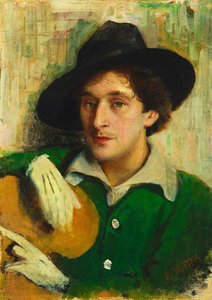
1887 - 1985 , Belorusija

Ditch the boring decor. Discover why Naive Art's raw, bold, and unfiltered aesthetic is the ultimate trend for modern urban spaces. Learn how to use vibrant colors and unstudied sincerity to create a high-impact, authentic vibe in your home or studio.


Budite u toku sa najnovijim vestima o umetnosti, ekskluzivnim ponudama i idejama za dekoraciju.
Recite nam o vašem projektu i naši stručnjaci za umetnost će vam pružiti 3 personalizovana predloga umetničkih dela.
Dozvolite nam da odaberemo 3 opcije specijalno za Vas - Besplatno!


 Pregledaj u prostoru
 Pošalji
 Podeli
 Detalji o delu

 Преузми
 Slični predmeti
 Rendgenski snimak
 Slajdovi
 Pročitaj više







 Opcija sa staklom dostupna je samo za dimenzije manje od 110 cm