x

 Köp tryck Köp högupplöst digital bild
 Skicka
 Visa detaljer
 Lägg till i favoriter
 Ladda ner
 Liknande objekt
 Röntgen
 Bildspel
 Acrylic On PaperOtherPop Art
 1973Contemporary
 21.0 x 81.0 cm
 De Young Museet
Handmålad olja på duk i din valda storlek och ram, tillverkad efter beställning av våra konstnärer.
Välj bland våra förinställda storlekar som motsvarar konstverkets ursprungliga proportioner.

Du kan ange egna mått för att passa en specifik ram eller yta. Om den valda storleken inte matchar originalbildens proportioner kommer vi antingen att beskära konstverket eller utöka målningen med ytterligare handmålade element. En digital skiss skickas till dig för godkännande innan produktionen påbörjas.
Observera att förhandsvisningen på skärmen inte återspeglar den faktiska beskärningen eller utökningen. Endast skissen visar den slutgiltiga kompositionen korrekt.
Även om anpassade storlekar är möjliga, rekommenderar vi att du väljer en dimension från den fördefinierade listan för att bevara originalproportionerna.
Leverans över hela världen () på 3–4 veckor istället för standard 5 veckor. (16 juli). Inga kompromisser med kvaliteten.


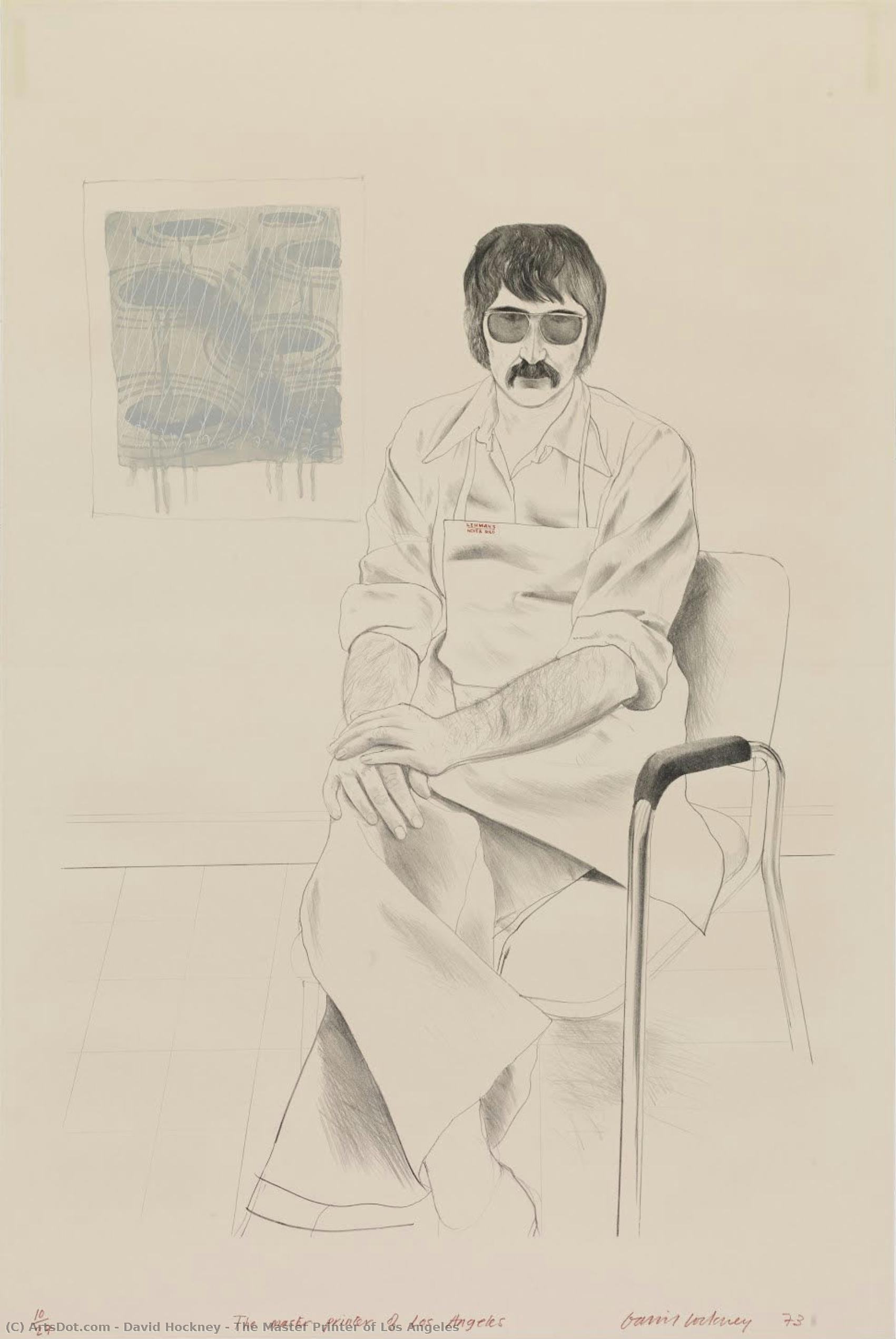
The Master Printer of Los Angeles
Storlek på reproduktion
David Hockney’s “The Master Printer of Los Angeles,” created in 1973, isn't merely a depiction of a man seated in contemplation; it’s a carefully constructed tableau brimming with symbolic weight and reflecting the burgeoning art scene of Southern California. The image, rendered in stark black and white lithograph and screenprint on Arches Cover mould-made paper, immediately draws the eye to Hockney’s central figure – a man radiating an almost unnerving stillness, shielded by the broad brim of his sunglasses. This isn't a portrait of celebrity or power; rather, it feels like a study in solitude, a quiet observation of a pivotal moment in artistic history.
The setting itself is crucial to understanding the work’s resonance. The man sits within a modestly furnished room – a chair, a clock, and a subtle suggestion of a wall – creating an intimate space that feels both familiar and slightly unsettling. The inclusion of the clock, with its hands frozen at a specific time, hints at a captured moment, a pause in the relentless flow of time itself. The muted palette, dominated by grays and blacks, amplifies this sense of stillness, evoking the quality of light found in the desert landscape – a characteristic that would become increasingly important to Hockney’s later work.
The central figure is undeniably enigmatic. His posture, his gaze directed slightly off-camera, and the cigarette held casually in his hand immediately invite interpretation. He embodies the archetype of the solitary artist – a figure wrestling with ideas, confronting challenges, and ultimately shaping beauty from raw materials. Some art historians suggest he represents Clyde Browne, a master printer who worked in Los Angeles during the Arroyo culture movement of the early 20th century, a period marked by experimental printmaking techniques and a vibrant artistic community. Hockney’s deliberate choice to portray Browne – a skilled craftsman operating largely outside the mainstream – speaks volumes about his admiration for this often-overlooked figure.
The cigarette itself is a potent symbol. It represents not just habit, but also the creative process—the burning away of the unnecessary, the distillation of ideas into something tangible and new. It’s a visual metaphor for the artist's struggle to find clarity amidst complexity, a common experience for any creator.
“The Master Printer of Los Angeles” is a testament to Hockney’s mastery of lithography and screenprinting. The stark contrasts between light and shadow are achieved through careful layering and manipulation of ink, creating a remarkable sense of depth and texture. The use of Arches Cover paper – renowned for its archival quality and subtle sheen – further enhances the work's visual impact. This particular print was created as part of a series exploring the role of master printers in the art world, commissioned by Walker Art Center.
Created during a period of significant artistic experimentation in Los Angeles, this piece reflects the city’s burgeoning reputation as a hub for avant-garde art and design. Hockney's work aligns with the broader trends of Pop Art and Minimalism, while simultaneously retaining a distinctly personal and introspective quality. The print’s stark aesthetic and focus on simple forms anticipate many of the themes that would dominate his later career.
Beyond its technical brilliance, “The Master Printer of Los Angeles” resonates with profound emotional depth. It captures a moment of quiet contemplation—a pause in the relentless pursuit of artistic expression. The man’s gaze, directed just beyond the viewer's perspective, suggests a sense of detachment and introspection, inviting us to consider our own relationship to art and creativity. The image evokes feelings of solitude, reflection, and perhaps even a touch of melancholy – a poignant reminder of the sacrifices and challenges inherent in the artist’s life.
Reproductions of this iconic work offer a captivating glimpse into Hockney's artistic vision and the vibrant cultural landscape of 1970s Los Angeles. It remains a powerful testament to the enduring legacy of master printers and their crucial role in shaping the world of art.
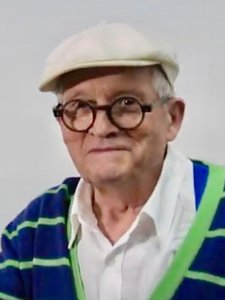
1937 - , Storbritannien
Utforska 10 legendariska litografier av Toulouse-Lautrec, Munch & Picasso! Upptäck konsthistorien bakom dessa mästerverk och låt dig inspireras. Köp museumkvalitativa reproduktioner på BuyPopArt.com – för en stilfull inredning.

Explore the captivating history of angels in art! Discover symbolism, iconic Renaissance masterpieces & renowned artists. Expert insights for art lovers & collectors at BuyPopArt.
Explore the captivating world of Paul Klee! Discover his innovative art, Bauhaus influence, & unique symbolic language. Expert analysis & high-quality reproductions at BuyPopArt.
Utforska 10 legendariska akrylmålningar som revolutionerade konsthistorien! Lär känna mästare som Rothko & Richter, deras tekniker och färgrikedom. Hitta inspiration för din inredning och köp museumkvalitativa reproduktioner på BuyPopArt.com.
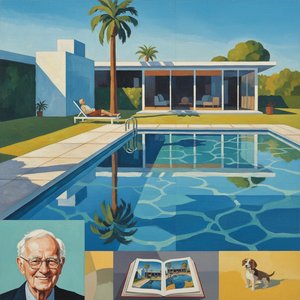
Explore the life & work of David Hockney, Pop Art's master chronicler. Discover his iconic paintings, Californian landscapes, and lasting influence on modern art. Expert analysis for collectors.


Håll dig uppdaterad med de senaste konstnyheterna, exklusiva erbjudanden och inredningsidéer.
Berätta om ditt projekt så kommer våra konstexperter att ge dig 3 personliga konstförslag.
Vi skapar ett urval av 3 alternativ helt anpassat för dig – gratis!


 Dela
Dela

 Visa mer




































 Glasalternativet är endast tillgängligt i storlekar under 110 cm.