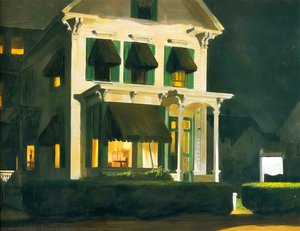
Giclée- eller canvasprint av museumskvalitet med snabb produktion och flexibla ytbehandlingsalternativ. ( Byt till handmålad målning Byt till bild)





























Välj bland våra förinställda storlekar som motsvarar konstverkets ursprungliga proportioner.

Du kan ange egna mått för att passa en specifik ram eller yta. Om det valda måttet inte överensstämmer med originalbildens proportioner kommer vi antingen att beskära konstverket eller utöka bilden med en speglad eller enfärgad kant. En digital mockup skickas för ditt godkännande innan produktionen påbörjas.
Vänligen notera att förhandsvisningen på skärmen inte återspeglar den faktiska beskärningen eller utökningen. Endast mockuppen visar den slutgiltiga kompositionen korrekt.
Även om anpassade storlekar är möjliga, rekommenderar vi att du väljer ett mått från den fördefinierade listan för att bevara de ursprungliga proportionerna.
Leverans över hela världen () på 2 veckor istället för standard 4/5 veckor. (11 augusti)


untitled (3714)
Reproduktionsstorlek
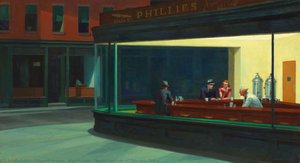
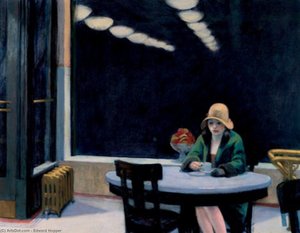
Edward Hopper's "Untitled (3714)," painted in 1942, isn’t merely a depiction of a diner interior; it’s a distilled essence of modern American loneliness. This deceptively simple scene—an elderly man perched on the steps of a modest house, leaning heavily on a cane—resonates with an almost unbearable quietude, a feeling that has become inextricably linked to Hopper's artistic vision and the anxieties of his era. The painting captures a fleeting moment of solitude, a tableau of human existence stripped bare of connection, rendered in a palette of muted earth tones and punctuated by the stark geometry of urban architecture.
Hopper’s mastery lies not just in observation but in translating that observation into a potent emotional experience. He wasn't interested in grand narratives or dramatic action; instead, he focused on the subtle gestures, the unspoken anxieties, and the pervasive sense of detachment that characterized much of 20th-century American life. The composition is meticulously controlled—the vertical thrust of the building, the horizontal sweep of the steps, all contribute to a feeling of contained stillness. The man’s posture, his slight stoop and the weight of the cane, immediately convey vulnerability and a quiet resignation. It's a portrait not of a specific individual, but of a universal experience: the feeling of being adrift in a vast, impersonal world.
The painting’s power is deeply rooted in Hopper’s distinctive technique. He employed a predominantly realistic style, yet infused it with a modernist sensibility—a deliberate simplification of forms and an acute awareness of light and shadow. Notice how the diffused afternoon light streams through the windows, casting long, soft shadows that flatten the space and heighten the sense of isolation. The use of ochre, brown, and yellow creates a warm, aged atmosphere, suggesting both time and decay. Hopper’s brushwork is remarkably smooth, almost impersonal—a deliberate choice that reinforces the painting's detached mood. He favored oil paints on canvas, allowing for rich color saturation and subtle gradations of tone.
The meticulous rendering of the building’s facade – the slightly weathered siding, the precise lines of the windows – speaks to Hopper’s painstaking attention to detail. Yet, this precision serves not to create a realistic representation but rather to emphasize the rigidity and artificiality of the urban environment. The rectangular shapes dominate the composition, creating a sense of order that ironically underscores the underlying feeling of alienation.
“Untitled (3714)” is rich in symbolic resonance. The elderly man himself represents aging, vulnerability, and perhaps even mortality. The cane isn’t simply a walking aid; it's a symbol of dependence and a reminder of time passing. The house, modest and unassuming, suggests a longing for stability and connection—a desire that remains unfulfilled. The darkened street outside the diner further amplifies this sense of isolation, creating a visual barrier between the man and the world beyond.
Hopper’s work frequently explored themes of loneliness, alienation, and the search for meaning in a rapidly changing society. “Untitled (3714)” is a quintessential example of this preoccupation, capturing the quiet desperation of individuals struggling to find their place in an increasingly impersonal world. It's a painting that invites contemplation—a silent conversation about the human condition.
Edward Hopper’s influence on American art and culture is undeniable. “Untitled (3714)” stands as one of his most iconic works, embodying his signature style and thematic concerns. Reproductions of this painting continue to resonate with viewers today, offering a poignant glimpse into the complexities of modern life. Its enduring appeal lies in its ability to evoke a powerful emotional response—a sense of melancholy, introspection, and perhaps even a touch of recognition for the quiet solitude that resides within us all.
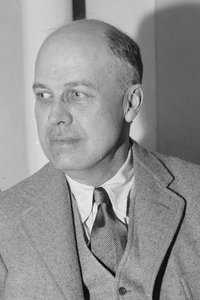
1931 - 1967 , USA

Explore the revolutionary Ashcan School! Discover how artists like Henri & Sloan challenged tradition with gritty realism, capturing urban life in early 20th-century America. Learn about their impact on American art history.

Utforska Edward Hoppers 25 mest ikoniska målningar – en djupdykning i amerikansk realism och modern konst. Upptäck historierna bakom Nighthawks, House by the Railroad & mer. Köp museumkvalitativa konsttryck på BuyPopArt.com.

Explore the life & legacy of Robert Henri, a pivotal figure in American Realism. Discover his captivating portraits, influence on the Ashcan School, and enduring impact on art history. Learn more at BuyPopArt.

Explore the captivating world of realism in art history! Discover iconic street scenes & genre paintings from masters like Courbet & Brown. Expert analysis & museum-quality reproductions at BuyPopArt.

Explore the profound world of Edward Hopper's American realism. Discover the symbolism, themes & enduring legacy of this iconic artist – from 'Nighthawks' to his lesser-known masterpieces. Expert analysis and insights.


Håll dig uppdaterad med de senaste konstnyheterna, exklusiva erbjudanden och inredningsidéer.
Berätta om ditt projekt så kommer våra konstexperter att ge dig 3 personliga konstförslag.
Vi skapar ett urval av 3 alternativ helt anpassat för dig – gratis!


 Visa i rummet
 Skicka
 Dela
Dela
 Detaljer

 Ladda ner
 Liknande objekt
 Röntgen
 Bildspel

 Läs mer







 Glasalternativet är endast tillgängligt i storlekar under 110 cm.