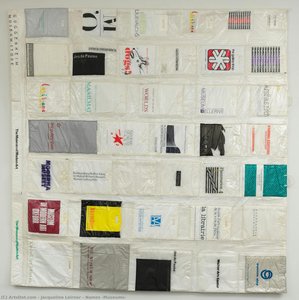
Handmålad olja på duk i din valda storlek och ram, tillverkad efter beställning av våra konstnärer. ( Beställ tryck Köp högupplöst bild)
Välj bland våra förinställda storlekar som motsvarar konstverkets ursprungliga proportioner.

Du kan ange egna mått för att passa en specifik ram eller yta. Om den valda storleken inte matchar originalbildens proportioner kommer vi antingen att beskära konstverket eller utöka målningen med ytterligare handmålade element. En digital skiss skickas till dig för godkännande innan produktionen påbörjas.
Observera att förhandsvisningen på skärmen inte återspeglar den faktiska beskärningen eller utökningen. Endast skissen visar den slutgiltiga kompositionen korrekt.
Även om anpassade storlekar är möjliga, rekommenderar vi att du väljer en dimension från den fördefinierade listan för att bevara originalproportionerna.
Leverans över hela världen () på 3–4 veckor istället för standard 5 veckor. (13 augusti). Inga kompromisser med kvaliteten.


Tramway
Storlek på reproduktion
In the golden twilight of the nineteenth century, a period defined by profound transition and the dawn of modern visual culture, Michel Eugène Courret emerged as a transformative force in the art of photography. Born in 1839 in the historic French town of Angoulême, Courret’s journey was one of remarkable geographical and artistic expansion. His early years were steeped in the sophisticated photographic traditions of Paris, where he sought mastery under the guidance of Eugène Maunoury. This apprenticeship was far more than mere technical instruction; it was an immersion into the delicate science of the albumen print, a method that allowed for unprecedented clarity and tonal depth. Through Maunoury, Courret learned to treat light not merely as a tool for visibility, but as a medium for storytelling, capturing the subtle textures of skin, fabric, and shadow with a precision that would later define his legendary career.
The trajectory of Courret’s life took a decisive turn in 1860 when he arrived in Lima, Peru. This move from the established artistic hubs of Europe to the burgeoning cultural landscape of South America proved to be a stroke of historical genius. Finding a society on the cusp of significant intellectual and social evolution, Courret recognized an untapped opportunity for photographic artistry. Alongside his brother, Aquiles, he founded Photo Central, a studio that would quickly become the beating heart of Peruvian portraiture. His arrival coincided with a period where the local elite sought to document their status and intellect, and Courret provided the perfect aesthetic vehicle for this self-expression. His work was not merely about capturing faces; it was about documenting the very soul of a nation in flux.
The significance of Courret’s oeuvre lies in its ability to bridge the gap between technical documentation and high art. His studio became a sanctuary for the intellectual luminaries of Peru, capturing portraits of figures who would shape the country's literary and political future. One can see his profound impact through his depictions of individuals such as Mercedes Cabello Llona de Carbonera, a pioneering female essayist, and Jose Galvez Barrenechea, a vital poet and politician. In these portraits, Courret utilized the formal language of Victorian portraiture—careful posing, symbolic props, and dramatic lighting—to imbue his subjects with a sense of permanence and dignity.
Beyond the elite circles of Lima, Courret’s work holds immense historical value for its ethnographic breadth. While he was celebrated for his sophisticated studio portraits, his lens also captured the diverse social strata of Peruvian life. His ability to navigate between the high-society elegance of the carte de visite and the raw, unvarnished reality of everyday existence makes his collection a vital archive of nineteenth-century Andean society. The technical mastery he brought from France—specifically his expertise in the albumen process—ensured that these fleeting moments were preserved with a luminous quality that has allowed them to endure for over a century.
As we reflect on the contributions of Michel Eugène Courret, we recognize an artist who did more than just take photographs; he helped construct a visual identity for Peru. His life serves as a testament to the power of cultural exchange and the enduring impact of a single, visionary eye. Through his lens, the history of a nation was not just recorded, but beautifully composed, leaving behind a legacy that continues to inspire awe in the hearts of art historians and photography enthusiasts alike.

1839 - 1920 , France


Håll dig uppdaterad med de senaste konstnyheterna, exklusiva erbjudanden och inredningsidéer.
Berätta om ditt projekt så kommer våra konstexperter att ge dig 3 personliga konstförslag.
Vi skapar ett urval av 3 alternativ helt anpassat för dig – gratis!


 Förhandsvisa
 Skicka
 Dela
Dela
 Visa detaljer

 Ladda ner
 Liknande objekt
 Röntgen
 Bildspel
 Visa mer




































 Glasalternativet är endast tillgängligt i storlekar under 110 cm.