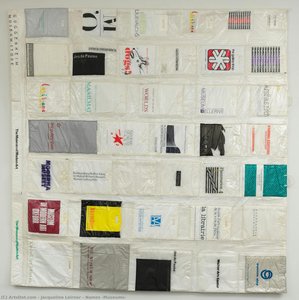
1978
1978 50.0 x 35.0 cm
 American University of Beirut
Köp en högupplöst, förbättrad digital bild med betydligt högre kvalitet än förhandsvisningen online.
Varje fil är noggrant förberedd av våra interna specialister med hjälp av avancerade verktyg och professionell manuell retuschering. Vi säkerställer att varje bild har exceptionell skärpa, exakt färgåtergivning och fina detaljer.
Den slutgiltiga filen levereras via e-post inom 72 timmar, optimerad för omedelbar användning i professionella sammanhang, redaktionellt bruk och tryckmiljöer. Detta är samma kvalitet som med förtroende används av ledande designstudior, förlag och gallerier.
Ladda ner en högupplöst fil för personlig visning, utskrift och kreativa projekt. ( Beställ tryck Beställ handmålad reproduktion)
När du väljer BuyPopArt.com får du inte bara en bild – du får ett professionellt förädlat digitalt konstverk, skapat med precision och med en garanterad tillfredsställelse. Här är allt som ingår i din beställning, automatiskt:

Din högupplösta digitala bild skickas till dig via e-post inom 72 timmar efter beställning – redo för omedelbar användning.

Ditt konstverk optimeras professionellt med hjälp av avancerade AI-verktyg och manuell redigering, vilket garanterar maximal detaljrikedom, skärpa och färgnoggrannhet.

Har du råkat radera eller tappa bort din fil? Ingen oro – vi skickar den kostnadsfritt till dig när som helst.

Njut av ditt konstverk omedelbart utan tull, importavgifter eller leveranskostnader – digitala nedladdningar är alltid skattefria.

Vi säkerställer att din digitala bild återger de ursprungliga färgerna så exakt som möjligt med hjälp av professionella verktyg och färghantering.

Om du inte är nöjd med din digitala bild kommer vi att revidera den eller återbetala 100% inom 60 dagar – utan frågor.

Inte nöjd? Få full återbetalning inom 60 dagar efter att du har tagit emot din digitala fil – utan frågor och diskussioner.

Köp 3 bilder, spara 10% – Köp 5, spara 15% – Köp 10+, spara 20%. Perfekt för kreativa projekt, gallerier och byråer.
Rafic Charaf (1932–2003) stands as a pivotal figure in the development of modern Lebanese art, a painter whose work resonated deeply with both the social and political realities of his nation and the enduring spirit of its folklore. Born in Baalbek, a region steeped in ancient history and layered cultural traditions, Charaf’s artistic journey was shaped by a rich heritage that manifested in a distinctive style characterized by poetic abstractions. His canvases often blended sociopolitical commentary with elements of autobiography and vibrant folk art, offering a compelling narrative of an artist deeply connected to his roots and committed to portraying the complexities of Lebanese identity.
His early years were spent in a modest village setting, far removed from the established artistic circles of Beirut. Despite this isolation, he cultivated a keen eye for observation, capturing scenes of daily life and the surrounding landscape on scraps of paper—a habit that would later inform his distinctive visual language. Crucially, his family’s background as blacksmiths instilled in him a profound respect for craftsmanship and an appreciation for the transformative power of materials. This early exposure to both manual labor and artistic expression laid the groundwork for his future explorations of form and texture, creating a bridge between the tactile reality of his upbringing and the ethereal nature of his later abstractions.
Charaf’s formal education began at the Académie Libanaise des Beaux-Arts (ALBA) in Beirut, where he honed his technical skills and developed a foundational understanding of Western art traditions. His talent eventually earned him prestigious scholarships that allowed him to expand his horizons far beyond the Levant. From 1955 to 1957, he studied at the Real Academia de Bellas Artes de San Fernando in Madrid, an experience that significantly impacted his palette and perspective. During this Spanish period, his work often reflected a more somber, melancholic tone, featuring muted colors and landscapes crisscrossed by wires and dead trees—a reflection of a bleak perception of life rooted in his difficult childhood.
The artist's pursuit of mastery continued in Italy, where he attended the Pietro Vanucci Academy in Perugia around 1960. This period of international study allowed him to synthesize various European influences with his Middle Eastern sensibilities. While his technical training was rooted in academic excellence, Charaf’s artistic heart remained tethered to the evocative depictions of mythology and folklore found in the works of Syrian artist Abou Subhi al Tinawi. This blend of Western technique and Eastern storytelling became the cornerstone of his mature style.
As Charaf returned to Beirut, his work underwent a transformative evolution. During the vibrant 1960s, his paintings began to move away from the starker landscapes of his youth toward more expressive and whimsical forms. In many of these works, one can observe simple forms rendered with visible, expressive brushstrokes alongside large planes of flat color, foreshadowing the signature abstraction that would define his career. His art became a tapestry of memory and social observation, where the boundaries between the personal and the political often blurred.
His contributions to the Lebanese art scene were both prolific and influential:
Ultimately, the work of Rafic Charaf remains a testament to the resilience of the human spirit and the power of art to navigate through periods of profound change. Through his poetic abstractions, he captured not just the landscape of Lebanon, but the very soul of its people, leaving behind a legacy that continues to inspire awe and reflection in the contemporary art world.

1932 - 2003 , Lebanon


Håll dig uppdaterad med de senaste konstnyheterna, exklusiva erbjudanden och inredningsidéer.
Berätta om ditt projekt så kommer våra konstexperter att ge dig 3 personliga konstförslag.
Vi skapar ett urval av 3 alternativ helt anpassat för dig – gratis!


 Förhandsvisa
 Skicka
 Dela
Dela
 Visa detaljer

 Ladda ner
 Liknande objekt
 Röntgen
 Bildspel
 Visa mer