Oil On CanvasWallArtEarly Renaissance
 1496Renaissance
 47.0 x 41.0 cm
Giclée- eller canvasprint av museumskvalitet med snabb produktion och flexibla ytbehandlingsalternativ. ( Beställ handmålad reproduktion Köp högupplöst bild)





























Välj bland våra förinställda storlekar som motsvarar konstverkets ursprungliga proportioner.

Du kan ange egna mått för att passa en specifik ram eller yta. Om det valda måttet inte överensstämmer med originalbildens proportioner kommer vi antingen att beskära konstverket eller utöka bilden med en speglad eller enfärgad kant. En digital mockup skickas för ditt godkännande innan produktionen påbörjas.
Vänligen notera att förhandsvisningen på skärmen inte återspeglar den faktiska beskärningen eller utökningen. Endast mockuppen visar den slutgiltiga kompositionen korrekt.
Även om anpassade storlekar är möjliga, rekommenderar vi att du väljer ett mått från den fördefinierade listan för att bevara de ursprungliga proportionerna.
Leverans över hela världen () på 2 veckor istället för standard 4/5 veckor. (16 augusti)


The outcast
Storlek på reproduktion
Created in 1496, Sandro Botticelli's "The Outcast" is a deeply moving depiction of human sorrow and isolation. This intimate work offers a poignant glimpse into the emotional landscape of the Renaissance, diverging from his more celebrated mythological scenes to focus on raw, relatable feeling.
The painting centers around a solitary female figure seated upon stone steps, set against the backdrop of what appears to be ancient Roman ruins. Her posture—head bowed, hands clasped loosely in her lap—speaks volumes about grief and despair. The composition is powerfully vertical, emphasized by the archway, the descending steps, and the woman’s own form. This creates a sense of enclosure and confinement, visually mirroring her emotional state. The figure isn't actively *doing* anything; she simply *is*, lost in contemplation or mourning.
Botticelli masterfully employs an oil painting technique characterized by soft blending and subtle gradations of color. The palette is restrained, dominated by warm browns, ochres, and pinkish-red tones that contribute to the melancholic atmosphere. Lines are gentle and flowing, lending a sense of vulnerability to the figure. While rooted in the traditions of early Renaissance realism, “The Outcast” also hints at the emotional intensity that would come to define Romanticism. The texture is suggested through delicate shading, evoking the rough surface of the stone and the weight of the draped fabric.
Late 15th-century Florence was a period of significant social and political upheaval, marked by religious fervor and anxieties. While the precise meaning remains open to interpretation, “The Outcast” likely reflects these broader cultural concerns. The Roman ruins themselves symbolize decay, loss, and the transience of earthly power. Some scholars suggest the figure represents a penitent Magdalene or embodies a more universal experience of suffering and exile. Botticelli’s choice to depict such a vulnerable subject matter is notable, particularly given his earlier focus on idealized beauty.
“The Outcast” isn't a painting that shouts; it whispers. Its power lies in its quiet intimacy and the universality of its theme—the experience of loss, loneliness, and profound sadness. The work invites viewers to empathize with the figure’s plight and contemplate their own experiences of sorrow. It is a testament to Botticelli’s skill as an artist that he can convey such depth of emotion with such restraint.
“The Outcast” stands as a powerful reminder of the enduring human capacity for both suffering and resilience—a timeless work that continues to resonate with audiences centuries after its creation.
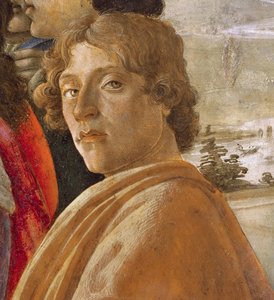
1445 - 1510 , Italien

Utforska Sandro Botticellis 25 mest ikoniska målningar! Fördjupa dig i renässansens skönhet, klassisk mytologi och tidlösa konstverk. Köp högkvalitativa reproduktioner & hitta inspiration för ditt hem på BuyPopArt.com.

Upptäck 10 renässansmästerverk av Botticelli, Leonardo da Vinci & Michelangelo! Fördjupa dig i italiensk konsthistoria och tidig renässans. Hitta inspiration för ditt hem med museumskvalitets reproduktioner på BuyPopArt.com.
Upptäck de 25 mest ikoniska mästerverken på Galleria degli Uffizi i Florens! Fördjupa dig i renässanskonst av Botticelli, Leonardo da Vinci & Michelangelo. Köp museumkvalitativa konsttryck och inred ditt hem med tidlös skönhet – utforska samlingen online hos BuyPopArt.com.

Explore the captivating world of Hubert Robert, master of Romantic landscape painting & 'capriccio' ruins. Discover his historical context, artistic innovations, and collecting insights with BuyPopArt.

Explore the profound beauty of Roman architecture through art history. From Piranesi's evocative engravings to classical masterpieces, discover how the grandeur of ancient Rome continues to inspire collectors and art enthusiasts worldwide.


Håll dig uppdaterad med de senaste konstnyheterna, exklusiva erbjudanden och inredningsidéer.
Berätta om ditt projekt så kommer våra konstexperter att ge dig 3 personliga konstförslag.
Vi skapar ett urval av 3 alternativ helt anpassat för dig – gratis!


 Förhandsvisa
 Skicka
 Dela
Dela
 Visa detaljer

 Ladda ner
 Liknande objekt
 Röntgen
 Bildspel
 Visa mer







 Glasalternativet är endast tillgängligt i storlekar under 110 cm.