DrawingWallArtGeorgian
 1760Early Modern
 8.0 x 14.0 cm
 Leeds Museums - Galleries
Köp en högupplöst, förbättrad digital bild med betydligt högre kvalitet än förhandsvisningen online.
Varje fil är noggrant förberedd av våra interna specialister med hjälp av avancerade verktyg och professionell manuell retuschering. Vi säkerställer att varje bild har exceptionell skärpa, exakt färgåtergivning och fina detaljer.
Den slutgiltiga filen levereras via e-post inom 72 timmar, optimerad för omedelbar användning i professionella sammanhang, redaktionellt bruk och tryckmiljöer. Detta är samma kvalitet som med förtroende används av ledande designstudior, förlag och gallerier.
Ladda ner en högupplöst fil för personlig visning, utskrift och kreativa projekt. ( Beställ tryck Beställ handmålad reproduktion)
När du väljer BuyPopArt.com får du inte bara en bild – du får ett professionellt förädlat digitalt konstverk, skapat med precision och med en garanterad tillfredsställelse. Här är allt som ingår i din beställning, automatiskt:

Din högupplösta digitala bild skickas till dig via e-post inom 72 timmar efter beställning – redo för omedelbar användning.

Ditt konstverk optimeras professionellt med hjälp av avancerade AI-verktyg och manuell redigering, vilket garanterar maximal detaljrikedom, skärpa och färgnoggrannhet.

Har du råkat radera eller tappa bort din fil? Ingen oro – vi skickar den kostnadsfritt till dig när som helst.

Njut av ditt konstverk omedelbart utan tull, importavgifter eller leveranskostnader – digitala nedladdningar är alltid skattefria.

Vi säkerställer att din digitala bild återger de ursprungliga färgerna så exakt som möjligt med hjälp av professionella verktyg och färghantering.

Om du inte är nöjd med din digitala bild kommer vi att revidera den eller återbetala 100% inom 60 dagar – utan frågor.

Inte nöjd? Få full återbetalning inom 60 dagar efter att du har tagit emot din digitala fil – utan frågor och diskussioner.

Köp 3 bilder, spara 10% – Köp 5, spara 15% – Köp 10+, spara 20%. Perfekt för kreativa projekt, gallerier och byråer.
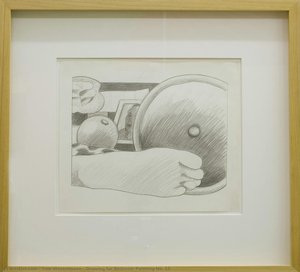
In the delicate lines of this 1760 drawing for a table, we find more than just a blueprint for furniture; we encounter a window into the refined soul of the Georgian era. Created by the legendary English cabinet-maker Thomas Chippendale, this exquisite work serves as a testament to an age where utility and artistry were inextricably linked. The drawing captures the essence of a pier or sideboard table, envisioned with a luxurious top of either polished marble or deep, rich mahogany. As the eye wanders across the composition, one perceives the meticulous planning of a master craftsman, whose hand was capable of translating grand architectural ambitions into the intimate scale of domestic splendor. The frame and legs, suggested to be finished in gold gilt or sophisticated paint, promise a piece that would not merely occupy a room but command it with an effortless, regal grace.
The technique employed here is one of precision and evocative suggestion. Through masterful use of line and subtle shading, Chippendale breathes life into the inanimate, creating a sense of depth and texture that invites the viewer to imagine the tactile reality of the finished object. The intricate carvings and ornamentation described in the composition reflect the Rococo influence that permeated the mid-18th century, characterized by flowing curves and organic motifs. This drawing is not merely a technical guide but an artistic performance, where every stroke contributes to a larger narrative of elegance. For the discerning collector or interior designer, this piece offers a profound study in how ornamentation can enhance structure without overwhelming it, providing a timeless blueprint for sophisticated spatial arrangement.
To understand this drawing is to understand the revolutionary impact of Thomas Chippendale himself. Operating from his workshop in St. Martin's Lane, London, Chippendale was a pioneer who bridged the gap between the artisan and the auteur. His seminal work, The Gentleman and Cabinet Maker’s Director, changed the landscape of British decorative arts forever, and this specific drawing for a table embodies the very spirit of that publication. It represents a moment in history when the rising middle class and the aristocracy alike sought to express their status through the curated beauty of their surroundings. The presence of decorative vases and secondary furniture in the background of the illustration suggests a complete vision of an 18th-century interior—a curated stage for social ritual and refined conversation.
For those seeking to bring a touch of historical majesty into a contemporary setting, a high-quality reproduction of this work serves as a powerful focal point. It carries with it the emotional weight of history, evoking a sense of nostalgia for an era of unparalleled craftsmanship. Whether placed in a study, a grand hallway, or a curated gallery space, this piece inspires a deep appreciation for the intersection of fine art and functional design. It is an invitation to contemplate the enduring power of beauty and the way a single, well-conceived design can transcend centuries to continue captivating the modern imagination.

Thomas Chippendale (June 5, 1718 – November 13, 1779) was an English cabinet-maker and furniture designer who revolutionized the world of interior design during the Georgian era. His innovative designs and exceptional craftsmanship cemented his place as one of the most influential figures in British decorative arts.
Born in Otley, Yorkshire, England, Chippendale’s early life remains somewhat shrouded in mystery. He began his career as an apprentice cabinet-maker, honing his skills in traditional woodworking techniques. By 1754, he had established his own workshop in St. Martin's Lane, London, quickly gaining a reputation for quality and originality.
Chippendale’s most significant contribution to the field was undoubtedly The Gentleman and Cabinet Maker’s Director, published in 1754. This pattern book, comprising over 160 engraved plates, showcased a diverse range of furniture designs – from elegant Rococo pieces to more restrained Neoclassical forms. It became an instant success and served as a crucial resource for cabinet-makers across England, Europe, and America.
Chippendale’s style wasn't born in isolation; it was a synthesis of various influences:
While many original pieces attributed to Chippendale’s workshop are difficult to definitively identify, several notable examples survive:
Chippendale’s impact on furniture design is immeasurable. He didn't just create beautiful objects; he established a distinct style that defined the Georgian era. His designs continue to inspire contemporary furniture makers and designers today.
Thomas Chippendale’s legacy extends far beyond the 18th century, solidifying his position as a true master of design and a pivotal figure in the history of decorative arts.

1718 - 1779 , United Kingdom


Håll dig uppdaterad med de senaste konstnyheterna, exklusiva erbjudanden och inredningsidéer.
Berätta om ditt projekt så kommer våra konstexperter att ge dig 3 personliga konstförslag.
Vi skapar ett urval av 3 alternativ helt anpassat för dig – gratis!


 Förhandsvisa
 Skicka
 Dela
Dela
 Visa detaljer

 Ladda ner
 Liknande objekt
 Röntgen
 Bildspel
 Visa mer