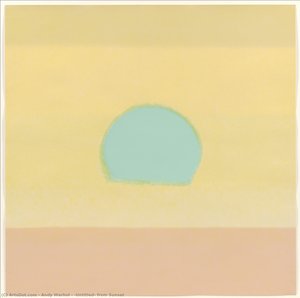
Köp en högupplöst, förbättrad digital bild som är vida överlägsen förhandsvisningen online.
Varje fil är noggrant förberedd av våra interna specialister med hjälp av avancerade verktyg och professionell manuell retuschering. Vi säkerställer att varje bild har exceptionell skärpa, exakt färgåtergivning och fina detaljer.
Den slutgiltiga filen levereras via e-post inom 72 timmar, optimerad för omedelbar användning i professionella sammanhang, redaktionellt bruk och tryckmiljöer. Detta är samma kvalitet som med förtroende används av ledande designstudior, förlag och gallerier.
Ladda ner en högupplöst fil för personlig visning, utskrift och kreativa projekt. ( Köp tryck Köp handgjord målning)
När du väljer BuyPopArt.com får du inte bara en bild – du får ett professionellt förädlat digitalt konstverk, skapat med precision och med en garanterad tillfredsställelse. Här är allt som ingår i din beställning, automatiskt:

Din högupplösta digitala bild skickas till dig via e-post inom 72 timmar efter beställning – redo för omedelbar användning.

Ditt konstverk optimeras professionellt med hjälp av avancerade AI-verktyg och manuell redigering, vilket garanterar maximal detaljrikedom, skärpa och färgnoggrannhet.

Har du råkat radera eller tappa bort din fil? Ingen oro – vi skickar den kostnadsfritt till dig när som helst.

Njut av ditt konstverk omedelbart utan tull, importavgifter eller leveranskostnader – digitala nedladdningar är alltid skattefria.

Vi säkerställer att din digitala bild återger de ursprungliga färgerna så exakt som möjligt med hjälp av professionella verktyg och färghantering.

Om du inte är nöjd med din digitala bild kommer vi att revidera den eller återbetala 100% inom 60 dagar – utan frågor.

Inte nöjd? Få full återbetalning inom 60 dagar efter att du har tagit emot din digitala fil – utan frågor och diskussioner.

Köp 3 bilder, spara 10% – Köp 5, spara 15% – Köp 10+, spara 20%. Perfekt för kreativa projekt, gallerier och byråer.
The story of William Scott is one of profound duality, a narrative woven from the rugged textures of his Scottish roots and the delicate, abstract geometries of his mature vision. Born in Greenock, Scotland, on February 15, 1913, to parents of Irish and Scottish heritage, Scott’s early life was marked by a sudden, transformative tragedy. The loss of his father, a dedicated housepainter, in a local fire during his childhood instilled in the young artist a deep-seated awareness of human fragility—a theme that would subtly underpin the structural strength of his later compositions. As he moved to Enniskillen, Northern Ireland, the landscapes and rhythms of Ulster began to settle into his consciousness, providing a foundational palette for a career that would eventually transcend borders and redefine the boundaries of British modernism.
His artistic education was a journey of disciplined mastery and intellectual expansion. From the early guidance of Kathleen Bridle at the Belfast Technical School to the prestigious halls of the Royal Academy Schools in London, Scott’s development was characterized by an insatiable curiosity for both form and feeling. It was during his time in London that he forged connections with luminaries such as the poet Dylan Thomas, a friendship that enriched his work with a lyrical, almost poetic sensibility. Initially drawn to sculpture, Scott eventually pivoted toward painting, finding in the medium a way to explore the tension between the tangible world and the abstract idea. This period of experimentation was furthered by his travels through France and Italy, where he found kinship with the French tradition of still life, drawing inspiration from the lineage of Chardin and Braque.
To look upon a William Scott painting is to witness a silent dialogue between object and space. He did not merely paint still lifes; he distilled them. His work often centered on the humble—kitchen utensils, fragments of pottery, and organic shapes—yet through his lens, these everyday items were elevated to symbols of cosmic order. In his hands, a simple bowl or a shard of ceramic became part of a larger, rhythmic arrangement of flat planes of color and sensitive, painterly lines. While his work was rooted in the recognizable, he moved with remarkable fluidity toward pure abstraction, particularly during the 1950s. Even in his most abstract phases, the ghost of the object remained, providing a structural anchor that prevented his compositions from drifting into total formlessness.
The technique of Scott was never about mere imitation; it was about the sensation of depth within flatness. As the critic Patrick Heron famously noted, Scott possessed a brilliant ability to evoke space and depth through a seemingly two-dimensional surface. His later works, particularly those from the 1960s and 1970s, moved toward a more austere and monumental style. The compositions became more stripped back, focusing on the raw power of geometric shapes—circles, squares, and arcs—that felt organic rather than mathematically precise. This evolution reflected a maturing artist who had moved beyond the need for narrative, finding instead a profound truth in the balance of weight, light, and shadow.
The achievements of William Scott are etched into the very fabric of 20th-century art history. As a central figure of the Post-war generation, he stood alongside giants like Peter Lanyon and Patrick Heron, helping to establish a uniquely British voice within the international modernist movement. His accolades were numerous, including winning first prize at the prestigious 1959 John Moores Liverpool Exhibition, a moment that solidified his standing among the elite of his era. His influence extended beyond the canvas; as Head of Painting at the Bath Academy of Art, he helped shape the pedagogical landscape for future generations of artists.
Today, the significance of Scott’s oeuvre lies in its enduring ability to bridge the gap between the figurative and the abstract. His work remains a testament to the idea that art can be both deeply personal and universally resonant. The presence of his paintings in the world's most esteemed institutions—including the Tate, the Guggenheim Museum, and the Museum of Modern Art (MoMA)—ensures that his exploration of form, space, and the essence of objects continues to inspire. He remains a pioneer of Ulster abstraction, an artist who took the fragments of a broken world and rearranged them into a vision of enduring, structured beauty.

1913 - 1989 , United Kingdom


Håll dig uppdaterad med de senaste konstnyheterna, exklusiva erbjudanden och inredningsidéer.
Berätta om ditt projekt så kommer våra konstexperter att ge dig 3 personliga konstförslag.
Vi skapar ett urval av 3 alternativ helt anpassat för dig – gratis!


 Visa i rummet
 Skicka
 Dela
Dela
 Detaljer

 Ladda ner
 Liknande objekt
 Röntgen
 Bildspel
 Läs mer