Acrylic On CanvasWallArtSymbolist Expressionism
 1891
1891 16.0 x 22.0 cm
Hızlı üretim ve esnek bitiş seçenekleriyle müze kalitesinde giclée veya kanvas baskı. ( El yapımı tablo satın al Görsel satın al)





























Eserin orijinal oranlarıyla uyumlu, önceden belirlenmiş boyutlarımız arasından seçim yapın.

Belirli bir çerçeveye veya alana uyması için kendi ölçülerinizi girebilirsiniz. Seçtiğiniz boyut orijinal görüntünün oranlarıyla eşleşmiyorsa, sanat eserini kırpacağız veya görüntüyü aynalanmış ya da düz dolgulu bir kenarlıkla genişleteceğiz. Üretim başlamadan önce onayınız için bir dijital taslak gönderilecektir.
Lütfen ekrandaki önizlemenin gerçek kırpma veya genişletmeyi yansıtmadığını unutmayın. Nihai kompozisyonu yalnızca taslak doğru bir şekilde gösterecektir.
Özel boyutlar mevcut olsa da, orijinal oranları korumak için önceden tanımlanmış listeden bir boyut seçmenizi öneririz.
Dünya Çapında Teslimat (); standart 4/5 hafta yerine 2 haftada. (19 Ağustos)


The Grotesque Singers
Reproduksiyon Boyutu
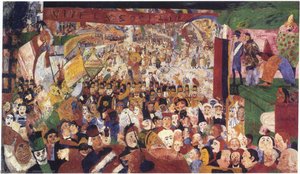
James Ensor's 1891 tempera on canvas, *The Grotesque Singers*, isn’t merely a painting; it’s an unsettling plunge into the heart of human absurdity. This small yet powerfully evocative work, measuring just 16 x 22 cm, resides within the Wednesbury Museum and Art Gallery in the United Kingdom, offering a rare glimpse into the mind of a truly singular artist. Ensor, born in Ostend, Belgium, to an English father and Belgian mother, possessed a unique perspective shaped by his upbringing amidst the vibrant chaos of a seaside resort town – a place saturated with masks, curiosities, and the theatricality of carnival. This early exposure profoundly influenced his artistic trajectory, leading him away from conventional academic training and toward a fiercely independent exploration of the irrational and the subconscious.
The painting immediately commands attention through its stark monochrome palette—a deliberate choice that amplifies the drama and intensifies the sense of unease. Two figures dominate the composition, rendered with an almost caricatured exaggeration of facial features: one boasts a grotesquely large nose, while the other possesses a disturbingly diminutive mouth. They are engaged in what appears to be a fervent song or conversation, their expressions contorted in a manner that suggests both madness and profound intensity. This deliberate distortion isn’t simply stylistic; it's a potent critique of societal norms, a visual dismantling of superficiality and hypocrisy – a hallmark of Ensor’s artistic philosophy. The inclusion of a book, positioned prominently within the scene, adds another layer of complexity. It can be interpreted as a symbol of knowledge or wisdom, yet its presence feels strangely incongruous with the singers' chaotic performance, hinting at a disconnect between intellectual pursuits and genuine human experience.
Ensor’s artistic style in *The Grotesque Singers* is deeply rooted in Symbolism and Expressionism, movements that sought to convey emotions and ideas beyond the purely representational. He masterfully employs a technique characterized by bold brushstrokes, flattened perspective, and an almost theatrical use of color (despite the monochrome scheme). The figures are not rendered with meticulous detail; instead, they are simplified into expressive forms, their features exaggerated to amplify their emotional impact. This approach aligns perfectly with Ensor’s broader exploration of the subconscious – he wasn't interested in faithfully depicting reality but rather in translating its underlying anxieties and psychological complexities onto canvas.
The painting’s composition is deliberately unsettling. The figures are crammed into a shallow space, creating a claustrophobic atmosphere that mirrors their internal turmoil. Ensor’s use of line is equally significant; jagged, angular lines contribute to the overall sense of agitation and instability. Notice how he uses overlapping forms and fragmented shapes to disrupt any sense of harmony or balance – mirroring the fractured nature of human relationships and the breakdown of social order.
*The Grotesque Singers* was created during a period of significant social and intellectual upheaval in Europe. The late 19th century witnessed rapid industrialization, urbanization, and a growing sense of alienation – themes that resonated deeply with Ensor’s artistic vision. His work can be seen as a response to these anxieties, offering a darkly humorous yet profoundly unsettling commentary on the human condition. Influenced by artists like Gustave Moreau and Edvard Munch, Ensor pushed beyond mere imitation, forging his own distinctive voice—one characterized by a willingness to confront uncomfortable truths and challenge conventional notions of beauty and representation.
BuyPopArt offers meticulously crafted hand-painted reproductions of *The Grotesque Singers*, allowing art lovers to experience Ensor’s visionary work in exquisite detail. These reproductions capture not only the painting's striking visual elements but also its underlying emotional intensity, ensuring that you can bring this captivating piece into your home or office. Beyond its aesthetic appeal, *The Grotesque Singers* remains a significant work of art history—a testament to Ensor’s innovative spirit and his willingness to explore the darker corners of human experience. It's a painting that continues to provoke thought and inspire debate, solidifying Ensor’s place as one of the most important artists of the Symbolist movement.
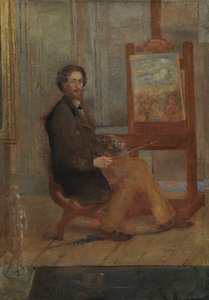
James Sidney Edouard Ensor (Ostend, 13 April 1860-19 November 1949) was a Belgian painter and printmaker, an important influence on expressionism and surrealism who lived in Ostend for almost his entire life. He was associated with the artistic group Les XX.
Ensor’s father, James Frederic Ensor, born in Brussels to English parents, was a cultivated man who studied engineering in England and Germany. Ensor’s mother, Maria Catharina Haegheman, was Belgian. Ensor himself lacked interest in academic study and left school at the age of fifteen to begin his artistic training with two local painters. From 1877 to 1880 he attended the Académie Royale des Beaux-Arts in Brussels, where one of his fellow students was Fernand Khnopff. Ensor first exhibited his work in 1881.
During the late 19th century much of Ensor’s work was rejected as scandalous, particularly his painting Christ’s Entry Into Brussels (1888–89). The Belgium art critic Octave Maus famously summed up the response from contemporaneous art critics to Ensor's innovative (and often scathingly political) work: “Ensor is the leader of a clan. Ensor is the limelight. Ensor sums up and concentrates certain principles which are considered to be anarchistic. In short, Ensor is a dangerous person who has great changes. ... He is consequently marked for blows. It is at him that all the harquebuses are aimed. It is on his head that are dumped the most aromatic containers of the so-called serious critics.” Some of Ensor's contemporaneous work reveals his defiant response to this criticism.
Ensor’s artistic style evolved dramatically over time, reflecting a profound engagement with psychological exploration and social critique. Initially influenced by Rembrandt, Redon, Goya, Japanese woodcuts, Brueghelian images and contemporary spoofs, Ensor developed a highly personal iconography and design. He rejected French Impressionism and Symbolism and lent himself to the expressive qualities of light, line, colour and the grotesque and macabre motifs such as carnival masks and skeletons, which he rendered in massive tableaux such as *The Aureoles of Christ* (1885–86) and *Skeletons Fighting over a Hanged Man* (1891). These grotesque metamorphoses culminate in Ensor’s most well-known and monumental mask tableau: *Christ’s Entry Into Brussels* (1888–89, oil on canvas, Los Angeles, J. Paul Getty Museum).
Ensor is now widely recognized as a pivotal figure in the transition from 19th-century Symbolism to early 20th-century Expressionism and Surrealism—a true pioneer of modern art. His fearless exploration of the subconscious, his embrace of grotesque imagery, and his rejection of academic conventions paved the way for future generations of artists who dared to challenge artistic norms. Despite facing initial resistance, Ensor eventually gained recognition in his later years, being named a Baron by King Albert I in 1929 and awarded the Légion d’honneur in 1933. He died in Ostend in 1949, leaving behind a body of work that continues to captivate, disturb, and inspire.
1860 - 1949 , Belçika
John Singer Sargent'ın en iyi 25 eserini keşfedin! Amerikan empresyonizminin ustası Sargent’ın portrelerindeki zarafeti, tekniği ve renkleri inceleyin. Ev dekorasyonunuz için lüks sanat baskıları BuyPopArt.com'da. Koleksiyonu şimdi keşfedin!

Explore the unsettling yet captivating world of James Ensor, a pioneer of Expressionism. Discover his satirical masterpieces, symbolic imagery & lasting influence on modern art. High-quality reproductions available at BuyPopArt.
James Abbott McNeill Whistler'ın en iyi 25 eserini keşfedin! Amerikan empresyonizminin öncüsü Whistler'ın nocturne resimleri, portreleri ve sanat tarihine damga vuran diğer başyapıtları BuyPopArt.com'da. Ev dekorasyonunuz için lüks tabloları inceleyin.

Explore 25 iconic Sir Alfred Munnings paintings! Discover the beauty of British Impressionism, equine art & rural England. Find museum-quality reproductions and elevate your home decor with BuyPopArt. Explore the full collection online.

Explore the transformative era of Early Modernism. From Cézanne's Post-Impressionism to the radical Russian Avant-Garde and Cubism, discover how masters broke tradition to redefine art history through our expert-led guide for collectors and enthusiasts.


En son sanat haberlerinden, özel tekliflerden ve dekorasyon fikirlerinden haberdar olun.
Projenizden bize bahsedin; sanat uzmanlarımız size özel 3 sanat eseri önerisi sunsun.
Size Özel 3 Seçeneği Ücretsiz Olarak Hazırlayalım!


 Önizleme yap
 Paylaş
 Paylaş
 Detayları Gör

 İndir
İndir
 Benzerlerini gör
 X-Işını
 Slayt Gösterisi
 Tümünü Gör







 Cam seçeneği yalnızca 110 cm altındaki boyutlar için mevcuttur.