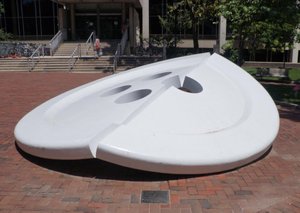
SculptureSculptureContemporary Sculpture
 2004Contemporary
 ISCAP - Porto Accounting and Business School
Çevrimiçi önizlemeden çok daha üstün, yüksek çözünürlüklü ve iyileştirilmiş bir dijital görüntü satın alın.
Her dosya, uzman ekibimiz tarafından gelişmiş araçlar ve titiz manuel rötuş teknikleri kullanılarak özenle hazırlanır. Her görüntünün olağanüstü netliğe, kusursuz renk doğruluğuna ve ince ayrıntılara sahip olduğundan emin oluruz.
Son dosya; profesyonel, editoryal ve baskı süreçlerinde anında kullanıma uygun şekilde optimize edilerek 72 saat içinde e-posta yoluyla teslim edilir. Bu, seçkin tasarım stüdyoları, yayıncılar ve galerilerin güvendiği aynı kalite standartlarındadır.
Kişisel sergileme, baskı ve yaratıcı projeleriniz için yüksek çözünürlüklü bir dosya indirin. ( Baskı satın al El yapımı tablo satın al)
BuyPopArt.com seçtiğinizde, sadece bir görsel edinmekle kalmaz; titizlikle hazırlanmış, profesyonelce iyileştirilmiş dijital bir sanat eserine sahip olur ve memnuniyet garantisiyle güvence altına alınırsınız. Siparişinizle birlikte otomatik olarak sunulan her şey şunlardır:

Yüksek çözünürlüklü dijital görüntü dosyanız, siparişinizin üzerinden en geç 72 saat geçmeden e-posta ile size gönderilecektir; hemen kullanıma hazırdır.

Sanat eseriniz; maksimum detay, netlik ve renk doğruluğu sağlamak amacıyla gelişmiş yapay zeka araçları ve manuel düzenleme kullanılarak profesyonelce optimize edilmektedir.

Dosyanızı yanlışlıkla mı sildiniz yoksa kayıp mı oldu? Endişelenmeyin; dosyanızı dilediğiniz zaman size ücretsiz olarak tekrar göndereceğiz.

Sanat eserinizin tadını gümrük vergisi, harç veya teslimat ücreti ödemeden anında çıkarın; dijital indirmeler her zaman vergiden muaftır.

Profesyonel araçlar ve renk yönetimi kullanarak dijital görselinizin orijinal renklere mümkün olduğunca yakın yansıtılmasını sağlıyoruz.

If you're not satisfied with your digital image, we'll revise it or refund 100% within 60 days - no questions asked.

Memnun kalmadınız mı? Dijital dosyanızı aldıktan sonraki 60 gün içinde, hiçbir soru sorulmaksızın tam iade alın.

Buy 3 images, save 10% - Buy 5, save 15% - Buy 10+, save 20%. Great for creative projects, galleries, and agencies.
In the heart of the contemporary urban landscape, Peter Klasen’s Untitled (2004) emerges as a profound dialogue between industrial rigidity and organic fluidity. This striking sculpture serves as more than just a public installation; it is a sculptural poem written in metal. The work commands attention through its large-scale, abstract forms that evoke the rhythmic curves of sound waves or the sleek silhouette of modern headphones. As the eye wanders across its metallic surfaces, one perceives a masterful balance between the heavy, grounded nature of steel and the ethereal, sweeping arcs that seem to capture the very movement of air and frequency. It is an installation that does not merely sit within its environment but actively reshapes the viewer's perception of the surrounding architecture and greenery.
The technical execution of this piece reflects Klasen’s deep-seated fascination with the textures of modernity. Utilizing a sophisticated process of fabrication and assembly, the artist manipulates industrial materials—primarily steel and concrete—to create a surface that is both rugged and refined. The interplay of light across the sculpture's geometric edges creates a dynamic experience; depending on the hour of the day, the shadows shift, lending a sense of temporal movement to the static metal. The color palette remains intentionally restrained, dominated by sophisticated grey tones that allow the sculpture to harmonize with the urban backdrop of residential facades and paved walkways, while occasionally offering sharp contrasts of black or vibrant accents that punctuate the visual narrative.
Beyond its physical presence, Untitled invites a deep philosophical inquiry into our relationship with technology and communication. The sculpture’s form, reminiscent of auditory equipment, acts as a powerful symbol for the invisible currents of information that flow through our modern world. It captures the essence of sound and signal, translating the intangible vibrations of digital life into a tangible, monumental form. There is an inherent tension within the work—a confrontation between the cold, unyielding nature of industrial materials and the soft, organic curves that suggest biological or acoustic rhythms. This duality mirrors the contemporary human condition, where our lives are increasingly intertwined with the mechanical and the algorithmic.
For the discerning collector or interior designer, this piece offers a sophisticated focal point that brings an air of avant-garde elegance to any space. Whether envisioned as a centerpiece in a minimalist gallery or as a conceptual element within a high-end architectural project, the sculpture provides a sense of intellectual depth and structural permanence. It is a work that celebrates the beauty found in industrial precision while evoking a sense of wonder about the unseen forces—sound, data, and connection—that define our era. Owning a reproduction of such a significant contemporary work allows one to invite this powerful intersection of art and industry into their personal environment, fostering a space of constant reflection and modern inspiration.

Born in the historic German city of Lübeck on August 18, 1935, Peter Klasen emerged as a profound witness to the transformations of the twentieth century. His early life was steeped in an environment sensitive to the arts; he grew up in a family where creative inclinations were nurtured, boasting an uncle who was a pupil of the legendary expressionist Otto Dix and a grandfather who served as a dedicated patron of art. This rich lineage provided the fertile soil from which his complex artistic vision would grow. Between 1956 and 1959, Klasen refined his technical prowess at the avant-garde Berlin University of the Arts, an experience that laid the groundwork for his later explorations into the friction between humanity and the machine.
Following his studies, a scholarship granted him passage to Paris in 1959, a move that would expand his horizons beyond German borders. It was during the 1960s that Klasen established himself as a pivotal figure in the Nouvelle Figuration, or Narrative Figuration, movement. This era marked the beginning of his lifelong interrogation of the modern landscape. He did not merely paint scenes; he constructed visual metaphors that critiqued the rapid standardization of Western society. His work began to capture the signs of our urban existence, utilizing the language of mass media to condemn the creeping uniformity of a consumer-driven world.
As his career progressed into the 1970s, Klasen achieved international renown through his groundbreaking "binary paintings." These works are characterized by a haunting tension, often presenting a stark opposition between fragments of the human body and industrial or commercial objects. Through this technique, he explored the profound anxiety of a contemporary society split between the concept of being and the impulse of having. His canvases became battlegrounds where the sensuality of the human form collided with the cold, often "disgusting" reality of industrial progress.
His mastery of photorealism serves as more than a technical feat; it is a deliberate tool for confrontation. By rendering factories, workshops, and technological advancements with breathtaking precision, he forces the viewer to confront the dehumanizing effects of mass production. In his most evocative works, the human figure often appears fragmented or intertwined with machinery, existing within environments that feel devoid of warmth or organic connection. This meticulous detail serves to highlight the hostility of the modern city, where the individual is frequently reduced to a mere commodity within a larger, impersonal system.
The significance of Peter Klasen’s contribution to modern art lies in his ability to translate the complexities of technological advancement into a visceral visual language. His work transcends simple representation, acting as a sociological critique of the late twentieth century. Whether through his expansive paintings or his striking industrial sculptures—which utilize materials like steel, aluminum, and vibrant orange accents to evoke urban installations—Klasen remains a master of contrast.
His enduring impact can be summarized through several key artistic pillars:
Today, Klasen stands as a pioneer whose work continues to resonate in an era still grappling with the consequences of digital and industrial saturation. He remains an essential voice for anyone seeking to understand the intersection of human identity and the relentless march of progress.

1935 - , Germany


En son sanat haberlerinden, özel tekliflerden ve dekorasyon fikirlerinden haberdar olun.
Projenizden bize bahsedin; sanat uzmanlarımız size özel 3 sanat eseri önerisi sunsun.
Size Özel 3 Seçeneği Ücretsiz Olarak Hazırlayalım!


 Paylaş
 Paylaş
 Detayları Gör

 İndir
İndir
 Benzerlerini gör
 Slayt Gösterisi
 Tümünü Gör