

 Acrylic On CanvasWallArtExpressionism
 1910
1910 29.0 x 19.0 cm
Музейна якість друку جيкле або на полотні з оперативним виготовленням та різноманітними варіантами фінішної обробки. ( Замовити репродукцію ручної роботи Купити цифрове зображення)





























Обирайте з наших стандартних розмірів, що відповідають оригінальним пропорціям твору мистецтва.

Ви можете вказати власні розміри, щоб репродукція ідеально підійшла до конкретної рами або інтер'єру. Якщо обраний вами розмір не відповідає пропорціям оригіналу, ми або обріжемо полотно, або розширимо зображення за допомогою дзеркального відображення чи суцільної заливки країв. Перед початком виробництва вам буде надіслано цифровий макет для затвердження.
Будь ласка, зверніть увагу, що попередній перегляд на екрані не відображає фактичне обрізання або розширення. Тільки макет точно покаже фінальну композицію.
Хоча можливість замовлення індивідуальних розмірів доступна, ми рекомендуємо обирати формат із попередньо визначеного списку, щоб зберегти оригінальні пропорції.
Доставка по всьому світу () за 2 тижні замість стандартних 4/5 тижнів. (17 Серпень)


Poem
Розмір репродукції
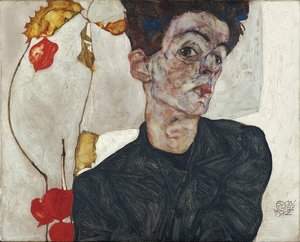
Egon Schiele’s “Poem,” completed in 1910, stands as a deceptively simple yet profoundly resonant testament to the artist's signature style and his preoccupation with themes of vulnerability and unspoken emotion. This unassuming watercolor—measuring 29 x 19 cm—captures a moment frozen in time: a sheet of paper bearing handwritten words, rendered in muted tones that amplify rather than diminish their impact.
The photograph itself presents a deliberate ambiguity. The blurry texture of the paper suggests age and preservation, hinting at a history unseen but felt nonetheless. It’s not merely an image of text; it's an emblem of communication—or perhaps its absence—a subtle invitation to contemplate what lies beneath the surface.
Schiele's work emerged during Vienna’s vibrant artistic milieu—a period marked by experimentation and a fervent embrace of Expressionism. Influenced heavily by Gustav Klimt, Schiele wrestled with anxieties surrounding sexuality, mortality, and the human condition. The painting reflects this broader cultural preoccupation with confronting uncomfortable truths about existence.
Vienna at the turn of the century was undergoing rapid social change—industrialization, urbanization, and burgeoning intellectual currents challenged traditional values. Artists like Schiele responded to these shifts by rejecting academic conventions in favor of emotionally charged imagery that prioritized subjective experience over objective representation. “Poem” embodies this spirit of rebellion against established norms.
The handwritten words on the paper are deliberately obscured, adding another layer of complexity to the artwork’s symbolic significance. They represent unspoken thoughts—perhaps desires, fears, or confessions—that remain hidden from view. This deliberate concealment underscores Schiele's fascination with psychological depth and his ability to convey emotion through visual suggestion.
The paper itself serves as a metaphor for fragility—a vulnerable surface bearing the marks of time and experience. Like Schiele’s own life, “Poem” confronts us with the inevitability of decay and loss, prompting contemplation on the ephemeral nature of beauty and consciousness. It's a piece that lingers in the mind long after viewing, inviting repeated observation and rewarding careful consideration.
1890 - 1918 , Австрія

Dive into the raw, visceral world of Figurative Expressionism. Explore how icons like Schiele and Bacon use bold textures and intense human forms to redefine modern aesthetics. Discover high-impact art that brings unapologetic energy and emotional depth to your contemporary space.


Будьте в курсі останніх новин зі світу мистецтва, ексклюзивних пропозицій та ідей для декорування.
Розкажіть нам про свій проєкт, і наші експерти з мистецтва підготують для вас 3 персоналізовані пропозиції щодо творів мистецтва.
Дозвольте нам підібрати 3 варіанти спеціально для вас — безкоштовно!


 Переглянути в інтер'єрі
 Надіслати як листівку
 Поділитися
 Детальніше

 Завантажити
 Схожі експонати
 Рентгенівське дослідження
 Слайд-шоу
 Читати далі







 Скляний варіант доступний лише для розмірів до 110 см


