

 АкварельНастінне мистецтвоExpressionist Style
 1913
1913 48.0 x 31.0 cm
Музейна якість друку جيкле або на полотні з оперативним виготовленням та різноманітними варіантами фінішної обробки. ( Замовити репродукцію ручної роботи Купити цифрове зображення)





























Обирайте з наших стандартних розмірів, що відповідають оригінальним пропорціям твору мистецтва.

Ви можете вказати власні розміри, щоб репродукція ідеально підійшла до конкретної рами або інтер'єру. Якщо обраний вами розмір не відповідає пропорціям оригіналу, ми або обріжемо полотно, або розширимо зображення за допомогою дзеркального відображення чи суцільної заливки країв. Перед початком виробництва вам буде надіслано цифровий макет для затвердження.
Будь ласка, зверніть увагу, що попередній перегляд на екрані не відображає фактичне обрізання або розширення. Тільки макет точно покаже фінальну композицію.
Хоча можливість замовлення індивідуальних розмірів доступна, ми рекомендуємо обирати формат із попередньо визначеного списку, щоб зберегти оригінальні пропорції.
Доставка по всьому світу () за 2 тижні замість стандартних 4/5 тижнів. (16 Серпень)


Rufer
Розмір репродукції
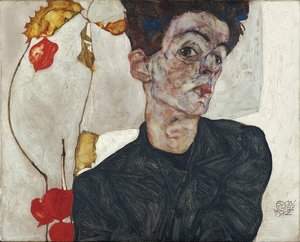
Egon Schiele's "Rufer," painted in 1913, isn’t merely a depiction of a man; it’s an immersion into the shadowed depths of the human psyche. This watercolor masterpiece, measuring a modest 48 x 31 cm, pulsates with the raw emotion characteristic of Schiele’s Expressionist style – a style forged in the crucible of personal tragedy and a profound understanding of mortality. The painting immediately draws the viewer in with its stark simplicity: a figure clad in a severe black suit, positioned centrally within a subtly defined space, his hands clasped together as if in silent contemplation or perhaps, a desperate plea. The muted palette – predominantly blues, greys, and browns – contributes to an atmosphere of restrained melancholy, while the deliberate use of loose brushstrokes and fragmented lines speaks volumes about Schiele’s rejection of academic precision in favor of conveying feeling directly.
Schiele's life was inextricably linked to themes of loss and suffering. The untimely death of his father, a victim of syphilis, profoundly impacted him, shaping an artistic sensibility that relentlessly confronted the fragility of existence. This trauma is palpably present in “Rufer.” The man’s downward gaze suggests introspection, perhaps even despair, while the tightly clasped hands could represent both a search for solace and a futile attempt to contain overwhelming emotions. The painting resonates with the broader anxieties of the early 20th century – a period marked by social upheaval, scientific advancements challenging traditional beliefs, and a growing awareness of human vulnerability. Schiele wasn’t simply portraying an individual; he was channeling the collective unease of his time.
The choice of watercolor is crucial to understanding “Rufer.” Unlike oil paints, which offer rich opacity and meticulous detail, watercolor possesses a remarkable ability to capture fleeting moments and convey subtle nuances of feeling. Schiele masterfully exploits this quality, allowing the colors to bleed and mingle, creating an ethereal and somewhat unstable effect. The transparency of the medium lends a sense of vulnerability to the subject, as if his inner world is slowly dissolving before our eyes. The loose application of paint mirrors the emotional turbulence at play – it’s not about precise representation but rather about capturing the *impression* of a profound internal state. It's a technique that amplifies the painting's inherent fragility and invites the viewer to connect with the subject on an intuitive level.
While seemingly straightforward, “Rufer” is laden with subtle symbolism. The man’s attire – the black suit – often represents authority, formality, or even a sense of confinement. The posture itself, with hands clasped together, can be interpreted as a gesture of prayer, reflection, or perhaps simply an attempt to impose order on chaos. Interestingly, Schiele's lifelong fascination with trains—a motif that frequently appeared in his work—can also be detected here, not visually, but through the suggestion of movement and journey within the figure’s stance. This echoes a recurring theme in his oeuvre: the human desire for travel, both physical and metaphorical, as a means of escaping or understanding one's place in the world.
“Rufer” is more than just a painting; it’s a poignant meditation on the complexities of the human condition. Egon Schiele’s ability to distill such profound emotion into a relatively small format is truly remarkable. A reproduction of this work, meticulously crafted by BuyPopArt.com, offers an unparalleled opportunity to experience the raw power and enduring beauty of Schiele's vision. It invites contemplation, sparking dialogue about mortality, loss, and the search for meaning in a world often characterized by uncertainty. Consider it not just as decoration, but as a window into the soul of one of art history’s most compelling figures.
1890 - 1918 , Австрія
Відкрийте 25 найвідоміших картин Еґона Шіле – австрійського експресіоніста, майстра психологічного портрету та виразного живопису. Історія мистецтва, техніки та натхнення для декору вашого дому від BuyPopArt.com.

Відкрийте для себе 10 легендарних акварелей від Turner, Monet та інших майстрів! Історія мистецтва, техніки живопису та натхнення для декору вашого дому. Купуйте репродукції картин аквареллю преміум-якості на BuyPopArt.com.

Explore the captivating world of watercolor painting! Discover its rich history, essential techniques, influential artists & collecting tips. A comprehensive guide for art enthusiasts from BuyPopArt.

Explore the captivating history of watercolor painting, from ancient techniques to modern masters like Kandinsky & Blake. Discover essential artists, collecting tips & the emotional power of this luminous medium. Expert insights for art enthusiasts.

Explore the emotionally charged world of Egon Schiele (1890-1918). Discover his Expressionist masterpieces, psychological themes, and lasting impact on modern art. A comprehensive guide for collectors & enthusiasts.


Будьте в курсі останніх новин зі світу мистецтва, ексклюзивних пропозицій та ідей для декорування.
Розкажіть нам про свій проєкт, і наші експерти з мистецтва підготують для вас 3 персоналізовані пропозиції щодо творів мистецтва.
Дозвольте нам підібрати 3 варіанти спеціально для вас — безкоштовно!


 Переглянути в інтер'єрі
 Надіслати як листівку
 Поділитися
 Детальніше

 Завантажити
 Схожі експонати
 Рентгенівське дослідження
 Слайд-шоу
 Читати далі







 Скляний варіант доступний лише для розмірів до 110 см


