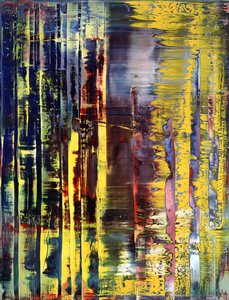
Музейна якість друку جيкле або на полотні з оперативним виготовленням та різноманітними варіантами фінішної обробки. ( Замовити репродукцію ручної роботи Купити цифрове зображення)





























Обирайте з наших стандартних розмірів, що відповідають оригінальним пропорціям твору мистецтва.

Ви можете вказати власні розміри, щоб репродукція ідеально підійшла до конкретної рами або інтер'єру. Якщо обраний вами розмір не відповідає пропорціям оригіналу, ми або обріжемо полотно, або розширимо зображення за допомогою дзеркального відображення чи суцільної заливки країв. Перед початком виробництва вам буде надіслано цифровий макет для затвердження.
Будь ласка, зверніть увагу, що попередній перегляд на екрані не відображає фактичне обрізання або розширення. Тільки макет точно покаже фінальну композицію.
Хоча можливість замовлення індивідуальних розмірів доступна, ми рекомендуємо обирати формат із попередньо визначеного списку, щоб зберегти оригінальні пропорції.
Доставка по всьому світу () за 2 тижні замість стандартних 4/5 тижнів. (17 Серпень)


Betty
Розмір репродукції
Gerhard Richter's 'Betty,' painted in 1988, isn’t merely a portrait; it’s an exquisitely layered meditation on memory, perception, and the elusive nature of representation. This arresting work, currently residing within the esteemed collection of the Saint Louis Art Museum, immediately draws the viewer into its quiet intensity. Richter, a titan of contemporary art, masterfully employs a deceptively simple composition – the back of his daughter’s head – to conjure a profound sense of unease and contemplation. The photograph upon which it's based, taken when Betty was just eleven years old, serves as a poignant anchor to a past both intimate and distant, a testament to the enduring power of familial bonds viewed through the lens of an artist grappling with his own history.
What immediately strikes the eye is Richter’s masterful manipulation of color. The painting exists almost entirely within a grayscale palette, a deliberate choice that strips away superficiality and forces us to confront the essential elements of form and texture. This monochromatic approach echoes Richter's broader exploration of abstraction, moving beyond direct representation towards an investigation of surface and materiality. The oil on canvas technique is applied with a remarkable degree of control – subtle gradations of tone suggest the play of light and shadow across hair and clothing, creating a remarkably realistic effect despite the absence of color. The brushstrokes are almost imperceptible, lending the image a photographic quality that simultaneously invites and deflects interpretation. It’s this tension between realism and abstraction that defines Richter's signature style – a constant negotiation between observation and imagination.
To fully appreciate ‘Betty,’ it’s crucial to understand the context in which it was created. Born in Dresden in 1932, Richter's childhood unfolded amidst the tumultuous backdrop of post-war Germany – a nation fractured by ideological division and scarred by the legacy of Nazi persecution. His early years were marked by displacement and uncertainty, experiences that profoundly shaped his artistic sensibility. The painting’s creation in 1988, just before the fall of the Berlin Wall, is particularly resonant. It represents a moment of transition, a symbolic closure to decades of political and social upheaval. Richter's work throughout this period consistently reflected a skepticism towards grand narratives and an interest in exploring the subjective experience – a direct response to the oppressive realities he had witnessed.
The averted gaze of Betty is, perhaps, the painting’s most compelling element. She turns her head away from the viewer, creating an immediate sense of distance and privacy. What is she looking at? What thoughts occupy her mind? Richter deliberately leaves this question unanswered, inviting us to project our own interpretations onto the image. The floral pattern on her garment – a vibrant splash of red and white against the muted background – could be interpreted as a symbol of domesticity or perhaps even a subtle commentary on the complexities of family life. 'Betty’s' power lies in its ability to evoke a feeling of quiet melancholy, a poignant reminder of fleeting moments and the inherent unknowability of another person’s inner world. It is a portrait not of a specific individual, but of the universal experience of looking away.
BuyPopArt offers meticulously crafted hand-painted reproductions of Gerhard Richter's ‘Betty’, allowing you to bring this iconic work into your home or office with unparalleled fidelity and artistic quality. Each reproduction captures the subtle nuances of Richter’s technique, ensuring that you own a piece of art history that speaks volumes.


1932 - , Німеччина

Master the high-impact world of contemporary abstraction. Discover how bold colors, textures, and modern movements like Abstract Expressionism can transform your space with premium, high-energy art curated for the design-conscious professional.

Discover the power of Neo-Abstract art. Explore how bold geometric forms and high-impact visual energy are redefining modern design. Learn to curate sophisticated, high-energy spaces with the latest trends in contemporary abstraction and structural color.


Будьте в курсі останніх новин зі світу мистецтва, ексклюзивних пропозицій та ідей для декорування.
Розкажіть нам про свій проєкт, і наші експерти з мистецтва підготують для вас 3 персоналізовані пропозиції щодо творів мистецтва.
Дозвольте нам підібрати 3 варіанти спеціально для вас — безкоштовно!


 Переглянути в інтер'єрі
 Надіслати як листівку
 Поділитися
 Детальніше

 Завантажити
 Схожі експонати
 Рентгенівське дослідження
 Слайд-шоу

 Читати далі







 Скляний варіант доступний лише для розмірів до 110 см