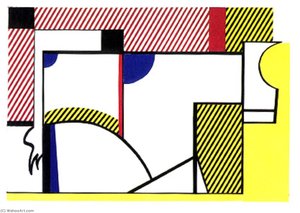
Написана вручну олією на полотні у вашому розмірі та рамі, виготовлена на замовлення нашими художниками. ( Замовити принт Купити цифрове зображення)
Обирайте з наших стандартних розмірів, що відповідають оригінальним пропорціям твору мистецтва.

Ви можете вказати власні розміри, щоб репродукція ідеально підійшла до конкретної рами або інтер'єру. Якщо вибраний вами розмір не відповідає пропорціям оригіналу, ми або обріжемо полотно, або доповнимо картину додатковими елементами, промальованими вручну. Цифровий макет буде надіслано вам на затвердження перед початком виробництва.
Зверніть увагу, що попередній перегляд на екрані не відображає фактичне обрізання або розширення зображення. Тільки макет точно покаже остаточну композицію.
Хоча ми можемо виготовити виріб у нестандартному розмірі, для збереження оригінальних пропорцій рекомендуємо обирати варіанти зі встановленого списку.
Доставка по всьому світу () за 3–4 тижні замість стандартних 5 тижнів. (14 Серпень). Без жодних компромісів у якості.


Crossover
Розмір репродукції
Nicholas Krushenick (1929-1999) stands as a singular figure in 20th-century American art, a painter who defied easy categorization and carved out his own unique visual language. Bridging the gap between Op Art’s calculated illusions, Pop Art’s embrace of popular culture, Abstract Expressionism’s raw emotion, Minimalism’s reductive forms, and Color Field painting’s immersive hues, Krushenick developed what is now widely recognized as “Pop Abstraction.” His work, characterized by bold colors, sharp black lines, and a playful yet unsettling energy, continues to intrigue and challenge viewers today. Born in the Bronx, New York City, Krushenick's artistic journey was shaped by humble beginnings, wartime service, and a relentless pursuit of formal innovation.
His early life instilled a pragmatic sensibility. Raised in a working-class family with Ukrainian roots, he dropped out of high school to enlist in the Army during World War II. This experience, coupled with his subsequent work constructing the Major Deegan Expressway, provided him with a grounding in construction and a keen eye for spatial relationships – elements that would later inform his distinctive painting style. Returning to art school through the GI Bill, he honed his skills at the Art Students League of New York and the Hans Hofmann School of Fine Art, absorbing influences from masters like Matisse and Turner while simultaneously forging his own path. Initially experimenting with a derivative Abstract Expressionist approach, Krushenick quickly moved beyond imitation, seeking a new visual vocabulary.
A pivotal moment in Krushenick’s career arrived in 1957 when he and his brother, John, established the Brata Gallery on Tenth Street in Manhattan's vibrant East Village. This wasn’t merely a commercial venture; it was a crucible for artistic experimentation, a space where emerging artists like Al Held, Ronald Bladen, Ed Clark, Yayoi Kusama, and George Sugarman could exhibit their work alongside established figures. The Brata Gallery became synonymous with the avant-garde of the era, fostering a spirit of collaboration and challenging prevailing art world norms. It was here that Krushenick began to develop his signature style – a deliberate departure from the gestural abstraction dominating the scene at the time.
By 1959, Krushenick transitioned from oil paint to Liquitex acrylics, a decision that dramatically altered the texture and vibrancy of his paintings. The immediate effect was a heightened sense of color saturation and a newfound freedom in applying bold black lines. These lines weren’t merely decorative; they were integral to the composition, defining shapes, creating visual tension, and ultimately flattening the picture plane – a key characteristic of Pop Abstraction. Critics like Vivien Raynor noted in 1965 that Krushenick was “beginning to look pop,” though his subject matter remained firmly rooted in abstraction, eschewing direct references to popular culture or recognizable objects. Instead, he drew inspiration from cartoon illustration and, surprisingly, the suggestive imagery of sexuality – often depicted through vulvar and penetrative forms, a provocative element that distinguished him from many of his contemporaries.
Krushenick’s artistic process was marked by both meticulous planning and an embrace of spontaneity. Initially, he relied on extensive preparatory drawings—essentially “maquettes”—to map out the composition before applying paint to the canvas. However, as his style evolved, he increasingly employed tape directly onto the surface, creating precise geometric forms and eliminating the visible brushstrokes that were characteristic of Abstract Expressionism. This technique, a deliberate distancing from the gestural approach of his predecessors, contributed to the smooth, almost machine-like quality of his paintings. As John Perreault observed, despite the “hard black, coloring-book lines,” Krushenick’s work possessed an “emotionally organic” sensibility, executed with “cool precision” and “great gusto.” His use of candy-cane stripes—bold, diagonal bands of color—became a defining motif, adding a dynamic energy to his compositions.
In the 1970s, Krushenick withdrew from the competitive New York art scene, dedicating himself to teaching at the University of Maryland, College Park. While he continued to paint during this period, his style underwent a significant transformation. The feathery, curvilinear forms of his earlier work gave way to grids and geometric patterns—a prescient reflection of the burgeoning technological landscape of the time. Corinne Robins described these paintings as evoking “the buzz of an IBM machine making crazy computations.” Throughout the 1980s and 1990s, Krushenick’s canvases became increasingly busy, yet his colors grew quieter, favoring razor-blade-like shapes over softer forms. Despite this shift, his work retained a remarkable vitality and a distinctive graphic intensity.
Nicholas Krushenick's influence extends far beyond the confines of his own oeuvre. His pioneering approach to Pop Art—combining bold color, geometric abstraction, and a playful sensibility—established him as a crucial figure in the development of contemporary art. His work is now held by over sixty major museums worldwide, a testament to its enduring appeal and artistic significance.

1929 - 1999 , США

Discover the power of Neo-Abstract art. Explore how bold geometric forms and high-impact visual energy are redefining modern design. Learn to curate sophisticated, high-energy spaces with the latest trends in contemporary abstraction and structural color.

Discover the high-impact world of Geometric Abstraction. From Cubist roots to modern urban trends, explore how bold shapes and colors redefine contemporary design. Elevate your space with expert art insights and custom-made abstract masterpieces.

Master the high-impact world of contemporary abstraction. Discover how bold colors, textures, and modern movements like Abstract Expressionism can transform your space with premium, high-energy art curated for the design-conscious professional.


Будьте в курсі останніх новин зі світу мистецтва, ексклюзивних пропозицій та ідей для декорування.
Розкажіть нам про свій проєкт, і наші експерти з мистецтва підготують для вас 3 персоналізовані пропозиції щодо творів мистецтва.
Дозвольте нам підібрати 3 варіанти спеціально для вас — безкоштовно!


 Переглянути в інтер'єрі
 Надіслати як листівку
 Поділитися
 Детальніше

 Завантажити
 Схожі експонати
 Рентгенівське дослідження
 Слайд-шоу
 Читати далі




































 Скляний варіант доступний лише для розмірів до 110 см