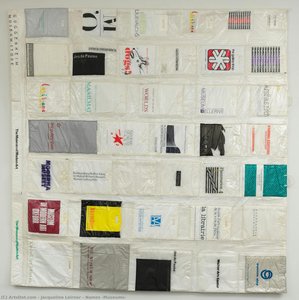
49.0 x 37.0 cm
 Fukuoka Art Museum
Написана вручну олією на полотні у вашому розмірі та рамі, виготовлена на замовлення нашими художниками. ( Купити принт Купити зображення)
Обирайте з наших стандартних розмірів, що відповідають оригінальним пропорціям твору мистецтва.

Ви можете вказати власні розміри, щоб репродукція ідеально підійшла до конкретної рами або інтер'єру. Якщо вибраний вами розмір не відповідає пропорціям оригіналу, ми або обріжемо полотно, або доповнимо картину додатковими елементами, промальованими вручну. Цифровий макет буде надіслано вам на затвердження перед початком виробництва.
Зверніть увагу, що попередній перегляд на екрані не відображає фактичне обрізання або розширення зображення. Тільки макет точно покаже остаточну композицію.
Хоча ми можемо виготовити виріб у нестандартному розмірі, для збереження оригінальних пропорцій рекомендуємо обирати варіанти зі встановленого списку.
Доставка по всьому світу () за 3–4 тижні замість стандартних 5 тижнів. (12 Серпень). Без жодних компромісів у якості.


Circle
Розмір репродукції
In the quiet, ink-washed landscapes of the late Edo period, few figures cast a shadow as profound yet as gentle as Sengai Gibon. A Rinzai Zen monk born in 1750, Sengai was not merely a practitioner of spiritual discipline but a master of visual wit, an artist who transformed the austere tenets of Buddhism into a playful, accessible dialogue with the world. While many of his contemporaries sought to capture the sublime through intricate detail or grandiosity, Sengai found the infinite within the infinitesimal. His life, spanning from the bustling port era of Nagata to the meditative seclusion of Shōfuku-ji temple in Fukuoka, was a continuous exercise in radical humility. He famously eschewed the trappings of high-ranking clergy, refusing the prestigious purple robes of his station to remain clothed in the simple black robe of an ordinary monk, a choice that mirrored the very essence of his brushwork: unpretentious, direct, and stripped of all unnecessary ego.
Sengai’s artistic journey was inextricably linked to his spiritual formation. Having spent much of his early life near Yokohama before dedicating himself to the monastic life at Shōfuku-ji—the first Zen temple established in Japan—his work became a vessel for making the often impenetrable teachings of the Rinzai sect palpable to the common person. He possessed a rare gift for zenga, or Zen painting, using the medium not as a decorative tool, but as a form of visual koan. His style was characterized by a deceptive simplicity; what appeared to be a spontaneous, almost childlike stroke often contained deep layers of philosophical complexity. To look upon a Sengai painting is to encounter a mind that viewed the universe through a lens of lightheartedness and self-mocking humor, yet remained anchored in a profound understanding of the void.
Perhaps no work encapsulates Sengai’s genius more perfectly than his most iconic creation, often referred to as Marusankakushikaku or "The Universe." In this breathtakingly minimalist composition, the vastness of existence is reduced to three fundamental shapes: a circle, a triangle, and a square. There is no title, no elaborate inscription—only the raw presence of form. Through these simple geometries, Sengai communicated the interconnectedness of all things, bridging the gap between spiritual truth and the mathematical harmony found in nature. This approach resonated deeply with the cultural zeitgeist of the Edo period, echoing the fascination with wasan, Japan’s native mathematics, where complex truths were often explored through elegant, geometric patterns.
His technique relied heavily on the mastery of sumi-e, the art of ink wash painting. By manipulating the density of black ink against the starkness of paper, he could evoke weight, movement, and breath with a single, decisive motion. His brushwork was never static; it possessed a rhythmic vitality that suggested the flow of qi or life force. In works such as his depictions of the Bodhisattva Monju riding a lion, Sengai utilized a narrative charm to convey complex moral lessons. He would often pair his imagery with inscriptions that cautioned against the pitfalls of excessive knowledge or rigid adherence to rules, reminding his viewers that true wisdom lies in an intuitive grasp of reality rather than the accumulation of intellectual data.
The historical significance of Sengai Gibon lies in his ability to democratize the profound. At a time when Zen teachings could feel distant or esoteric, he used humor, wit, and a "playful" approach to art to invite everyone—from wealthy merchants to humble children—into the fold of spiritual contemplation. He did not seek to impress with technical virtuosity but to enlighten through spontaneous expression. His legacy is found in the way he blurred the boundaries between calligraphy and painting, creating a new visual language that defied categorization. As he famously remarked, his work was neither purely calligraphy nor purely painting, yet it captured the essence of both.
Today, Sengai remains a towering figure in Japanese art history, celebrated for an aesthetic that anticipates modern minimalism while remaining deeply rooted in ancient tradition. His life serves as a testament to the power of simplicity and the enduring strength of a spirit that finds joy in the mundane. Through his ink-stained legacy, we are reminded that the most profound truths are often found not in the complex or the ornate, but in the humble circle, the steady triangle, and the grounded square.

1750 - 1837 , Japan


Будьте в курсі останніх новин зі світу мистецтва, ексклюзивних пропозицій та ідей для декорування.
Розкажіть нам про свій проєкт, і наші експерти з мистецтва підготують для вас 3 персоналізовані пропозиції щодо творів мистецтва.
Дозвольте нам підібрати 3 варіанти спеціально для вас — безкоштовно!


 Переглянути в інтер'єрі
 Надіслати
 Поділитися
 Деталі

 Завантажити
 Схожі експонати
 Рентгенівське дослідження
 Слайд-шоу
 Читати далі




































 Скляний варіант доступний лише для розмірів до 110 см