x

从与原作比例一致的预设尺寸中进行选择。

您可以输入自定义尺寸,以适配特定的画框或空间。如果所选尺寸与原图比例不符,我们将通过裁剪作品或添加手绘元素来扩展画面。数字样稿将在制作开始前发送给您确认。
请注意,屏幕预览无法准确反映实际的裁剪或扩展效果,只有样稿才能真实呈现最终的构图。
虽然我们提供定制尺寸服务,但为了保留原作比例,建议您从预设列表中选择尺寸。

Two Cheeseburgers, with Everything (Dual Hamburgers)
复制品尺寸
Claes Oldenburg’s “Two Cheeseburgers, with Everything,” created in 1962, stands as a cornerstone of Pop Art and a masterful demonstration of how sculpture can transform the mundane into the monumental. More than just a depiction of a hamburger—a symbol of American consumer culture—the piece embodies Oldenburg's signature approach: confronting grand artistic conventions with playful irreverence and celebrating the commonplace.
Born in Stockholm, Sweden, in 1929, Claes Oldenburg embarked on an artistic journey fueled by Surrealism and Dada’s questioning spirit. He honed his sculptural skills at Yale University before establishing himself as a prominent voice within the burgeoning Pop Art movement alongside fellow innovators like Jim Dine and Allan Kaprow. This collaborative ethos profoundly shaped his creative vision, resulting in groundbreaking installations that blurred the lines between art and architecture.
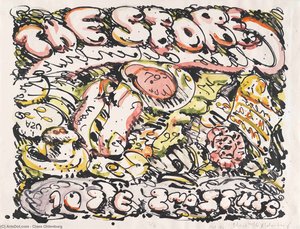
The genesis of “Two Cheeseburgers” occurred during Oldenburg’s ambitious project dubbed “The Store,” which debuted in December 1961 at a modest storefront on Manhattan's Lower East Side. Alongside fellow artists, including Lucas Samaras and Tom Wesselmann, Oldenburg presented three oversized soft sculptures—a hamburger, an ice cream cone, and a cake—each meticulously crafted from burlap soaked in plaster and painstakingly painted with enamel. This deliberate juxtaposition of scale challenged viewers’ perceptions of reality and underscored Oldenburg's fascination with the transformative potential of art.
Technically speaking, Oldenburg employed a technique that prioritized tactile experience alongside visual impact. The sculptures were constructed using chicken wire encased in plaster, creating a robust framework for layering textured surfaces—including lettuce, cheese slices, tomato wedges, and pickles—to mimic the appearance of a fully assembled cheeseburger. This meticulous attention to detail wasn’t merely decorative; it served as a deliberate provocation against the prevailing seriousness of Abstract Expressionism.
Beyond its formal qualities, “Two Cheeseburgers” carries significant symbolic weight. The oversized burger functions as an emblem of American prosperity and indulgence—a deliberately ironic commentary on societal values. Simultaneously, Oldenburg’s choice to represent a familiar food item within the context of monumental sculpture elevates it to the level of art, questioning hierarchies of taste and suggesting that beauty can be found in unexpected places. As Alfred H. Barr Jr., MoMA's founding director noted upon witnessing the installation, Oldenburg’s work was “brilliant,” marking a pivotal moment in redefining artistic boundaries.
The piece’s enduring legacy resides not only in its aesthetic achievements but also in its conceptual boldness—a testament to Oldenburg’s unwavering commitment to exploring humor and absurdity as avenues for artistic expression. Its inclusion in MoMA's collection solidified its place within the canon of 20th-century art, ensuring that “Two Cheeseburgers” continues to inspire contemplation on scale, materiality, and the role of art in shaping our understanding of the everyday world.

1929 - 2022
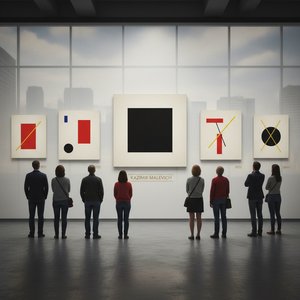
Explore the revolutionary art of Kazimir Malevich & his groundbreaking Suprematism movement. Discover the origins, core principles, and lasting impact of this pivotal force in modern abstract painting.
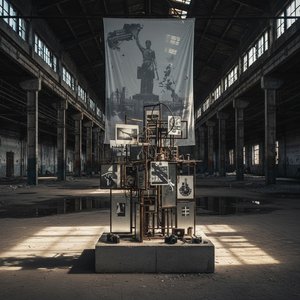
Explore the compelling work of Ukrainian artist Pavlo Makov, renowned for his conceptual photography deconstructing Soviet legacy. Discover his unique artistic process and investment potential.
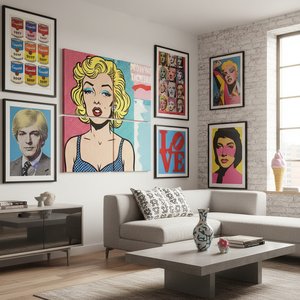
探索波普艺术十大杰作!安迪·沃霍尔、罗伊·利希滕斯坦等大师作品,定义现代艺术潮流。了解艺术史背后的故事,为您的客厅或卧室增添色彩与活力。BuyPopArt.com提供博物馆品质的艺术复制品,在线发现更多经典之作!
Discover how the digital age is transforming art patronage. Explore collecting trends, investment insights & expert guidance from BuyPopArt.com – museum-quality reproductions & custom artwork.


第一时间获取最新的艺术新闻、独家优惠及装饰灵感。
向我们介绍您的项目需求,我们的艺术专家将为您提供 3 个个性化的艺术品推荐。
由我们的专家为您精选 3 款心仪之作 —— 完全免费!


 购买版画
购买版画 分享
分享 分享
分享
 详情
详情

 下载
下载
 相似作品
相似作品 X射线
X射线 幻灯片播放
幻灯片播放


 展开详情
展开详情






































 玻璃选项仅适用于110厘米以下的尺寸。