PreviewPreview 购买版画 购买版画定制手绘复刻品 定制手绘复刻品 分享分享
详情详情 加入收藏 加入收藏 下载下载 相似作品相似作品 X射线X射线 幻灯片播放幻灯片播放

untitled (2575)

Discover 'untitled (2575)' by Franz Marc, a vibrant Expressionist painting featuring deer amidst swirling colors and snowy landscapes. Explore the beauty of nature through Marc's unique artistic lens.

德国表现主义先驱弗朗茨·马克的艺术世界!探索他的标志性动物绘画、鲜艳的色彩和深刻的精神主题。他是“蓝骑士”团体的联合创始人,作品充满象征意义,反映了对自然与人性的思考。

购买高分辨率增强版数字图像,其品质远超在线预览。

每一份文件都由我们的内部专家使用先进工具与专业的后期润色技术精心打造。我们确保每一张图像都具备卓越的清晰度、精准的色彩还原度以及细腻的细节表现。

最终文件将在 72 小时内通过电子邮件交付,并针对专业、编辑及印刷用途进行了优化。其品质与顶级设计工作室、出版社和画廊所信赖的标准完全一致。

数字图像

下载高分辨率文件,用于个人展示、打印及创意项目。

最终价格

$9.99

每份数字图像订单均包含

专业数字图像交付,品质保障

选择 BuyPopArt.com,您获得的不仅仅是一张图像——您收到的是经过专业级增强、精雕细琢的数字艺术作品,并享有满意保证。以下是您的订单中自动包含的所有内容:

shipping_icon
邮件快速送达

您的高分辨率数字图像文件将在下单后 72 小时内通过电子邮件发送给您 —— 即可立即使用。

canvas_icon
AI 增强型数字文件

您的艺术品经过专业优化,结合先进的 AI 技术与人工修饰,确保呈现极致的细节、清晰度与色彩准确度。

insurance_icon
终身免费重发服务

不小心删除了文件或找不到了?没关系——我们将随时为您免费重发。

tax_icon
无需进口费用,始终如一

即刻拥有您的艺术作品,无需支付任何关税、税费或运费——数字下载始终免税。

color_icon
色彩精准保证

我们通过专业工具与色彩管理技术,确保您的数字图像尽可能真实地还原原作色彩。

return_icon
60天满意保证

如果您对所购买的数字图像不满意,我们将在60天内为您进行修改或退还100%的款项——无需任何解释。

guarantee_icon
100% 退款保证

如果不满意?在收到数字文件后的60天内,我们为您提供全额退款——无需任何理由。

discount_icon
批量订单优惠

购买 3 张图片可享 10% 折扣 - 购买 5 张可享 15% 折扣 - 购买 10+ 张可享 20% 折扣。非常适合创意项目、画廊和机构使用。

作品概览

  • Artist: Franz Marc
  • Notable elements or techniques: Vibrant colors, swirls
  • Movement: Expressionism
  • Artistic style: Animal painting
  • Influences: Van Gogh

艺术知识测试

每道题只有一个正确答案。

题目 1:
Franz Marc is most closely associated with which art movement?
题目 2:
What are the primary subjects depicted in this painting?
题目 3:
The background of the painting features what distinctive pattern?
题目 4:
What impact did Vincent van Gogh have on Franz Marc's artistic style?
题目 5:
During which major historical event was Franz Marc drafted into the army?

藏品详情

A Symphony of Color and Spirit: Exploring Franz Marc’s Untitled Deer Painting

Franz Marc's untitled work featuring deer—designated as “untitled (2575)” in our collection—is a captivating example of the artist’s unique contribution to early 20th-century Expressionism. Painted sometime before his untimely death in 1916, this piece transcends a simple depiction of animals; it is a vibrant exploration of color, spirituality, and the interconnectedness of nature. The painting immediately draws the eye with its striking palette. Unlike traditional landscapes that might favor muted earth tones, Marc employs bold, almost otherworldly hues. Two deer dominate the foreground, one gazing upwards as if in contemplation, the other lowered in quietude. These are not rendered realistically; instead, they are imbued with a symbolic vibrancy, their forms defined by energetic brushstrokes and colors that seem to emanate from within. The snowy ground provides a cool contrast, enhancing the warmth of the deer’s coats and creating a visual tension that holds the viewer's attention. A smaller deer positioned to the right adds depth and reinforces the sense of a natural scene, while above them, a swirling pattern of blue and white evokes a dynamic sky or perhaps a spiritual realm—a common theme in Marc’s work.

The Blaue Reiter and a Search for Spiritual Harmony

To understand this painting fully, it's essential to consider its place within the context of *Der Blaue Reiter* (The Blue Rider), an influential group of artists co-founded by Marc and Wassily Kandinsky. Emerging in Munich around 1911, *Der Blaue Reiter* sought a spiritual dimension in art, rejecting materialism and embracing abstraction as a means to express inner truths. Marc believed that animals possessed a purity and innocence lost to humanity, making them ideal subjects for conveying these spiritual ideas. He moved away from representational accuracy, instead using color symbolically—blue often representing masculinity and spirituality, yellow femininity and joy, and red vitality and passion. While the specific symbolism within “untitled (2575)” remains open to interpretation, it’s clear that Marc wasn't merely painting deer; he was attempting to capture their essence, their connection to a larger cosmic order. His time spent studying Vincent van Gogh’s expressive use of color in Paris profoundly impacted his artistic development and is clearly visible in the emotional intensity of this piece.

Technique and Emotional Resonance

Marc’s technique in “untitled (2575)” is characterized by a dynamic interplay between form and color. The brushstrokes are visible, lending an energy and immediacy to the scene. He doesn't blend colors seamlessly; rather, he allows them to exist side-by-side, creating a sense of vibration and movement. This technique contributes significantly to the painting’s emotional impact. It isn’t a serene or idyllic landscape; there is a palpable tension, a feeling of longing or perhaps even premonition. The upward gaze of one deer suggests aspiration, while the downward focus of the other hints at introspection. The swirling background adds to this sense of unease and mystery. This painting invites contemplation—it doesn’t offer easy answers but instead encourages viewers to connect with their own emotions and spiritual beliefs.

Bringing Marc's Vision into Your Space

A reproduction of Franz Marc’s “untitled (2575)” can be a powerful addition to any interior. Its vibrant colors and dynamic composition make it a focal point, sparking conversation and adding a touch of intellectual sophistication. The painting’s themes of nature, spirituality, and emotional depth resonate universally, making it suitable for both residential and commercial spaces. Imagine this artwork gracing a living room, study, or office—its presence would undoubtedly inspire creativity and contemplation. For those seeking to infuse their surroundings with artistic energy and historical significance, a BuyPopArt reproduction offers an accessible way to experience the beauty and profound message of Franz Marc’s visionary work.

艺术家简介

Franz Marc (1880-1916): Pioneer of German Expressionism and the Soulful Vision of Color

Franz Moritz Wilhelm Marc, born on February 8, 1880, in Munich, was a painter whose brief but intensely focused career irrevocably altered the course of German Expressionism. His story is one of profound spiritual seeking translated into a vibrant visual language—a quest to understand the essence of life through the purity he found in the natural world, particularly within the animal kingdom. Initially influenced by his father, Wilhelm Marc, a landscape painter who instilled in him a love for observation and detail, young Franz’s artistic path wasn't immediately certain. He briefly contemplated theology, grappling with questions of faith and existence before ultimately dedicating himself to art at the Academy of Fine Arts in Munich—a decision driven by an innate desire to express inner truths through visual form.

Early Influences and Artistic Training

Marc’s formative years were marked by a fascination with Romantic literature and philosophy, mirroring the sensibilities of his time. He studied drawing first with Gabriel Hackl and then painting with Wilhelm von Diez at Munich University—receiving instruction from masters who championed naturalism and studio production. However, it was a transformative encounter with Vincent van Gogh’s paintings during visits to Paris that truly ignited his artistic vision. Van Gogh's expressive use of color and raw emotion resonated deeply with Marc—liberating him from conventional techniques and setting him on a path toward a more subjective and emotionally charged style. This influence is palpable in Marc’s early works, characterized by muted palettes and meticulous attention to detail—reflecting the prevailing artistic trends of his era. He sought to capture not merely what he saw but also *how* he felt—a deeply personal response to the world around him.

The Birth of Der Blaue Reiter and Artistic Collaboration

Marc’s artistic development wasn't solitary; it flourished within the dynamic context of Munich’s burgeoning bohemian scene. He experimented with various artist groups, including the Neue Künstlervereinigung München, before co-founding *Der Blaue Reiter* (The Blue Rider) in 1911 alongside Wassily Kandinsky—a pivotal moment that would define his artistic trajectory and solidify his place as a leader of German Expressionism. This wasn’t merely a group or an exhibition series; it was a philosophical and artistic revolution—a concerted effort to move beyond representational art and express inner spiritual truths through abstraction and symbolic color. The journal *Der Blaue Reiter* became a platform for disseminating these ideas, showcasing not only their own work but also that of fellow artists who shared his vision—artists like August Macke and Franz Kupffer—and exploring diverse cultural influences from folk art to primitive sculpture. Marc’s contribution during this period was instrumental in establishing the core tenets of Expressionism: prioritizing emotion over rational observation and utilizing simplified forms and bold colors to convey profound spiritual concepts.

Exploring Animal Symbolism and Color Theory

Marc's artistic style is immediately recognizable for its distinctive use of color—a conscious departure from naturalistic conventions that reflected his belief in art’s capacity to transcend the material realm. He eschewed descriptive color palettes, instead employing hues imbued with symbolic meaning—primarily blue (representing spirituality), yellow (signifying joy and femininity), and red (embodied violence and materiality). This systematic approach to color—informed by Kandinsky's theories of color psychology—was a hallmark of his oeuvre and underscored his conviction that art could communicate ideas beyond the literal level. His fascination with animals stemmed from their perceived purity and connection to nature—a perspective rooted in Romantic ideals and mirroring the broader cultural preoccupation with the sublime during his time. Marc’s paintings of horses, deer, foxes, and other creatures are not merely depictions of animals; they are symbolic representations of fundamental human values—innocence, harmony, courage, and vulnerability—expressed through simplified forms and vibrant colors.

Legacy and Enduring Influence

Marc's untimely death on March 4, 1916, during the Battle of Verdun—a tragic consequence of his involvement in World War I—marked a devastating loss for the art world but cemented his legacy as one of the most influential figures in modern art history. His work continues to inspire awe and contemplation today—demonstrating the enduring power of art to provoke emotion and engage intellect. Marc’s paintings are exhibited in prominent museums worldwide, including the Lenbachhaus in Munich—where a comprehensive collection showcases the breadth and depth of his artistic vision. He is remembered not only as a pioneer of German Expressionism but also as a visionary artist who dared to explore the profound connection between art, spirituality, and the natural world—a legacy that transcends time and continues to resonate with audiences across generations. His exploration of color symbolism and abstraction remains a cornerstone of artistic thought—a testament to his unwavering belief in art’s ability to illuminate the human condition and inspire transformative insight.
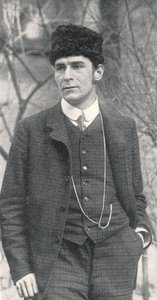
马克·弗朗茨

马克·弗朗茨

1880 - 1916 , 德国

基本信息

  • Artistic Movement Or Style: 德國表現主義
  • Artists Or Movements Influenced By This Artist: ['抽象藝術']
  • Artists Who Influenced This Artist:
    • 梵高
    • 德拉奧內
  • Date Of Birth: 二月八日, eighteen eighty 年
  • Date Of Death: 三月四日, nineteen sixteen 年
  • Full Name: Franz Moritz Wilhelm Marc
  • Nationality: 德國人
  • Notable Artworks:
    • 紅鹿
    • 藍馬塔
  • Place Of Birth: 慕尼黑,德國