A Glimpse into a Transforming World: Paul Cézanne’s “Landscape”
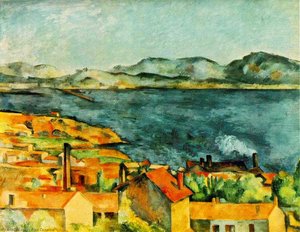
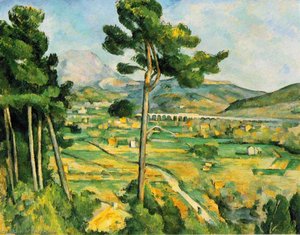
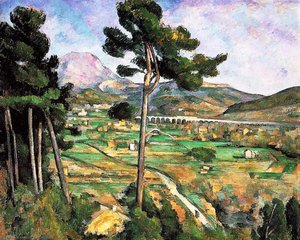
Paul Cézanne's "Landscape," painted in 1867, isn't merely a depiction of the Provençal countryside; it’s a pivotal moment crystallized on canvas – a silent declaration of artistic revolution. It represents Cézanne’s nascent journey from the established academic traditions of his time towards the radically innovative approaches that would soon dominate much of the 20th century. He didn't simply *paint* a landscape; he meticulously dissected and reconstructed it, driven by an intensely personal vision – a vision that would profoundly influence generations of artists who followed.
The scene itself is deceptively tranquil: a gently sloping field leading towards distant trees beneath a sky pregnant with dramatic clouds. Two sheep graze peacefully in the foreground, anchoring the composition with their quiet presence and offering a scale against which to measure the vastness around them. Subtle hints of birds flitting through the air add an almost ethereal vibrancy, suggesting the teeming life hidden within nature’s embrace. However, beneath this serene surface lies Cézanne's groundbreaking approach – a deliberate dismantling of traditional perspective and form. He wasn't striving for photographic realism; instead, he began to simplify shapes into fundamental geometric planes—a foreshadowing of his later explorations in Cubism that would reshape the very foundations of modern art.
The Birth of Modern Brushwork: A Broken Vision
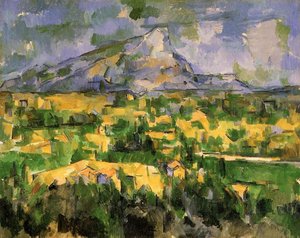
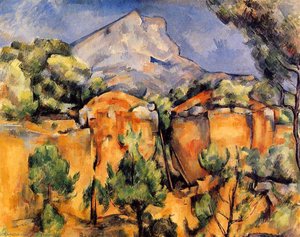
Cézanne’s technique is immediately recognizable – a deliberate departure from the smooth, blended brushstrokes favored by academic painters. He employed small, individual strokes—often described as “modulations”—building up texture and form with painstaking care. These weren't meant to create seamless transitions; rather, they were deliberately fragmented, emphasizing the very materiality of the paint itself. Observe how he doesn’t mix colors on his palette to achieve subtle gradations; instead, he applies them directly to the canvas in distinct patches – a mosaic of color allowing the viewer’s eye to blend them optically. This technique creates a vibrant and dynamic surface, full of visual energy—a testament to Cézanne's revolutionary approach.
Bridging Impressionism & The Dawn of Cubism
Cézanne emerged from a world steeped in Romanticism and Realism, initially influenced by the detailed landscapes of artists like Corot. However, his encounter with the Impressionists – particularly Camille Pissarro – proved transformative. He embraced their focus on light and color, but crucially, he rejected their emphasis on fleeting impressions. Cézanne sought to create paintings that were solid, enduring, and based on underlying geometric structures—a desire to capture not just a momentary sensation, but the very essence of form. This quest positioned him as a crucial bridge between the dissolving forms of Impressionism and the fragmented perspectives of Cubism – laying the groundwork for artists like Picasso and Matisse who would later acknowledge his profound influence.
Symbolic Resonance: A Meditation on Nature
While not overtly symbolic in a traditional sense, “Landscape” evokes a powerful sense of quiet contemplation and reverence for nature. The vastness of the sky and the solidity of the land suggest an enduring power—a reminder of humanity’s place within the grand scheme of things. The sheep, traditionally symbols of innocence and tranquility, contribute to this peaceful atmosphere. Yet, Cézanne's deliberate distortion of perspective and simplification of forms also introduce a subtle element of ambiguity – inviting us to question our own perceptions and engage with the artwork on an emotional and intellectual level. It’s not simply *about* landscape; it’s about how we perceive and construct our understanding of the world around us.
For Collectors & Interior Designers
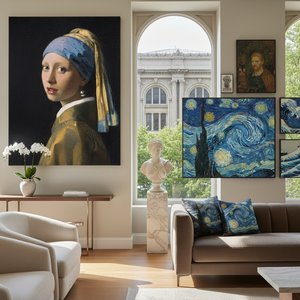
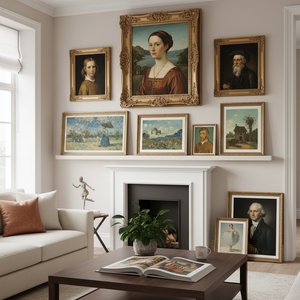
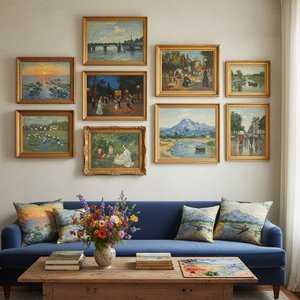
A reproduction of Cézanne's “Landscape” adds a touch of sophisticated artistry to any space, injecting a sense of timeless beauty and intellectual depth. Its muted color palette and serene subject matter complement a wide range of interior design styles – from traditional to contemporary. Owning a high-quality reproduction allows you to connect with one of the most influential artists of all time, investing in art history itself. The painting’s contemplative mood can create a calming and inspiring atmosphere in your home or office.



 效果预览
效果预览
 切换至印刷版
 分享
分享 分享
分享
 详情
详情

 下载
下载
 相似作品
相似作品 X射线
X射线 幻灯片播放
幻灯片播放

 展开详情
展开详情
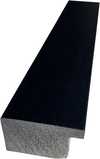
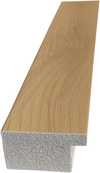
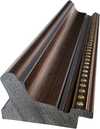
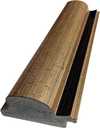

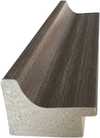
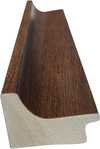
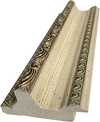

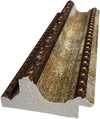
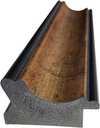
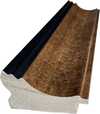
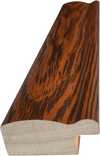


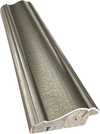





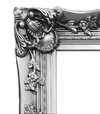
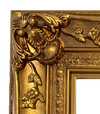
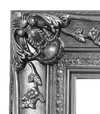


 玻璃选项仅适用于110厘米以下的尺寸。