A Dreamscape of Color and Myth: Exploring Paul Klee’s ‘Sirens Eggs’
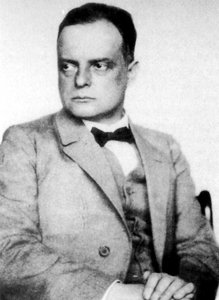
Paul Klee, born in Münchenbuchsee, Switzerland, in 1879, stands as a singular figure within the vibrant tapestry of twentieth-century art. His artistic trajectory wasn't merely about depicting the visual world; it was about distilling its essence into a language of simplified forms and evocative color—a pursuit that cemented his legacy as one of the most influential artists of his time.
- Early Influences: Klee’s formative years were steeped in musical appreciation, nurtured by his father's profession. This connection profoundly shaped his artistic sensibilities, recognizing parallels between musical arrangement and visual composition.
- Munich Years & Artistic Development: Studying painting from 1898 to 1900 in Munich instilled him with foundational knowledge of European art traditions while simultaneously fostering a burgeoning independence of spirit. His encounter with Wassily Kandinsky in 1911 marked a pivotal moment, propelling him into the orbit of the Blue Rider movement and its exploration of expressive abstraction.
The Tunisian Journey: Klee’s sojourn in Tunisia during World War I proved transformative, triggering an intense fascination with color—a preoccupation that would become central to his evolving artistic style. This immersion in vibrant hues fueled experimentation and ultimately propelled him toward a bolder visual vocabulary.
Style & Technique – Embracing Geometric Simplicity
From 1921 to 1931, Klee taught at Bauhaus, where he championed the principles of functional art and geometric abstraction. Subsequently, his role as instructor at Düsseldorf’s art academy solidified his commitment to artistic innovation. However, it was after 1931 that Klee truly unleashed his creative potential, adopting a distinctive approach characterized by large color grids—a technique born from a desire to capture the rhythm and harmony of visual experience.
- Color Grids: These grids served as a framework for exploring chromatic relationships, prioritizing clarity and emotional resonance over meticulous detail.
- Simplified Forms & Symbolic Resonance: Klee’s paintings prioritized simplified figurations and symbolic representations—elements that invited contemplation and encouraged viewers to engage with the artwork on an intuitive level.
Symbolism – Echoes of Mythological Lore
The title ‘Sirens Eggs,’ derived from Greek mythology, immediately establishes a connection to ancient narratives concerning alluring sea creatures who lured sailors astray with irresistible voices. This allusion speaks to themes of temptation, danger, and hidden beauty—concepts that permeate the artwork’s visual language.
The composition itself is deliberately understated, dominated by muted blues contrasted against expansive orange and yellow fields. Two prominent circular shapes at the top evoke celestial bodies, reinforcing a sense of serenity and hinting at an otherworldly dimension. Lines are used sparingly but effectively to delineate forms and contribute to the overall visual rhythm.
Emotional Impact & Artistic Legacy
‘Sirens Eggs’ embodies Klee's profound artistic vision—a testament to his ability to transform observation into emotive expression. The artwork transcends mere representation, inviting viewers into a contemplative space where color, form, and line converge to communicate an unspoken sentiment. It stands as a poignant reminder of Klee’s unwavering dedication to exploring the expressive potential of abstraction while simultaneously honoring the traditions of folk art.


 效果预览
效果预览
 购买手绘画作
 分享
分享 分享
分享
 详情
详情

 下载
下载
 相似作品
相似作品 X射线
X射线 幻灯片播放
幻灯片播放


 展开详情
展开详情






































 玻璃选项仅适用于110厘米以下的尺寸。