Buy print Buy printBuy Image Buy Image SendSend
DetailsDetails Add to favorites Add to favorites DownloadDownload SimilarsSimilars X-RayX-Ray DiaporamaDiaporama

Black Fire I

Experience Barnett Newman’s monumental ‘Black Fire I,’ a cornerstone of Color Field painting embodying spiritual depth and minimalist elegance—sold for $84.2M at Christie's.

Explore the profound abstract world of Barnett Newman (1905-1970), a key figure in Abstract Expressionism. Discover his iconic 'zips,' color field paintings, and spiritual explorations of human experience.

Hand Made Oil Reproduction

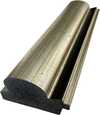
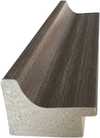
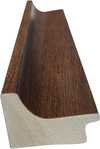
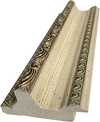
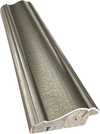
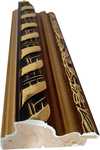
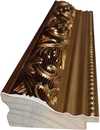
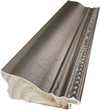
Hand-painted oil on canvas in your size and frame, made to order by our artists.
P118B $10
P118H $10
P118W $10
P438Z $10
P508JH $12
P508YH $12
P805H $10
P805Z $10
P919BZ $10
P919G $10
P919XJ $10
P959ZH $10
P968JZ $12
W106C $8
W218G $10
W218JH $8
W218Y $10
W307PJ $10
W316G $10
W316PJ $8
W316Y $10
W398PJ $8
W4111J $10
W500HY $15
W500JH $15
W692G $12
W849H $8
W940BG $15
W953PJ $8

Standard
custom
CM
INCH

Pick from our preset sizes that match the artwork's original proportions.

width
height

You may enter your own dimensions to fit a specific frame or space. If your selected size does not match the original image's proportions, we will either crop the artwork or extend the painting with additional hand-painted elements. A digital mockup will be sent for your approval before production begins.
Please note that the on-screen preview does not reflect the actual cropping or extension. Only the mockup will accurately show the final composition.
While custom sizes are available, we recommend selecting a dimension from the predefined list to preserve the original proportions.

Examples of what can be changed: Replace face with customer photo; Add pet (e.g., replace cat with dog); Include hidden message in background; Change background landscape or elements.
After order, BuyPopArt.com team will email client for instructions and provide a mockup preview

Worldwide Delivery () in 3/4 weeks instead of standard 5 weeks. (16 July). No compromise on quality.

why_choose_icon
Free Worldwide Express Shipping
why_choose_icon
High-Quality Linen Canvas
why_choose_icon
Full Shipping Insurance
why_choose_icon
Customs Tax Refund Guarantee
why_choose_icon
True Color Matching Guarantee
why_choose_icon
60-Day Return Policy (Defects Only)
why_choose_icon
100% Money-Back Guarantee
why_choose_icon
Bulk Discount Offer

Total Price

-

reproduction

Black Fire I

Reproduction Medium

Reproduction Size

-

Total Price

-

Quick Facts

  • Medium: Oil on Canvas
  • Dimensions: 289 x 213 cm
  • Artistic style: Minimalist
  • Notable elements or techniques: Vertical Zip Structure
  • Location: Private Collection
  • Influences:
    • Cubism
    • Matisse
  • Artist: Barnett Newman

Art Quiz

There is only one correct answer for each question.

Question 1:
What artistic movement is Barnett Newman’s Black Fire I primarily associated with?
Question 2:
Approximately how large is Black Fire I in terms of dimensions?
Question 3:
Newman’s technique in Black Fire I involves applying paint to create:
Question 4:
What is the dominant color scheme of Black Fire I?
Question 5:
Barnett Newman aimed to evoke what fundamental human emotions through his artwork?

Artwork Description

Black Fire I: A Monumental Statement in Abstract Expressionism

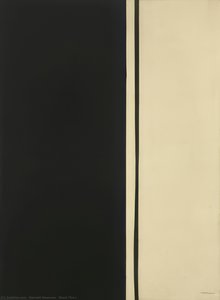
Barnett Newman’s Black Fire I (1963) stands as an undeniable pinnacle of Color Field painting within the broader Abstract Expressionist movement, embodying a profound exploration of form and emotion. Measuring an impressive 289 x 213 cm, this monumental canvas transcends mere dimensions; it asserts itself upon the viewer’s perception with unwavering simplicity and a weighty resonance that speaks to fundamental human experience.

Composition & Technique: The Power of Reduction

The artwork is dramatically divided into two distinct vertical panels. On the left, an intense black dominates—a monolithic presence—while the right panel offers a subtle counterpoint in soft beige – almost an off-white – creating a visual dialogue that underscores Newman’s commitment to reductive aesthetics. This deliberate separation isn't arbitrary; it’s a calculated gesture directing all attention to the interplay between these two powerful fields of color. Newman achieved flawlessly smooth, flat surfaces using meticulous technique—a process characterized by painstaking brushwork and an unwavering dedication to achieving maximum tonal purity. The resulting texture is remarkably subtle, prioritizing visual impact over tactile sensation.

Historical Context: A Pioneer of Abstraction

Barnett Newman (1905-1970) emerged as a central figure in the genesis of Abstract Expressionism, rejecting representational art and pursuing an entirely new artistic language. Influenced by Surrealist experimentation and captivated by the stylistic innovations of artists like Picasso and Matisse, Newman swiftly abandoned traditional conventions—scale, subject matter, and even artistic purpose—embracing instead the radical freedom offered by abstraction. His formative years were spent studying philosophy at City College of New York, where he honed his intellectual rigor alongside a burgeoning interest in visual art.

Symbolism & Emotional Impact: Beyond the Surface

The stark contrast between black and beige in Black Fire I invites multifaceted interpretations. It can be seen as representing duality—darkness versus light, stillness versus dynamism—a tension that mirrors the anxieties of postwar America. Newman consistently infused his work with spiritual themes, aiming to evoke an experience that transcends visual perception alone. The painting doesn’t proclaim its meaning; it presents a space for contemplation—a canvas upon which viewers project their own emotional responses.

Why Collectors & Designers Value This Work

For discerning art collectors, Black Fire I represents a cornerstone piece by one of the most influential artists of the 20th century. Its enduring legacy and significant place in art history solidify its position as a highly sought-after investment—a testament to Newman’s artistic vision and his profound contribution to the canon of modern art. Interior designers appreciate its versatility, recognizing that the artwork's minimalist aesthetic provides an elegant anchor for contemporary spaces – from sophisticated galleries to comfortable living rooms.

Display Recommendations: Creating the Right Atmosphere

To fully appreciate Black Fire I’s grandeur, consider positioning it within a room with ample space and diffused lighting—allowing its color fields to illuminate naturally. Pairing it with neutral tones—such as gray or cream—enhances its visual impact without competing for attention. The painting's inherent drama lends itself particularly well to environments designed for reflection and conversation, fostering an immersive experience that honors Newman’s artistic legacy.

Experience the timeless power of Barnett Newman’s vision. Black Fire I is more than just a painting; it’s an invitation to engage with fundamental questions of existence—rendered in breathtaking simplicity and profound emotional depth.


Artist Biography

A Pioneer of Abstract Expressionism: The Life and Art of Barnett Newman

Barnett Newman, born in 1905 in New York City to Jewish immigrant parents from Poland, emerged as a pivotal figure in the landscape of American art. His journey wasn’t one of immediate recognition but rather a slow burn of artistic exploration and philosophical inquiry that ultimately redefined the possibilities of abstract painting. Initially studying at the Art Students League and later at the City College of New York, Newman absorbed the influences of his time – the burgeoning Cubism of Picasso and the vibrant color palettes of Matisse were early touchstones. However, he soon felt constrained by these established modes of representation, sensing a need to forge a new visual language capable of expressing the anxieties and spiritual longings of the post-war era. He even destroyed much of his earlier representational work, a deliberate act signifying his commitment to an entirely new artistic path. This period of self-imposed creative destruction was crucial; it cleared the ground for the radical simplicity that would come to define his mature style.

The Birth of the “Zip” and the Expansion of Color

Newman’s breakthrough arrived with the development of what he famously termed "zips"—vertical bands of color that bisect vast fields of monochrome hues. These weren't merely lines; they were dynamic forces, asserting presence within the expansive emptiness of the canvas. His first solo exhibition in 1943 at Betty Parsons Gallery marked a significant step, though initial reactions were mixed. It was with works like Onement VI (1950-51) that Newman truly established his signature aesthetic. The painting’s sheer scale and austere composition—a single red zip dividing the canvas into fields of orange and red—were revolutionary. Vir Heroicus Sublimis (1958-60), a monumental work, further solidified this approach, its multiple zips creating a sense of spatial depth and evoking feelings of awe and contemplation. The “zip” wasn’t simply an aesthetic device; it was a structural element that simultaneously divided and unified the canvas, acting as a symbolic marker of human presence within the infinite. Newman's work also included pieces like "Rothko by Newman", showcasing his unique style in relation to another key figure in Abstract Expressionism.

Spirituality, The Sublime, and Philosophical Underpinnings

Beyond mere aesthetics, Newman’s art was deeply rooted in philosophical and spiritual concerns. He rejected the notion that painting should merely depict the external world, believing instead that it could serve as a vehicle for exploring profound existential questions. He sought to capture what he called “the sublime”—an experience of overwhelming grandeur and transcendence—through his abstract forms. This wasn’t about religious iconography but rather an attempt to evoke a primal sense of awe and wonder in the viewer. Newman was profoundly affected by the horrors of World War II and the dawn of the nuclear age, believing that traditional artistic conventions were inadequate for expressing the anxieties and moral complexities of this new era. His paintings became arenas for confronting these issues, offering not answers but rather spaces for contemplation and emotional resonance. He saw his work as a rejection of societal norms and an affirmation of individual freedom, striving to create art that was both intellectually rigorous and emotionally powerful.

Legacy and Influence on Modern Art

Barnett Newman’s impact on the development of Abstract Expressionism—alongside contemporaries like Mark Rothko and Jackson Pollock—is undeniable. He wasn't simply a painter; he was a theorist, a writer, and an advocate for a new kind of art that prioritized emotional truth over representational accuracy. His innovative use of color and form profoundly influenced subsequent generations of artists, particularly those working in Color Field painting and Minimalism. Artists who followed found inspiration in his reductionist approach and his emphasis on the experiential qualities of art. Today, Newman’s work is held in major museums worldwide, including the Museum of Modern Art in New York and the National Gallery of Art in Washington, D.C., cementing his place as a central figure in 20th-century art history. His paintings continue to challenge and inspire viewers, inviting them to engage with fundamental questions about human existence, spirituality, and the power of abstract form.

Further Exploration

  • Key Themes: Spirituality, The Sublime, Human Existence, Post-War Anxiety.
  • Influences: Henri Matisse, Pablo Picasso, Cubism, Surrealism.
  • Notable Works: Onement VI, Vir Heroicus Sublimis, “Rothko by Newman”, The Song of Orpheus.
  • Artistic Style: Abstract Expressionism, Color Field Painting, characterized by large fields of color and vertical "zips".
Barnett Newman

Barnett Newman

1905 - 1970 , United States of America

Quick Facts

  • Artistic Movement Or Style: Abstract Expressionism
  • Artists Or Movements Influenced By This Artist:
    • Color Field painting
    • Minimalism
  • Artists Who Influenced This Artist:
    • Henri Matisse
    • Pablo Picasso
  • Date Of Birth: January 29, 1905
  • Date Of Death: July 4, 1970
  • Full Name: Barnett Newman
  • Nationality: American
  • Notable Artworks:
    • Onement VI
    • Vir Heroicus Sublimis
    • Rothko by Newman
  • Place Of Birth: New York City, USA
Explore artworks organized by themes, styles, and characteristics.