x


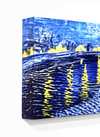
Hand-painted oil on canvas in your size and frame, made to order by our artists.
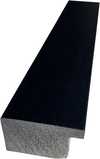
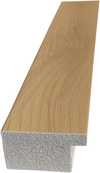
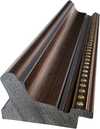
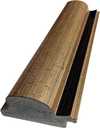

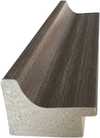
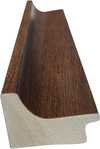
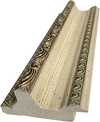
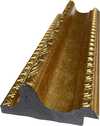
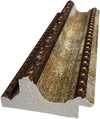
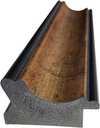
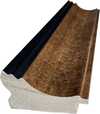
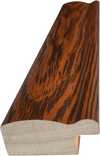
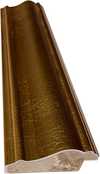
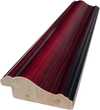
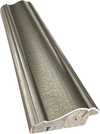
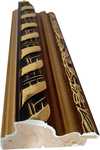

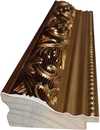
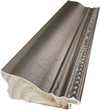
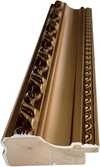
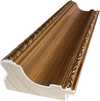
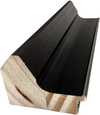
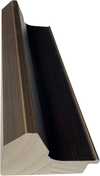
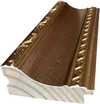
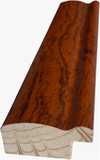
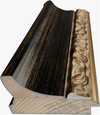
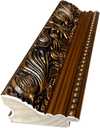
Pick from our preset sizes that match the artwork's original proportions.

You may enter your own dimensions to fit a specific frame or space. If your selected size does not match the original image's proportions, we will either crop the artwork or extend the painting with additional hand-painted elements. A digital mockup will be sent for your approval before production begins.
Please note that the on-screen preview does not reflect the actual cropping or extension. Only the mockup will accurately show the final composition.
While custom sizes are available, we recommend selecting a dimension from the predefined list to preserve the original proportions.
Worldwide Delivery () in 3/4 weeks instead of standard 5 weeks. (16 July). No compromise on quality.


Self-Portrait, Musée d'Orsay, Paris.
Reproduction Size
To stand before Camille Pissarro’s Self-Portrait from 1873 is to encounter not merely a likeness, but a profound moment of self-examination rendered in paint. The subject sits with an air of thoughtful contemplation, his long white beard and mustache lending him the gravitas of a seasoned philosopher or chronicler. His gaze, directed outward toward the viewer, feels both direct and deeply internalized; it is as if Pissarro has paused his own creative process to offer us a moment of unvarnished introspection. The composition is richly layered, moving beyond the central figure to include the subtle presence of another individual in the background and the quiet anchor of a potted plant on the left. These peripheral elements do not distract, but rather build an intimate stage upon which the artist’s inner life is displayed.
Technically, this work serves as a beautiful testament to Pissarro's mastery within the burgeoning movement of Impressionism. While his later works are famed for their vibrant depictions of rural and urban scenes bathed in light, here we see that characteristic touch—the application of paint using visible, short brushstrokes. These strokes do not aim for photographic perfection; rather, they build texture and capture the fleeting quality of light interacting with skin, fabric, and background surfaces. The palette, often featuring earthy tones alongside subtle highlights, allows the viewer's eye to wander across the surface, discovering depth where solid forms meet atmospheric suggestion. It is a painting that rewards close looking, inviting one to trace the path of the pigment.
Painted in 1873, this self-portrait arrives at a pivotal juncture in Pissarro’s career, a time when he was deeply engaged with the artistic currents defining modern Paris. The act of painting oneself was always an exercise in negotiation—how does one capture the essence of consciousness? Here, Pissarro seems to be grappling with his own identity as an artist amidst the rapid changes sweeping through art. The setting itself, with its simple chair and muted backdrop, strips away pretense, leaving only the man and his thoughts exposed for contemplation.
For those who wish to incorporate this quiet intensity into a modern living space or study, owning a high-quality reproduction of this Self-Portrait offers an unparalleled connection to Impressionist genius. It functions beautifully as a focal point, lending an air of cultivated history and thoughtful depth to any room. The blend of formal portraiture with the spontaneity of Impressionist technique makes it versatile—it speaks to both academic appreciation and casual aesthetic delight. It is more than decoration; it is a conversation starter, inviting every admirer to pause, look closely, and wonder what thoughts might be passing through the mind of an artist gazing back at us across the decades.
Camille Pissarro, a name synonymous with both the birth and evolution of Impressionism, was an artist whose life mirrored the shifting landscapes he so devotedly captured on canvas. Born Jacob Abraham Camille Pissarro on July 10, 1830, in Charlotte Amalie, St. Thomas – then part of the Danish West Indies, now the US Virgin Islands – his origins were as diverse and vibrant as the scenes that would later define his artistic vision. His father, a Portuguese Jewish merchant with French nationality, and his mother, from a French-Jewish family on the island, instilled in him a unique cultural heritage. This upbringing, somewhat unconventional due to familial complexities, fostered an early sensitivity to the world around him, a quality that would become the cornerstone of his artistic practice. His initial formal training at the Savary Academy near Paris provided a foundation in traditional techniques, but it was his return to St. Thomas and subsequent work as a cargo clerk that truly ignited his passion for observation. The bustling harbor, the vibrant local life, and the raw beauty of the Caribbean landscape became his first subjects, shaping an eye keenly attuned to the nuances of everyday existence.
Pissarro’s artistic journey was one of constant exploration and refinement. After a period assisting Danish painter Anton Melbye in Paris, he immersed himself in the works of masters like Gustave Courbet, Jean-Baptiste-Camille Corot, and Honoré Daumier – artists who championed realism and social commentary. He initially sought acceptance within the established art world, exhibiting at the Paris Salon, but soon found its constraints stifling. A pivotal moment came with his embrace of *plein air* painting—working outdoors directly from nature—a practice encouraged by Corot that would become central to Impressionism. This shift wasn’t merely technical; it represented a philosophical change, a desire to capture the fleeting effects of light and atmosphere, the very essence of a scene rather than its precise representation. He began experimenting with looser brushwork and brighter palettes, moving away from academic conventions towards a more subjective and expressive style. His early landscapes, though still grounded in realism, hinted at the revolutionary path he was about to forge. This period saw him grappling with finding his own voice amidst the burgeoning artistic ferment of Paris, a city undergoing rapid transformation that provided endless inspiration.
Camille Pissarro wasn’t simply *an* Impressionist; he was arguably its most steadfast and unifying force. Uniquely, he exhibited at all eight Paris Impressionist exhibitions between 1874 and 1886, acting as a stabilizing presence within a group often characterized by internal disagreements and individual ambitions. He wasn’t merely present—he actively encouraged his fellow artists, offering support, guidance, and a much-needed sense of camaraderie. This earned him the affectionate nickname “the father figure” of the movement. His commitment to artistic freedom and innovation was unwavering, even in the face of critical scorn and public indifference. He believed in the power of collective action and championed the idea of artists exhibiting independently from the Salon’s restrictive rules. Beyond his own work, Pissarro's influence extended to a younger generation of artists, including Paul Cézanne, Vincent van Gogh, and Paul Gauguin, whom he mentored and profoundly impacted. He provided them with not only technical advice but also a philosophical framework for their artistic explorations. His willingness to experiment led him briefly into Neo-Impressionism, influenced by Georges Seurat and Paul Signac’s pointillist techniques, before ultimately returning to a more personal style that blended his earlier influences with new discoveries.
Pissarro's artistic output was remarkably diverse, yet consistently focused on the world around him. He is celebrated for his depictions of both rural and urban landscapes, often portraying scenes of everyday life—peasants working in fields, bustling Parisian streets, quiet village squares. His paintings weren’t simply picturesque views; they were social commentaries, reflecting his deep empathy for the working class and his commitment to depicting their lives with dignity and respect.
His later works, particularly those created during periods of political unrest or personal hardship, often carry a sense of melancholy and social critique. Pissarro’s legacy extends far beyond his beautiful paintings. He was a champion of artistic freedom, a mentor to generations of artists, and a pioneer in the development of modern art. His commitment to *plein air* painting revolutionized landscape art, while his willingness to experiment with different styles demonstrated his intellectual curiosity and unwavering dedication to his craft. Today, his works are held in major museums worldwide, continuing to inspire and captivate audiences with their honesty, beauty, and profound humanity. He remains a celebrated figure whose contributions continue to be studied and appreciated for their enduring relevance. Camille Pissarro’s art is not merely a record of the world as it was; it is a testament to the power of observation, empathy, and artistic innovation.
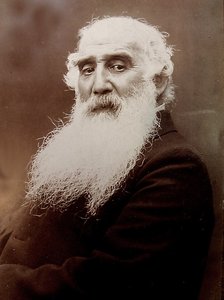
1830 - 1903 , France
Journey through 18th & 19th century art! Explore iconic masterpieces by Monet, Van Gogh & more. Discover the stories behind these timeless paintings and find museum-quality reproductions for your home at BuyPopArt.com.

Explore the fascinating intersection of Impressionistic Realism! Discover how 19th-century artists balanced subjective perception with objective representation, revolutionizing art history. Learn about key techniques & masters.

Discover the captivating life & art of Jorge Apperley (George Owen Wynne Apperley). Explore his stunning portraits, Spanish influences, and legacy in 19th-century equestrian painting. Expert insights for collectors.
Delve into the world of Francisco Goya with BuyPopArt. Explore 25 iconic paintings – from 'The Third of May' to his haunting Black Paintings. Discover the stories, techniques & emotions behind these Spanish masterpieces. Find museum-quality art reproductions for your home at BuyPopArt.com!
Explore the captivating world of Alonzo Chappel, a master of 19th-century American historical painting. Discover his iconic works, Romantic style & lasting legacy. Learn about collecting Chappel's art today!


Stay updated with the latest art news, exclusive offers, and decoration ideas.
Tell us about your project and our art experts will provide you with 3 personalized art suggestions.
Let Us Curate 3 Options Just for You - Free!


 Buy print
 Send
Send Share
Share
 Details

 Download
 Similars
 X-Ray
X-Ray Diaporama

 Read More
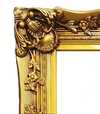
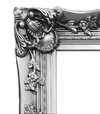
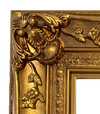
 Glass option is only available in size under 110 CM