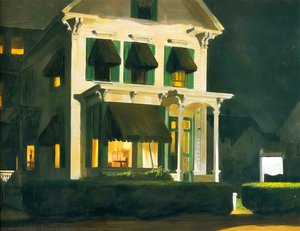
Contemporary Realism
 1922
1922 20.0 x 25.0 cm
 Smithsonian American Art Museum
Museum-quality giclée or canvas print with fast production and flexible finish options. ( Buy Hand Made Painting Buy Image)





























Pick from our preset sizes that match the artwork's original proportions.

You may enter your own dimensions to fit a specific frame or space. If your selected size does not match the original image's proportions, we will either crop the artwork or extend the image with a mirrored or solid-fill edge. A digital mockup will be sent for your approval before production begins.
Please note that the on-screen preview does not reflect the actual cropping or extension. Only the mockup will accurately show the final composition.
While custom sizes are available, we recommend selecting a dimension from the predefined list to preserve the original proportions.
Worldwide Delivery () in 2 weeks instead of standard 4/5 weeks. (19 August)


The Cat Boat
Reproduction Size
Edward Hopper's “The Cat Boat,” created in 1922, stands as a quintessential emblem of American Modernism—a deceptively simple scene imbued with profound psychological depth. More than just depicting a sailboat gliding along the New England coast, it’s a masterful distillation of Hopper’s signature style: realism tempered by an unsettling stillness that invites contemplation and subtly underscores themes of isolation and melancholy.
The artwork's composition centers around the sailboat itself—a dominant presence in the foreground—whose angled sail creates a dynamic diagonal line, pulling the viewer’s eye across the canvas. A smaller boat appears in the background to provide context and subtly heighten the sense of distance. Hopper skillfully employs etching techniques, utilizing hatching and cross-hatching extensively to render textures – from the rough surface of the water to the solidity of the boat's structure—achieving remarkable tonal variation without resorting to color.
The diffused lighting contributes significantly to the artwork’s mood. Soft shadows and highlights suggest an overcast day, avoiding harshness and emphasizing Hopper’s preference for capturing atmospheric conditions that heighten emotional resonance. Careful attention to perspective—overlapping elements and tonal gradations—creates a convincing illusion of depth, grounding the viewer in the landscape while simultaneously conveying a feeling of detachment. The figures aboard the sailboat are rendered with minimal detail, almost as if viewed from afar, furthering this sense of isolation.
Created during a period of rapid urbanization and social upheaval in America—the aftermath of World War I— “The Cat Boat” reflects Hopper's fascination with the quiet corners of modern life. He was returning from Paris after his artistic studies, where he had absorbed influences from Impressionism and Cubism, yet he steadfastly adhered to realism as a means of conveying emotion and capturing the essence of human experience. The etching medium itself—chosen by Hopper in response to challenges faced by artists during this era—underscores his commitment to meticulous observation and precise execution.
Ultimately, “The Cat Boat” transcends its visual description; it evokes a powerful emotional response. The image speaks to the human desire for connection amidst solitude, capturing a fleeting moment of leisure that simultaneously conveys a sense of melancholy and contemplative awareness. Hopper’s masterful use of light and shadow—combined with his understated compositional choices—transforms what appears as a straightforward seascape into an enduring symbol of American Modernism's preoccupation with psychological nuance.

1931 - 1967 , United States of America

Explore the profound depth of American Realism. From the gritty Ashcan School to poignant social landscapes, discover how masters captured the raw soul of a nation through evocative oil paintings and timeless art history.


Stay updated with the latest art news, exclusive offers, and decoration ideas.
Tell us about your project and our art experts will provide you with 3 personalized art suggestions.
Let Us Curate 3 Options Just for You - Free!


 Preview
 Send
Send Share
Share
 Details

 Download
 Similars
 X-Ray
X-Ray Diaporama
 Read More







 Glass option is only available in size under 110 CM