Acrylic On CanvasWallArtExpressionist Nature
 1922
1922 47.0 x 35.0 cm
 MAM Rio
Museum-quality giclée or canvas print with fast production and flexible finish options. ( Buy Hand Made Painting Buy Image)





























Pick from our preset sizes that match the artwork's original proportions.

You may enter your own dimensions to fit a specific frame or space. If your selected size does not match the original image's proportions, we will either crop the artwork or extend the image with a mirrored or solid-fill edge. A digital mockup will be sent for your approval before production begins.
Please note that the on-screen preview does not reflect the actual cropping or extension. Only the mockup will accurately show the final composition.
While custom sizes are available, we recommend selecting a dimension from the predefined list to preserve the original proportions.
Worldwide Delivery () in 2 weeks instead of standard 4/5 weeks. (19 August)


[Lady
Reproduction Size
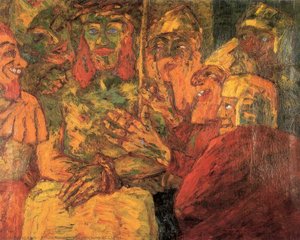
Emil Nolde's "Lady," painted in 1922, isn’t merely a portrait; it’s a distilled essence of introspection and subtle power. Executed in watercolor on paper, the work immediately possesses a captivating vintage quality – a delicate softness that belies the profound emotional depth contained within its simple composition. The painting depicts a woman, her features rendered with an almost hesitant delicacy, yet imbued with a remarkable stillness. Her gaze, directed slightly off-center, invites the viewer into a private world, fostering a sense of intimate observation rather than straightforward representation.
Nolde’s style at this period – roughly midway through his career – is characterized by an expressive use of color and a willingness to depart from photographic realism. He wasn't interested in capturing a likeness; instead, he sought to convey mood and feeling. The palette here is restrained yet luminous: muted blues and greens dominate, punctuated by the warm blush of her dress and the delicate pink of a flower nestled within her hair. This careful orchestration of color contributes significantly to the painting’s overall atmosphere – one of quiet contemplation and understated elegance.
To understand “Lady,” it's crucial to situate it within the broader context of Nolde’s artistic development. He was a key figure in Die Brücke (The Bridge), an early German Expressionist group that rejected academic traditions in favor of subjective experience and emotional intensity. However, unlike some of his fellow Brücke members, Nolde retained a strong connection to folk art – particularly the expressive power of primitive masks and carvings from his native Schleswig-Holstein. This influence is evident in the painting’s simplified forms and its avoidance of overly detailed rendering.
Furthermore, Nolde's early life profoundly shaped his artistic vision. Born Hans Emil Hansen into a family deeply rooted in rural traditions and religious beliefs, he carried with him a sense of connection to the natural world and a reverence for the spiritual. This is subtly reflected in the painting’s serene atmosphere and its suggestion of timelessness – as if the subject exists outside of conventional time and place.
The flower in the woman's hair, a delicate pink bloom, carries significant symbolic weight. It represents beauty, fragility, and perhaps even remembrance. Its placement is deliberate, drawing attention to her face and subtly enhancing the sense of intimacy. The slight tilt of her head, combined with her averted gaze, creates an air of mystery – we are left wondering about her thoughts and feelings. Is she lost in contemplation? Does she hold a secret? Nolde deliberately avoids providing definitive answers, allowing the viewer to project their own interpretations onto the image.
The woman’s posture is remarkably relaxed, yet there's an underlying tension—a quiet strength that suggests resilience. She isn’t passively receiving; she is actively observing, holding herself with a dignified composure. This subtle interplay of vulnerability and fortitude makes “Lady” a compelling study in human character.
BuyPopArt offers meticulously crafted hand-painted reproductions of Emil Nolde’s "Lady," ensuring that the painting's delicate beauty and emotional resonance are faithfully preserved. Each reproduction is created by skilled artists using archival-quality materials, guaranteeing its longevity and authenticity. Whether you seek a stunning addition to your art collection or a unique piece for your interior design scheme, our reproductions provide an exceptional opportunity to experience the power and allure of this iconic work. The original’s intimate scale – 47 x 35 cm – is perfectly replicated, allowing you to bring Nolde's evocative portrait into your space with remarkable fidelity.
Emil Nolde, a renowned German-Danish painter, was born Hans Emil Hansen on August 7, 1867, in Nolde, Schleswig-Holstein, Germany. He came from a family with strong ties to rural life and religious beliefs, factors that would profoundly influence his artistic vision. Despite initial resistance from his parents, who preferred he pursue a more conventional career, Nolde relentlessly pursued his passion for art. He initially worked as a wood carver and furniture decorator before dedicating himself fully to painting in his late twenties.
Nolde’s artistic journey was marked by self-education and exploration. He traveled extensively, absorbing influences from various cultures and art forms. Early influences included Vincent van Gogh, Paul Gauguin, and traditional folk art – particularly the expressive power of primitive masks and carvings. These encounters sparked his interest in bold colors, simplified forms, and emotionally charged subject matter. He initially experimented with Realism and Impressionism but quickly moved towards a more subjective and expressive style.
In 1905, Nolde co-founded Die Brücke (The Bridge), a pivotal group of German Expressionist artists. This collective sought to break away from academic traditions and express inner emotions through radical artistic experimentation. Nolde’s contribution to Die Brücke was significant; his intense use of color and distorted forms pushed the boundaries of representation. However, he maintained a somewhat independent path within the group, often diverging in subject matter and stylistic approach.
Nolde’s oeuvre is characterized by several recurring themes: religious scenes, landscapes, seascapes, and portraits. He was particularly fascinated by the power of masks – both as physical objects and symbolic representations of primal emotions. His artistic style is defined by:
Throughout his career, Nolde created a vast body of work. Some of his most celebrated paintings include:
Despite facing criticism and censorship during the Nazi regime – his work was deemed “degenerate” – Nolde continued to paint in secret. He produced a significant body of watercolor paintings during this period, demonstrating his unwavering commitment to artistic expression.
Emil Nolde’s innovative use of color and expressive brushwork profoundly influenced generations of artists. His work bridged the gap between traditional representational art and the abstract movements that followed. He remains a central figure in the history of German Expressionism, celebrated for his emotional intensity, bold experimentation, and enduring artistic vision. His legacy continues to inspire artists and art lovers worldwide.

1867 - 1956 , Germany

Journey through 10 legendary watercolor masterpieces by Sargent, Turner & Homer! Explore iconic landscapes, portraits & floral art that redefined history. Find museum-quality reproductions and curated decor ideas at BuyPopArt.com.

Explore the captivating world of watercolor painting! Discover its rich history, essential techniques, influential artists & collecting tips. A comprehensive guide for art enthusiasts from BuyPopArt.

Explore the captivating history of watercolor painting, from ancient techniques to modern masters like Kandinsky & Blake. Discover essential artists, collecting tips & the emotional power of this luminous medium. Expert insights for art enthusiasts.

Explore the captivating world of watercolor painting! Discover its rich history, essential techniques, influential artists & collecting tips from art experts. A comprehensive guide for enthusiasts.

Explore the captivating world of watercolor painting! Discover its rich history, essential techniques, influential artists, and collecting tips. A comprehensive guide for art enthusiasts.


Stay updated with the latest art news, exclusive offers, and decoration ideas.
Tell us about your project and our art experts will provide you with 3 personalized art suggestions.
Let Us Curate 3 Options Just for You - Free!


 Preview
 Send
Send Share
Share
 Details

 Download
 Similars
 X-Ray
X-Ray Diaporama
 Read More







 Glass option is only available in size under 110 CM