

Hand-painted oil on canvas in your size and frame, made to order by our artists. ( Buy Print Buy Image)
Pick from our preset sizes that match the artwork's original proportions.

You may enter your own dimensions to fit a specific frame or space. If your selected size does not match the original image's proportions, we will either crop the artwork or extend the painting with additional hand-painted elements. A digital mockup will be sent for your approval before production begins.
Please note that the on-screen preview does not reflect the actual cropping or extension. Only the mockup will accurately show the final composition.
While custom sizes are available, we recommend selecting a dimension from the predefined list to preserve the original proportions.
Worldwide Delivery () in 3/4 weeks instead of standard 5 weeks. (15 August). No compromise on quality.


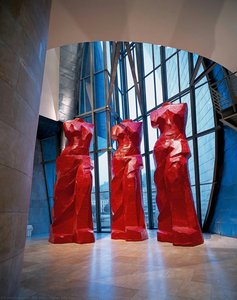
Bodice
Reproduction Size

Born amidst the profound historical weight of Hiroshima in 1938, Issey Miyake emerged as a visionary who would forever alter the silhouette of modern fashion. His journey was not merely one of aesthetic pursuit but a deep, philosophical exploration of the relationship between the human form and the materials that drape it. After honing his sensibilities through studies that bridged the gap between traditional Japanese aesthetics and Western structuralism, Miyake moved to Tokyo, where early professional encounters with designers like Guy Laroche began to shape his burgeoning identity. His subsequent voyage to Paris in 1960 served as a transformative crucible; there, amidst the avant-garde energy of Pierre Cardin and Christian Dior, he absorbed the complexities of European couture while maintaining a steadfast commitment to his Japanese roots.
Miyake’s design philosophy was never confined by the traditional boundaries of a garment. Instead, he viewed clothing as a dynamic medium for technological experimentation. He sought to move away from the restrictive, structured tailoring of the past, favoring instead a sense of freedom, movement, and comfort. This pursuit led to his most iconic contribution to the sartorial world: the mastery of pleating. By utilizing innovative heat-treatment processes on fabric, he created garments that possessed an organic, sculptural quality—pieces that could expand, contract, and breathe alongside the wearer. His work became a dialogue between the static nature of textile and the kinetic energy of the human body, making his clothing feel less like a costume and로 more like a second, more expressive skin.
The brilliance of Miyake lay in his ability to marry ancient craftsmanship with futuristic technology. He was a pioneer of the A-POC (A Piece of Cloth) concept, a revolutionary method that utilized computer-aided design and knitting technology to create garments from a single continuous tube of fabric, minimizing waste and maximizing structural integrity. This approach reflected a profound respect for the lifecycle of materials and an avant-garde spirit that anticipated the sustainable movements of the modern era. His collections often featured bold, rhythmic patterns and vibrant colors that paid homage to Japanese cultural motifs while remaining resolutely contemporary.
His achievements were recognized globally by the most prestigious institutions in fashion and art. Throughout his illustrious career, he was honored with the Neiman Marcus Award in 1996 and the CFDA Award in 1997, cementing his status as a titan of the industry. His work transcended the runway to enter the hallowed halls of museums, with exhibitions at the Metropolitan Museum of Art in New York showcasing his ability to bridge the gap between wearable art and high fashion. Notable collections, such as his celebrated "Dress Dress" series, continue to be studied for their intricate folds and structural complexity, preserved in institutions like the Powerhouse Museum in Sydney.
The historical significance of Issey Miyake extends far beyond the garments he produced. He inspired a generation of designers to view textiles not as passive surfaces, but as active participants in the design process. By integrating technology into the very fiber of his creations, he paved the way for the digital revolution in fashion. His legacy is defined by several key pillars:
Though he passed away in 2022, the spirit of Issey Miyake remains vibrant in every fold and pleat of his enduring work. He did not just design clothes; he designed a new way for humanity to inhabit space through fabric. His life stands as a testament to the power of innovation when tempered by a deep respect for tradition and an unwavering curiosity about the future.

1938 - 2022 , Japan

Step beyond the canvas with our expert trend forecast on modern 3D sculpture and high-impact art. Discover how texture, depth, and material innovation are redefining contemporary interiors for the bold collector.


Stay updated with the latest art news, exclusive offers, and decoration ideas.
Tell us about your project and our art experts will provide you with 3 personalized art suggestions.
Let Us Curate 3 Options Just for You - Free!


 Preview
 Send
Send Share
Share
 Details

 Download
 Similars
 X-Ray
X-Ray Diaporama


 Read More




































 Glass option is only available in size under 110 CM




![Dress [Left]\nDress [Right]](/media/artworks/images/thumbnails/17/0e/170ed909a3294f978bce47409f9a17ed.jpg)


