Museum-quality giclée or canvas print with fast production and flexible finish options. ( Switch to hand made Painting Switch to Image)





























Pick from our preset sizes that match the artwork's original proportions.

You may enter your own dimensions to fit a specific frame or space. If your selected size does not match the original image's proportions, we will either crop the artwork or extend the image with a mirrored or solid-fill edge. A digital mockup will be sent for your approval before production begins.
Please note that the on-screen preview does not reflect the actual cropping or extension. Only the mockup will accurately show the final composition.
While custom sizes are available, we recommend selecting a dimension from the predefined list to preserve the original proportions.
Worldwide Delivery () in 2 weeks instead of standard 4/5 weeks. (11 August)


Bamboo frame
Reproduction Size
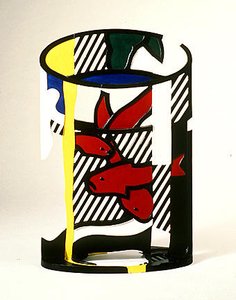
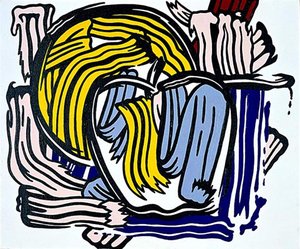
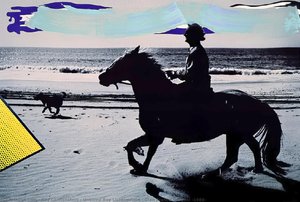
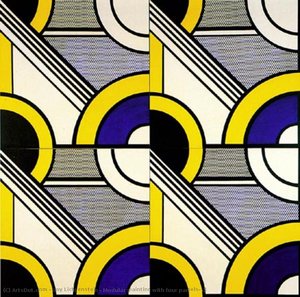
Roy Lichtenstein’s “Bamboo Frame,” painted in 1984, is more than just a depiction of a red curtain with yellow stripes; it’s a potent distillation of the Pop Art movement’s fascination with mass culture and its ability to elevate everyday objects into profound artistic statements. This large-scale artwork immediately commands attention with its vibrant color palette – the assertive red of the curtain juxtaposed against the energetic yellows, all set within a surprisingly delicate pink background. The inclusion of two figures, subtly positioned within the scene, adds an element of narrative and invites the viewer to consider their role as participant in this carefully constructed visual experience.
Created during a period of significant social and cultural change – the late 1980s saw a renewed interest in commercial art and popular imagery – “Bamboo Frame” exemplifies Lichtenstein's signature style. He achieved this iconic look through a meticulous process of serigraphy, or screen printing, a technique borrowed from the world of advertising and comic books. This method allowed him to build up layers of color with incredible precision, creating the characteristic hard-edged lines and Ben-Day dots that define his work. The deliberate flatness of the image, a rejection of traditional perspective, further emphasizes its connection to commercial art forms. The use of pink as a background is particularly noteworthy; it softens the boldness of the red and yellow, adding an unexpected layer of complexity and subtly referencing the decorative arts – a conscious nod to the artists Lichtenstein admired.
While seemingly simple in its composition, “Bamboo Frame” is rich with symbolic potential. The curtain itself can be interpreted as a barrier, a division between inside and outside, or perhaps even a representation of the art world’s perceived distance from the public. The two figures, rendered with Lichtenstein's signature simplified forms, are ambiguous; they could represent viewers observing the scene, or perhaps even the artist himself contemplating his subject matter. The title, “Bamboo Frame,” adds another layer of intrigue, suggesting a connection to traditional East Asian art and design – a subtle reference to Lichtenstein’s lifelong interest in Japanese aesthetics. The overall effect is one of controlled chaos, inviting contemplation on themes of perception, representation, and the relationship between high and low culture.
“Bamboo Frame” by Roy Lichtenstein remains a compelling work of art, demonstrating his mastery of Pop Art techniques and his ability to transform familiar imagery into enduring icons. This reproduction offers an exceptional opportunity to own a piece of art history, bringing the boldness and sophistication of Lichtenstein’s vision into your home or office. Its vibrant colors and dynamic composition make it a striking focal point in any space, while its historical significance ensures that it will continue to captivate viewers for generations to come.


1923 - 1997 , United States of America

Master your space with bold Pop Art. Discover trend-setting ways to use high-impact colors and iconic pieces like Lichtenstein to create visual harmony. Elevate your home with premium, hand-painted reproductions and custom art commissions designed for the modern collector.

Discover BuyPopArt.com's premium poster prints. Featuring 12-color pigment technology and museum-grade substrates, our versatile, high-fidelity prints offer vivid colors and archival quality for sophisticated modern decor. Elevate your space with professional art solutions.

Level up your space with bold Pop Art and Abstract prints. Discover how high-impact, trend-driven visuals transform modern interiors into ultimate chill zones. Master the art of curation with expert design tips for a high-energy, contemporary aesthetic.

Level up your space with high-impact lithography and graphic art. From Warhol-inspired pop prints to bold street art aesthetics, discover how to curate a visually powerful collection that defines your personal brand and urban style.


Stay updated with the latest art news, exclusive offers, and decoration ideas.
Tell us about your project and our art experts will provide you with 3 personalized art suggestions.
Let Us Curate 3 Options Just for You - Free!


 Preview
 Send
Send Share
Share
 Details

 Download
 Similars
 X-Ray
X-Ray Diaporama

 Read More







 Glass option is only available in size under 110 CM