Acrylic On CanvasWallArtPop Art
 1962Modern
 106.0 x 106.0 cm
Museum-quality giclée or canvas print with fast production and flexible finish options. ( Buy Hand Made Painting Buy Image)





























Pick from our preset sizes that match the artwork's original proportions.

You may enter your own dimensions to fit a specific frame or space. If your selected size does not match the original image's proportions, we will either crop the artwork or extend the image with a mirrored or solid-fill edge. A digital mockup will be sent for your approval before production begins.
Please note that the on-screen preview does not reflect the actual cropping or extension. Only the mockup will accurately show the final composition.
While custom sizes are available, we recommend selecting a dimension from the predefined list to preserve the original proportions.
Worldwide Delivery () in 2 weeks instead of standard 4/5 weeks. (12 August)


Brattata
Reproduction Size
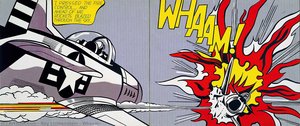
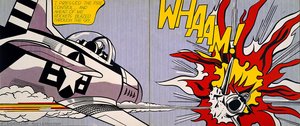
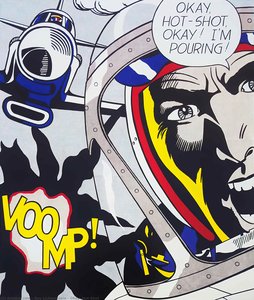
Roy Lichtenstein's “Brattata,” completed in 1962, stands as a cornerstone of Pop Art—a movement that irrevocably challenged artistic conventions and embraced imagery derived from popular culture. Measuring 106 x 106 cm and residing within the Tehran Museum of Contemporary Art’s collection, this oil on canvas painting transcends mere representation; it's an audacious reimagining of comic book aesthetics into a sophisticated form of visual art.
At its genesis lies DC Comics’ “All-American Men of War” #89, January–February 1962. Lichtenstein wasn't merely copying; he was actively interrogating the visual language of comics—a medium known for its bold lines, flat colors, and stylized narratives—transforming it into a statement of artistic ambition. The panel depicts a tense aerial combat scenario featuring a pilot battling enemy aircraft, capturing the dynamism and immediacy characteristic of comic book storytelling.
Lichtenstein’s masterful technique—the deliberate incorporation of Ben-Day dots—is central to “Brattata’s” impact. This method, borrowed from commercial printing processes, meticulously replicates the halftone shading found in comic books. Thick black outlines delineate figures and shapes with precision, while stylized shading contributes to a sense of depth without resorting to traditional perspective. The artist's intention was not simply to reproduce but to elevate the conventions of comics into the realm of fine art, questioning notions of artistic skill and originality.
Beyond its visual style, “Brattata” pulsates with narrative energy. Above the pilot’s helmet is a text balloon bearing the phrase "That was their mistake - because it gave me more targets than I could have shot at," encapsulating a moment of strategic calculation amidst the chaos of battle. The inclusion of onomatopoeia—the word “BRATTATA”—further amplifies the painting's dramatic impact, mirroring the sounds of gunfire and reinforcing its connection to comic book conventions.
“Brattata” isn’t merely a stylistic exercise; it reflects Lichtenstein’s own formative experiences as a United States Army pilot during World War II. Like other works from his aeronautical genre—including “Jet Pilot,” “Bratatat!,” and “Okay Hot-Shot, Okay!”—the painting embodies Lichtenstein's fascination with military imagery and his desire to explore themes of courage and conflict. The meticulous depiction of the gun sight and cockpit control panel by Russ Heath underscores Lichtenstein’s commitment to capturing realistic details while maintaining the distinctive aesthetic of comic art.

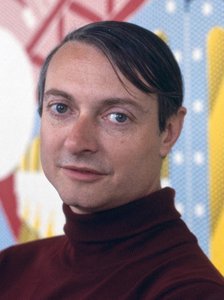
1923 - 1997 , United States of America

Master your space with bold Pop Art. Discover trend-setting ways to use high-impact colors and iconic pieces like Lichtenstein to create visual harmony. Elevate your home with premium, hand-painted reproductions and custom art commissions designed for the modern collector.


Stay updated with the latest art news, exclusive offers, and decoration ideas.
Tell us about your project and our art experts will provide you with 3 personalized art suggestions.
Let Us Curate 3 Options Just for You - Free!


 Preview
 Send
Send Share
Share
 Details

 Download
 Similars
 X-Ray
X-Ray Diaporama
 Read More







 Glass option is only available in size under 110 CM