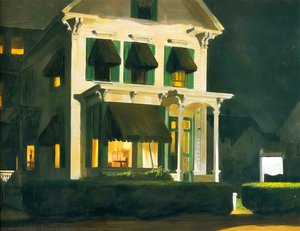
Muuseumikvaliteediga giclée- või kangasprint kiire tootmisega ja paindlikud viimistlusvõimalused. ( Lülita käsitsi maalatud版本le Vaata pilti)





























Vali meie eelmääratud suurused, mis vastavad teose algupärastele proportsioonidele.

Saate sisestada oma mõõdud, et need sobiks konkreetse raami või ruumi sisse. Kui valitud suurus ei vasta originaalteose proportsioonidele, lõigame teose ära või laiendame pilti peegeldatud või ühtlase servaga. Enne tootmisprotsessi algust saadetakse Teie kinnitamiseks digitaalne näidis.
Palun märka, et ekraanil kuvatav eelvaade ei kajasta tegelikku lõigamist või laiendamist. Ainult näidis kujutab täpselt lõplikku kompositsiooni.
Kuigi erimõõdu on saadaval, soovitame originaaproportsioonide säilitamiseks valida mõõt ette määratud nimekirjast.
Ülemaailmne tarne () 2 nädala jooksul, tavalise 4/5 nädala asemel. (10 august)


Manhattan Bridge Loop
Reproduktsiooni suurus
Edward Hopper’s “Manhattan Bridge Loop,” completed in 1928, isn't merely a depiction of a New York City street; it’s a masterful distillation of the anxieties and quiet contemplations characteristic of the Jazz Age. This iconic painting transcends its visual simplicity to deliver a profound statement about human experience within the sprawling metropolis.
The canvas captures an early morning scene overlooking Manhattan Bridge, bathed in diffused light that casts long shadows across the pavement. Hopper meticulously renders the architectural details – the brick building on the left and the towering skyscraper on the right – creating a palpable sense of urban scale. Two figures occupy the frame: a solitary man walking away from the bridge, seemingly absorbed in his own thoughts, and another person positioned near the bottom-right corner, gazing out at the cityscape.
Hopper employed a distinctive style rooted in realism but imbued with an emotional resonance that distinguishes it from straightforward observation. His palette is muted—primarily browns, grays, and rusty hues—reflecting the bleakness of the urban environment. The artist skillfully utilizes chiaroscuro – dramatic contrasts between light and shadow – to heighten the sense of isolation and emphasize the figures’ vulnerability against the immensity of the cityscape. Hopper's brushstrokes are deliberate and controlled, conveying a stillness that invites contemplation.
“Manhattan Bridge Loop” emerged during a period marked by significant social and cultural shifts following World War I. The painting reflects the disillusionment felt by many Americans grappling with the loss of traditional values and facing an increasingly impersonal urban landscape. Hopper’s work aligns with the broader artistic movement known as American Regionalism, which sought to portray the realities of everyday life in rural America and urban centers alike.
Beyond its visual representation, “Manhattan Bridge Loop” operates on a symbolic level. The solitary man embodies the pervasive feeling of alienation that permeated modern society—a yearning for connection amidst overwhelming anonymity. Hopper’s careful positioning of the figures encourages viewers to consider their own role in observing and experiencing the world around them. The bridge itself serves as a visual metaphor for transition, separation, and perhaps even escape from the pressures of urban life.
"Manhattan Bridge Loop" lingers in the mind long after viewing it. Hopper’s masterful use of light and shadow evokes a palpable sense of melancholy—a quiet acknowledgement of solitude and the complexities of human emotion. It's a painting that invites introspection, prompting viewers to confront questions about identity, purpose, and the relationship between individuals and their surroundings. This enduring appeal testifies to Hopper’s ability to capture not just what he saw but also what he felt.

1931 - 1967 , USA

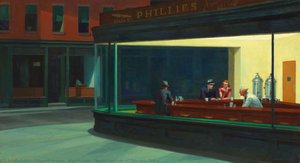
Explore the profound world of Edward Hopper's American realism. Discover the symbolism, themes & enduring legacy of this iconic artist – from 'Nighthawks' to his lesser-known masterpieces. Expert analysis and insights.

Explore the captivating work of Henry Marvell Carr, a pivotal figure in American Impressionism. Discover his evocative realism, war art, and cultural depictions – a journey through light, form, and legacy.

Explore 10 defining American Realism masterpieces – Hopper, Homer & more. Discover the stories behind these iconic paintings and bring timeless art to your home with BuyPopArt's museum-quality reproductions. Explore the full collection online.

Explore the revolutionary Ashcan School! Discover how artists like Henri & Sloan challenged tradition with gritty realism, capturing urban life in early 20th-century America. Learn about their impact on American art history.

Explore the powerful social commentary & artistic representation of American Realism. Discover key artists like Bellows & Sloan, and understand the movement's lasting impact on 20th-century art history.


Püsige kursis viimaste kunstiuudistega, eksklusiivsete pakkumistega ja sisustamisideetega.
Kirjeldage meile oma projekti ja meie kunstieksperdid pakuvad teile 3 isikupärast kunstiettepanekut.
Laske meil koostada just teile mõeldud 3 valikut – tasuta!


 Eelvaade
 Saada
Saada Jaga
Jaga
 Teave teose kohta

 Laadi alla
 Sarnased teosed
 Röntgenuuring
 Slaidietendus

 Loe lähemalt







 Klaasivalik on saadaval ainult suuruses kuni 110 cm