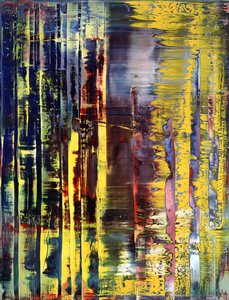
Acrylic On CanvasWallArtNeo-Expressionism
 1989
1989 200.0 x 240.0 cm
 MoMA - Museum of Modern Art
Acquérez une image numérique haute résolution et optimisée, d'une qualité bien supérieure à l'aperçu en ligne.
Chaque fichier est méticuleusement préparé par nos spécialistes internes à l'aide d'outils avancés et d'une retouche manuelle experte. Nous garantissons que chaque image possède une clarté exceptionnelle, une précision des couleurs irréprochable et un niveau de détail fin.
Le fichier final est livré par e-mail sous 72 heures, optimisé pour une utilisation immédiate dans des contextes professionnels, éditoriaux et d'impression. Il offre la même qualité de confiance que celle utilisée par les plus grands studios de création, éditeurs et galeries.
Téléchargez un fichier haute résolution pour votre usage personnel, l'impression et vos projets créatifs. ( Commander l'impression Commander la reproduction peinte à la main)
En choisissant BuyPopArt.com, vous n'obtenez pas seulement une simple image : vous recevez une œuvre numérique sublimée avec professionnalisme, conçue avec précision et accompagnée d'une garantie de satisfaction. Voici tout ce qui accompagne automatiquement votre commande :

Votre fichier d'image numérique haute résolution vous sera envoyé par e-mail sous 72 heures après votre commande — prêt à un usage immédiat.

Votre œuvre d'art bénéficie d'une optimisation professionnelle grâce à des outils d'IA avancés et une retouche manuelle, garantissant un niveau maximal de détail, de clarté et de fidélité chromatique.

Vous avez accidentellement supprimé ou perdu votre fichier ? Pas d'inquiétude — nous vous le renverrons gratuitement, quand vous le souhaitez.

Profitez de votre œuvre d'art instantanément sans frais de douane ni de livraison — les téléchargements numériques sont toujours exonérés de taxes.

Nous garantissons que votre image numérique reproduit les couleurs de l'original aussi fidèlement que possible grâce à des outils professionnels et une gestion rigoureuse des couleurs.

Si vous n'êtes pas satisfait de votre image numérique, nous la retoucherons ou vous rembourserons 100% sous 60 jours — sans poser de questions.

Pas satisfait ? Obtenez un remboursement intégral dans les 60 jours suivant la réception de votre fichier numérique — sans aucune question posée.

Achetez 3 images, économisez 10% - Achetez 5, économisez 15% - Achetez 10+, économisez 20%. Idéal pour les projets créatifs, les galeries et les agences.
Albert Oehlen's "Untitled," painted in 1989, isn’t merely a depiction of color; it’s an immersive exploration of the act of painting itself. This large-scale work, measuring a substantial 200 x 240 cm, immediately draws the viewer into a vibrant, almost chaotic field of pinks, yellows, and blues. Yet, beneath this initial impression of unrestrained exuberance lies a meticulously considered process – a testament to Oehlen’s radical approach to abstraction and his deliberate rejection of traditional artistic conventions.
The painting's style defies easy categorization. It leans heavily into the gestural qualities of Abstract Expressionism, particularly the work of Pollock, but with a crucial difference: Oehlen doesn’t aim for spontaneous, uncontrolled drips. Instead, he employs a system – a carefully calibrated layering of acrylic paint applied through a combination of brushing and spraying. This technique creates a surface that is both intensely textured and remarkably controlled. The squares, arranged in seemingly random patterns, aren't haphazard; they are the product of repeated application and subtle adjustments, suggesting an underlying structure beneath the apparent chaos.
Oehlen’s work emerged during a pivotal moment in German art history—the late 1970s and early 1980s, a period marked by a reaction against the prevailing Neo-Expressionist movement. Artists like Oehlen, Martin Kippenberger, and Georg Herold sought to dismantle the established hierarchies of the art world, questioning notions of originality, skill, and even beauty. Oehlen famously coined the term “bad painting” – not as an insult, but as a deliberate provocation. He embraced imperfections, mistakes, and the visible traces of his hand, arguing that the process of creation was more important than the finished product.
This philosophy is powerfully evident in "Untitled." The slightly uneven edges of the squares, the subtle variations in color saturation, and the evidence of brushstrokes all contribute to a sense of immediacy and authenticity. Oehlen isn’t striving for photographic realism or idealized beauty; he's presenting us with the raw materials of his artistic practice – the paint itself, the tools he uses, and the act of applying them to canvas.
While seemingly chaotic, “Untitled” is underpinned by a subtle sense of order. The grid-like arrangement of the squares creates a visual framework that anchors the composition. However, this structure isn’t rigid or imposed; it emerges organically from Oehlen's process. The repetition of shapes and colors suggests a system, while the variations within those patterns introduce an element of surprise and unpredictability.
Some art historians interpret the squares as representing the fragmented nature of modern experience – a world increasingly dominated by mass media, advertising, and consumer culture. The bright, synthetic colors evoke the vibrancy of billboards and posters, while the grid-like structure suggests the uniformity and standardization of contemporary society. Yet, Oehlen’s deliberate use of imperfections and gestural marks hints at a resistance to this homogenization, a desire to reclaim individuality and spontaneity.
"Untitled" stands as a cornerstone in Albert Oehlen's oeuvre, demonstrating his commitment to exploring the fundamental principles of painting. Reproductions capture much of the original’s energy and texture, offering an accessible way to experience this complex work. However, nothing truly replicates the immediacy and physicality of the original canvas. The subtle variations in color, the evidence of brushstrokes, and the overall sense of process are all crucial elements that contribute to the painting's unique character.
For collectors seeking a piece with historical significance and artistic depth, or for interior designers aiming to inject a vibrant, thought-provoking element into a space, an authentic reproduction of Albert Oehlen’s “Untitled” offers a compelling connection to one of the most innovative artists of our time. It's a painting that invites contemplation, challenges conventional notions of beauty, and celebrates the enduring power of the creative process.


1954 - , Allemagne


Restez informé(e) des dernières actualités artistiques, des offres exclusives et des idées de décoration.
Parlez-nous de votre projet et nos experts en art vous proposeront 3 suggestions d'œuvres personnalisées.
Laissez-nous sélectionner 3 œuvres rien que pour vous – Gratuit !


 Aperçu en situation
 Envoyer
 Partager
 Détails de l'œuvre

 Télécharger
 Articles similaires
 Radiographie
 Diaporama
 Lire la suite