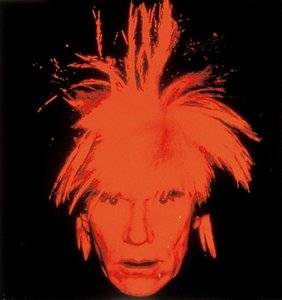
Acquérez une image numérique haute résolution et optimisée, d'une qualité bien supérieure à l'aperçu en ligne.
Chaque fichier est méticuleusement préparé par nos spécialistes internes à l'aide d'outils avancés et d'une retouche manuelle experte. Nous garantissons que chaque image possède une clarté exceptionnelle, une précision des couleurs irréprochable et un niveau de détail fin.
Le fichier final est livré par e-mail sous 72 heures, optimisé pour une utilisation immédiate dans des contextes professionnels, éditoriaux et d'impression. Il offre la même qualité de confiance que celle utilisée par les plus grands studios de création, éditeurs et galeries.
Téléchargez un fichier haute résolution pour votre usage personnel, l'impression et vos projets créatifs. ( Acheter l'impression Acheter la peinture faite à la main)
En choisissant BuyPopArt.com, vous n'obtenez pas seulement une simple image : vous recevez une œuvre numérique sublimée avec professionnalisme, conçue avec précision et accompagnée d'une garantie de satisfaction. Voici tout ce qui accompagne automatiquement votre commande :

Votre fichier d'image numérique haute résolution vous sera envoyé par e-mail sous 72 heures après votre commande — prêt à un usage immédiat.

Votre œuvre d'art bénéficie d'une optimisation professionnelle grâce à des outils d'IA avancés et une retouche manuelle, garantissant un niveau maximal de détail, de clarté et de fidélité chromatique.

Vous avez accidentellement supprimé ou perdu votre fichier ? Pas d'inquiétude — nous vous le renverrons gratuitement, quand vous le souhaitez.

Profitez de votre œuvre d'art instantanément sans frais de douane ni de livraison — les téléchargements numériques sont toujours exonérés de taxes.

Nous garantissons que votre image numérique reproduit les couleurs de l'original aussi fidèlement que possible grâce à des outils professionnels et une gestion rigoureuse des couleurs.

Si vous n'êtes pas satisfait de votre image numérique, nous la retoucherons ou vous rembourserons 100% sous 60 jours — sans poser de questions.

Pas satisfait ? Obtenez un remboursement intégral dans les 60 jours suivant la réception de votre fichier numérique — sans aucune question posée.

Achetez 3 images, économisez 10% - Achetez 5, économisez 15% - Achetez 10+, économisez 20%. Idéal pour les projets créatifs, les galeries et les agences.
Andy Warhol’s 1979 portrait of Truman Capote is more than just a likeness; it’s a distillation of celebrity, authorship, and the shifting cultural landscape of the late 20th century. Captured in stark black and white, with only the vibrant flash of a yellow hat to break the monochrome, the image presents Capote as both an icon and an enigma. The cigarette held casually in his hand speaks to a certain world-weariness, a hint of the complexities that lay beneath the polished facade of one of America’s most celebrated writers. Warhol, ever attuned to the power of image and persona, recognized in Capote a kindred spirit – a figure who meticulously crafted their own public identity.
Warhol’s technique, rooted firmly in the principles of Pop Art, transforms a simple photograph into a potent symbol. Utilizing his signature silkscreen process, he didn’t aim for photorealistic replication but rather for a flattening of image and meaning. The repetition inherent in silkscreening – often employed by Warhol to create multiple variations of a single subject – is absent here, lending this portrait a unique intimacy. The choice of black and white enhances the dramatic effect, emphasizing Capote’s striking features—his piercing blue eyes and the sharp angles of his face. This isn’t a sentimental portrayal; it’s an observation, coolly detached yet undeniably compelling. The yellow hat is a masterstroke, injecting a jolt of color that draws the eye and subtly hints at Capote’s flamboyant personality.
The late 1970s were a pivotal moment for both men. Capote, having once moved effortlessly within New York’s high society, was increasingly ostracized following the publication of his controversial exposé, “Answered Prayers,” which revealed scandalous secrets about his socialite friends. Warhol, already an established art world figure, continued to explore the intersection of art and celebrity through his portraits and films. Their connection wasn’t merely artistic; it was a reciprocal exchange. Warhol famously traded a portrait for a year’s worth of columns in *Interview* magazine, solidifying their symbiotic relationship. The photograph itself documents a period when both artists were navigating shifting social currents and questioning the boundaries between public and private life. It is said that Warhol and Capote frequented the Turtle Bay Health Club together, as documented in an Interview Magazine article from 1979, adding another layer of context to this intimate portrait.
Warhol’s deliberate use of monochrome serves not only to heighten visual impact but also to underscore the emotional core of the image. Black and white symbolizes anonymity, stripping away superficial glamour and revealing Capote's inner gaze—a gaze that conveys both vulnerability and intellectual seriousness. The yellow hat is arguably the most significant element beyond the portrait itself; it represents Warhol’s desire to elevate Capote’s status within the cultural hierarchy. It’s a visual declaration of Warhol’s belief in the transformative power of art, suggesting that even seemingly mundane objects can become imbued with meaning and significance. This juxtaposition speaks to the broader anxieties surrounding celebrity culture—the pressure to maintain an image, the fear of exposure, and the yearning for authenticity.
“Truman Capote” remains a compelling testament to Warhol’s artistic vision and his astute understanding of human psychology. It captures a moment in time—the uneasy alliance between two figures who redefined their respective fields—and invites contemplation on the nature of fame, artifice, and perception. As an interior design element, this reproduction offers more than just aesthetic pleasure; it provides a window into American culture during a transformative era, prompting viewers to consider how Warhol’s stylistic choices reflect the anxieties and aspirations of his time. Its stark simplicity—the deliberate absence of color—commands attention and encourages reflection on the enduring power of visual representation.
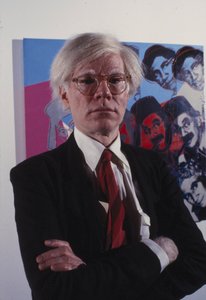
1928 - 1987 , États-Unis d'Amérique


Restez informé(e) des dernières actualités artistiques, des offres exclusives et des idées de décoration.
Parlez-nous de votre projet et nos experts en art vous proposeront 3 suggestions d'œuvres personnalisées.
Laissez-nous sélectionner 3 œuvres rien que pour vous – Gratuit !


 Aperçu en situation
 Envoyer
 Partager
 Détails de l'œuvre

 Télécharger
 Articles similaires
 Radiographie
 Diaporama

 Lire la suite