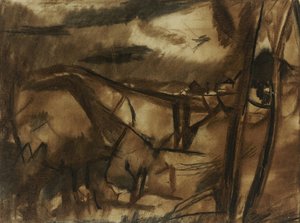
Oil On CanvasWallArtEarly Modern
 1948
1948 132.0 x 99.0 cm
 Walker Art Gallery
Huile sur toile peinte à la main, avec cadre et dimensions personnalisés, réalisée sur commande par nos artistes. ( Passer au tirage Passer à l'image)





























Choisissez parmi nos formats prédéfinis qui respectent les proportions originales de l’œuvre.

Vous pouvez saisir vos propres dimensions pour l'adapter à un cadre ou à un espace spécifique. Si la taille sélectionnée ne correspond pas aux proportions de l'image d'origine, nous recadrerons l'œuvre ou prolongerons la peinture avec des éléments peints à la main supplémentaires. Une maquette numérique vous sera envoyée pour approbation avant le début de la production.
Veuillez noter que l'aperçu à l'écran ne reflète pas le recadrage ou l'extension réels. Seule la maquette montrera fidèlement la composition finale.
Bien que des tailles personnalisées soient disponibles, nous vous recommandons de sélectionner une dimension dans la liste prédéfinie afin de préserver les proportions d'origine.
Livraison dans le monde entier () en 3 à 4 semaines au lieu des 5 semaines habituelles. (6 août). Aucun compromis sur la qualité.


Sketch
Format de la reproduction
David Bomberg’s “Sketch,” painted in 1948, isn’t merely a depiction of a scene; it’s an embodiment of the artist’s evolving vision during a pivotal period in British art. Born into a Polish-Jewish family in Birmingham and deeply influenced by the avant-garde movements swirling around London – Cubism, Futurism, and the radical ideas championed by Roger Fry – Bomberg sought to translate these complex influences into a distinctly personal language. This particular work, created shortly after his expulsion from the Slade School of Art for his perceived “audacity,” reflects both a rejection of academic constraints and an embrace of dynamic abstraction. The painting’s raw energy and fragmented forms speak volumes about the anxieties and transformations shaping the post-war artistic landscape.

Bomberg’s technique in “Sketch” is immediately arresting. He employs a bold, almost aggressively simplified palette dominated by vibrant reds, oranges, and yellows – colors that evoke both heat and intensity. These hues are layered and blended with remarkable skill, creating a sense of depth and movement despite the painting's predominantly geometric structure. The composition itself is fractured, composed of interlocking planes and angular shapes that seem to vibrate with energy. This deliberate fragmentation isn’t chaotic; rather, it mirrors the artist’s exploration of form and his desire to capture not just what he *saw*, but how he *felt* about what he saw. The use of thick impasto – applying paint in heavy layers – adds a tactile quality to the work, inviting the viewer to engage with its surface.
Bomberg was part of the “Whitechapel Boys,” a group of young artists who challenged the established artistic conventions of early 20th-century London. This collective, including Mark Gertler and Stanley Spencer, were deeply influenced by the avant-garde movements emerging from Paris and Italy. His time at the Slade School of Art, under the tutelage of Henry Tonks, provided a crucial foundation, but Bomberg quickly surpassed his teacher’s more traditional approach. His work reflects this trajectory, incorporating elements of Cubism – particularly in its emphasis on multiple perspectives – alongside the dynamism of Futurism and the emotional intensity of Expressionism. Further research reveals that Bomberg's exploration of Jerusalem Church (as documented in a separate BuyPopArt article) demonstrates his continued interest in capturing spiritual themes through abstract forms.
“Sketch” is more than just a visually striking composition; it's an exploration of emotional states. The intense colors and fragmented forms evoke feelings of both excitement and unease. Some art historians interpret the painting as a reflection of Bomberg’s personal struggles, particularly his experiences in the trenches during World War I. The dynamism of the composition suggests a restless spirit, while the underlying geometric structure hints at an attempt to impose order on chaos. Ultimately, “Sketch” invites viewers to contemplate the complexities of human experience and the power of art to capture the intangible.
Né dans une famille immigrante polonaise-juive, Abraham et Rebecca Bomberg, à Birmingham. La famille a déménagé à Whitechapel, Londres, en 1895.
A étudié initialement à la City and Guilds Technical Art School avant de se former comme lithographe à Birmingham.
A étudié sous Walter Sickert à Westminster School of Art (1908-1910), où il a été influencé par l'accent mis par Sickert sur la forme et la vie urbaine.
Exposition significative à Paul Cézanne grâce à l'exposition de 1910 de Roger Fry "Manet et les post-impressionnistes".
A fréquenté la Slade School of Art (1911), remportant le prix Tonks pour son dessin du camarade étudiant Isaac Rosenberg.
Les expériences en tant que soldat pendant la Première mondiale ont profondément influencé sa vision artistique, conduisant à un éloignement de l'abstraction.
Dans les années 1920, Bomberg a adopté un style plus figuratif, se concentrant sur des portraits et des paysages tirés directement de la nature.
A développé une technique expressionniste de plus en plus marquée, caractérisée par un impasto texturé et une intensité émotionnelle.
De nombreux voyages à travers le Moyen-Orient (en particulier la Palestine) et l'Europe ont considérablement influencé son œuvre ultérieure. Ses représentations de Jérusalem sont particulièrement notables.

1890 - 1957 , Royaume-Uni
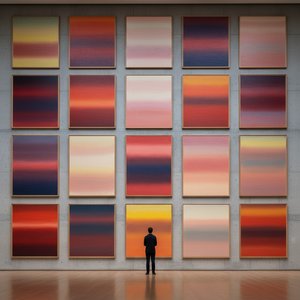
Plongez dans l'univers émotionnel de Mark Rothko avec les 25 œuvres clés du maître de l'abstraction. Découvrez l'histoire, la technique et le pouvoir des couleurs de ces tableaux iconiques. Reproductions d'art de qualité musée sur BuyPopArt.com
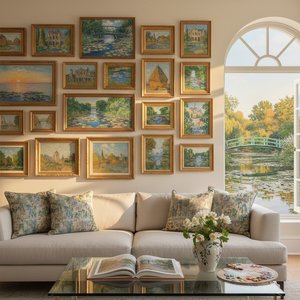
Plongez dans l'univers impressionniste de Claude Monet ! Découvrez les 25 œuvres les plus célèbres du maître, de 'Impression soleil levant' aux 'Nymphéas'. Inspirez votre décoration intérieure avec BuyPopArt.com et trouvez la reproduction parfaite.
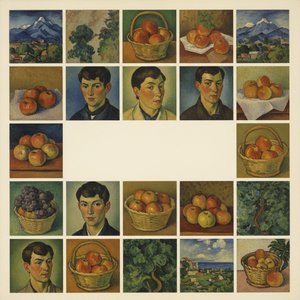
Plongez dans l'univers de Paul Cézanne avec les 25 œuvres incontournables du maître post-impressionniste. Découvrez l'histoire, la technique et l'émotion derrière ses tableaux iconiques comme 'Les Baigneuses' ou 'Mont Sainte-Victoire'. Reproductions d'art haute qualité sur BuyPopArt.com.

Plongez dans l'univers subtil des 10 plus beaux tableaux gris de l'histoire de l'art. Découvrez Monet, Van Gogh et d'autres maîtres et trouvez l'inspiration déco parfaite sur !

Plongez dans l'univers de Winslow Homer avec les 25 œuvres incontournables du maître américain. Découvrez ses peintures marines, paysages et scènes de genre, et trouvez l'inspiration déco idéale. Reproductions d'art de qualité muséale sur BuyPopArt.com.


Restez informé(e) des dernières actualités artistiques, des offres exclusives et des idées de décoration.
Parlez-nous de votre projet et nos experts en art vous proposeront 3 suggestions d'œuvres personnalisées.
Laissez-nous sélectionner 3 œuvres rien que pour vous – Gratuit !


 Aperçu en situation
 Envoyer
 Partager
 Détails de l'œuvre

 Télécharger
 Articles similaires
 Radiographie
 Diaporama
 Lire la suite







 L'option verre n'est disponible que pour les dimensions inférieures à 110 cm.