Commander la reproduction Commander la reproductionAcheter l'image haute résolution Acheter l'image haute résolution PartagerPartager
Détails de l'œuvreDétails de l'œuvre Ajouter aux favoris Ajouter aux favoris TéléchargerTélécharger Articles similairesArticles similaires RadiographieRadiographie DiaporamaDiaporama

Branch

Explore Fernand Léger’s surrealist Branch painting—a striking juxtaposition of sculpture and vibrant color! Created in 1952, this monumental artwork embodies the machine age aesthetic with its bold blues and yellows, inviting viewers to contemplate form and innovation.

Explorez l'art de Fernand Léger (1881-1955), un pionnier du Cubisme et du 'Tubisme'. Découvrez ses peintures audacieuses et figuratives célébrant la vie moderne, les machines et la forme humaine. Un précurseur du Pop Art !

Giclée / Impression d'art

Impression giclée ou sur toile de qualité musée, avec une production rapide et des finitions au choix.

P118B $10
P118H $10
P118W $10
P438Z $10
P508JH $12
P508YH $12
P805H $10
P805Z $10
P919BZ $10
P919G $10
P919XJ $10
P959ZH $10
P968JZ $12
W106C $8
W218G $10
W218JH $8
W218Y $10
W307PJ $10
W316G $10
W316PJ $8
W316Y $10
W398PJ $8
W4111J $10
W500HY $15
W500JH $15
W692G $12
W849H $8
W940BG $15
W953PJ $8

Standard
custom
CM
INCH

Choisissez parmi nos formats prédéfinis qui respectent les proportions originales de l’œuvre.

largeur
hauteur

Vous pouvez saisir vos propres dimensions pour vous adapter à un cadre ou à un espace spécifique. Si la taille sélectionnée ne correspond pas aux proportions de l'image originale, nous recadrerons l'œuvre ou étendrons l'image avec une bordure en miroir ou une couleur unie. Une maquette numérique vous sera envoyée pour approbation avant le début de la production.
Veuillez noter que l'aperçu à l'écran ne reflète pas le recadrage ou l'extension réelle. Seule la maquette montrera avec précision la composition finale.
Bien que des tailles personnalisées soient disponibles, nous vous recommandons de choisir une dimension dans la liste prédéfinie afin de préserver les proportions originales.

Livraison dans le monde entier () en 2 semaines au lieu des 4/5 semaines habituelles. (21 juillet)

why_choose_icon
Livraison express gratuite dans le monde entier
why_choose_icon
Toile de lin de haute qualité
why_choose_icon
Assurance transport complète
why_choose_icon
Garantie de remboursement des frais de douane
why_choose_icon
Garantie de fidélité des couleurs
why_choose_icon
Politique de retour de 60 jours (uniquement en cas de défaut)
why_choose_icon
Garantie de remboursement à 100%
why_choose_icon
Réduction sur les achats groupés

Prix total

-

reproduction

Branch

Giclée / Impression d'art

Format de reproduction

-

Prix total final

-

En bref

  • Artistic style: Geometric abstraction
  • Movement: Surrealism
  • Title: Branch
  • Year: 1952
  • Subject or theme: Industrial landscape
  • Medium: Painting
  • Notable elements or techniques: Sculpture integration

Description de l'œuvre

A Symphony of Blue and Yellow: Exploring Fernand Léger’s “Branch”

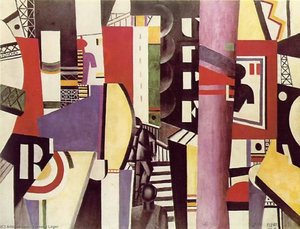
Fernand Léger's "Branch," painted in 1952, isn’t merely an image; it’s a carefully constructed dialogue between organic form and industrial influence—a hallmark of Léger’s distinctive artistic approach. Measuring 63 x 35 cm, this surrealistic artwork immediately draws the eye with its bold color palette dominated by serene blues contrasted against vibrant yellows, creating a visual tension that speaks volumes about Léger's preoccupation with reconciling nature and technology. The painting itself depicts a sculpture of a figure holding an object resembling either a tennis racket or baseball bat—a deliberate juxtaposition designed to provoke contemplation on humanity’s relationship with tools and the evolving landscape of modern life.
  • Style: Léger's style is undeniably Surrealist, yet it transcends simple categorization. He eschewed pure abstraction, opting instead for a “Constructivist” aesthetic informed by his fascination with geometric forms and industrial machinery. This approach sought to represent the world not as it appears to the eye but as it *feels*, prioritizing underlying structure and rhythm over superficial detail.
  • Technique: Léger employed a technique characterized by thick, textured brushstrokes—a deliberate departure from Impressionism’s focus on capturing fleeting light effects. He utilized encaustic paint, layering wax onto pigment, resulting in surfaces that possess remarkable durability and luminosity. This method allowed him to achieve an expressive quality unattainable with conventional oil paints, emphasizing the materiality of the artwork itself.
The sculpture accompanying “Branch” serves as a crucial element in understanding Léger’s artistic intent. Crafted from wood—a material symbolizing stability and tradition—it stands in stark opposition to the abstract painting, highlighting the artist's desire to explore the tension between past and future. The object held by the figure – resembling either a tennis racket or baseball bat – represents the pervasive influence of sport and leisure activities within the industrialized society Léger envisioned. This deliberate inclusion underscores his belief that even amidst technological advancements, human experience retains its fundamental connection to primal instincts and physical activity. Historical Context: Léger’s work emerged during a period of significant societal transformation—the aftermath of World War I and the rapid expansion of industrialization across Europe. Artists like Léger responded to these changes by grappling with questions about humanity's role in the new world order, rejecting sentimental idealism for a more pragmatic engagement with reality. He was deeply influenced by Constructivism, championed by artists like Vladimir Tatlin and Aleksandr Rodchenko, who sought to create art that served as propaganda for the Soviet Union—a movement focused on simplifying forms and conveying powerful messages through geometric abstraction. Léger’s vision aligned perfectly with this ethos, reflecting a conviction that art could contribute to shaping social consciousness. Symbolism: Beyond its formal qualities, “Branch” is laden with symbolic significance. The branch itself represents growth, resilience, and connection to the natural world—a counterpoint to the coldness of industrial machinery. However, it’s also positioned before a sculpture embodying human activity, suggesting that progress doesn't negate our inherent need for physical engagement and connection to nature. Léger’s deliberate use of color – blue representing tranquility and contemplation alongside yellow symbolizing energy and optimism – reinforces this overarching theme. Ultimately, “Branch” transcends mere visual representation; it invites viewers to contemplate the complexities of modernity and humanity’s enduring relationship with its environment. Its textured surface and striking color scheme offer a captivating glimpse into Léger's artistic genius—a testament to his ability to synthesize seemingly disparate influences into a powerfully evocative artwork that continues to resonate today.

Biographie de l'artiste

jeune vie et formation

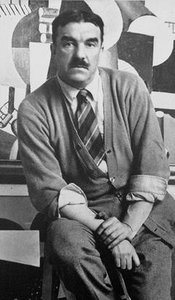
fernand léger, peintre, sculpteur et cinéaste français, est né le 4 février 1881 à Argentan, Orne, en Normandie inférieure. Son père élevait du bétail, et léger a initialement été formé à l'architecture de 1897 à 1899. Il s’est ensuite installé à Paris en 1900, se débrouillant comme dessinateur architectural.

développement artistique

Le travail précoce de léger a été influencé par l'impressionnisme, comme le montrent le jardin de ma mère (mon jardin) (1905). Après avoir fréquenté l'école des beaux-arts et l’académie Julian, il a commencé à travailler sérieusement comme peintre à 25 ans. Son style s'est développé en une forme personnelle de cubisme, que les critiques ont qualifié de "tubisme" pour son accent sur les formes cylindriques.

cubisme et le groupe des Puteaux

En 1910, léger a exposé au Salon d’automne aux côtés de jean metzinger et henri le fauconnier. Il a rejoint le groupe des Puteaux, également connu sous le nom de section d’or (la section dorée), avec d'autres artistes tels que francis picabia et marcel duchamp.

guerre et son influence sur le travail de léger

Les expériences de léger à la Première Guerre mondiale ont eu un impact significatif sur son œuvre. Pendant son séjour au front, il a produit des croquis d'artillerie, d'avions et de soldats. Sa peinture soldier avec un tuyau (1916) reflète cette période.

œuvre ultérieure et héritage

L'œuvre post-guerre de léger, caractérisée par des formes machine-like élégantes, le lia à la tradition de la peinture figurative française. Ses paysages animés de 1921 ont présenté des figures et des animaux dans des formes harmonieuses et rationalisées. œuvres clés: musées présentant l'œuvre de léger:
Fernand Léger

Fernand Léger

1881 - 1955 , France

En bref

  • Artistes Influents:
    • Cézanne
    • Impressionnisme
  • Date De Décès: 1955
  • Date De Naissance: 4 février 1881
  • Influences Artistiques: ['Pop Art']
  • Lieu De Naissance: Argentan, France
  • Mouvement Artistique: Cubisme, Tubisme
  • Nationalité: Française
  • Nom Complet: Fernand Léger
  • Oeuvres Notables:
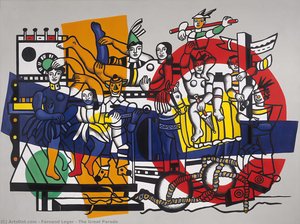
    • La Grande Parade
    • Machine Élément
    • Femme assise
    • Paysages animés
Explorez des œuvres d'art classées par thèmes, styles et caractéristiques.