x


 Commander l'impression Acheter l'image haute résolution
 Partager
 Détails de l'œuvre
 Ajouter aux favoris
 Télécharger
 Articles similaires
 Radiographie
 Diaporama
Huile sur toile peinte à la main, avec cadre et dimensions personnalisés, réalisée sur commande par nos artistes.





























Choisissez parmi nos formats prédéfinis qui respectent les proportions originales de l’œuvre.

Vous pouvez saisir vos propres dimensions pour l'adapter à un cadre ou à un espace spécifique. Si la taille sélectionnée ne correspond pas aux proportions de l'image d'origine, nous recadrerons l'œuvre ou prolongerons la peinture avec des éléments peints à la main supplémentaires. Une maquette numérique vous sera envoyée pour approbation avant le début de la production.
Veuillez noter que l'aperçu à l'écran ne reflète pas le recadrage ou l'extension réels. Seule la maquette montrera fidèlement la composition finale.
Bien que des tailles personnalisées soient disponibles, nous vous recommandons de sélectionner une dimension dans la liste prédéfinie afin de préserver les proportions d'origine.
Livraison dans le monde entier () en 3 à 4 semaines au lieu des 5 semaines habituelles. (17 juillet). Aucune concession sur la qualité.


Composition
Format de reproduction
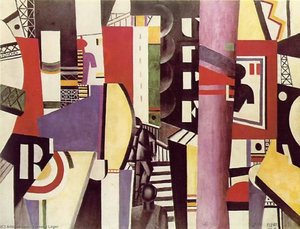
Fernand Léger's "Composition" is not merely a painting; it’s an assertion, a vibrant declaration of the burgeoning machine age rendered in bold, unapologetic color. Executed by one of the most significant figures of early 20th-century art, this work exemplifies Léger’s unique approach to Cubism – a style he deliberately sought to infuse with the energy and geometry of industrial forms rather than simply abstracting them into pure shapes. The painting immediately commands attention with its central red circle, a powerful motif that echoes both the sun and the mechanical heart of modern industry. Surrounding this dominant form are a carefully orchestrated array of geometric elements – blues, yellows, and browns – each contributing to a dynamic tension that reflects Léger’s fascination with movement and transformation.
Léger's artistic journey was profoundly shaped by his upbringing in rural Normandy. Witnessing the physical labor of farming instilled in him an appreciation for form, structure, and the raw materials of the world. This experience later translated into a deliberate engagement with the aesthetics of machinery – locomotives, factories, and urban landscapes – which he depicted not as romanticized subjects but as powerful, almost sculptural entities. “Composition” embodies this approach perfectly. The circles, particularly the prominent red one, can be interpreted as representations of wheels, gears, or even the sun itself, symbolizing both creation and destruction, progress and potential danger. The keyhole shape adds a layer of intrigue, perhaps suggesting access to hidden mechanisms or a glimpse into an unseen world.
While Léger was influenced by the pioneering work of Pablo Picasso and Georges Braque – the founders of Cubism – he forged his own distinct path. Unlike his contemporaries, who often fragmented objects into multiple viewpoints, Léger retained a sense of solidity and mass within his compositions. His use of color is particularly noteworthy; it’s not muted or restrained but intensely saturated, reflecting the vibrancy and energy of the industrial world. The application of paint – likely built up in thick impasto layers – adds to the tactile quality of the work, further emphasizing its connection to physical form. This technique contributes significantly to the painting's powerful presence.
"Composition" transcends a simple depiction of geometric shapes; it evokes a complex range of emotions and ideas. The juxtaposition of organic forms (the circles) with mechanical ones speaks to the ongoing tension between humanity and technology, nature and industry. The painting’s dynamism invites contemplation about the future – a future increasingly defined by machines and urban landscapes. Léger's work is ultimately optimistic, celebrating the potential for innovation and progress while acknowledging the inherent challenges of this transformative era. The bold colors and assertive forms create an immediate emotional impact, drawing the viewer into a world of powerful visual statements.
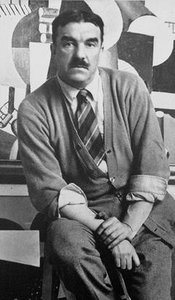
1881 - 1955 , France

Plongez dans l'univers vibrant de Joan Miró ! Découvrez les 25 œuvres majeures du maître catalan, explorant le surréalisme et ses formes abstraites. Reproductions de qualité muséale & inspiration déco sur BuyPopArt.com.
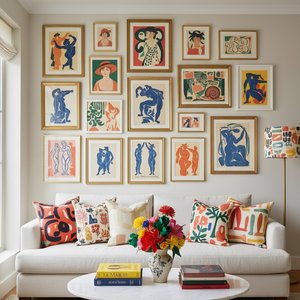
Plongez dans l'univers vibrant d'Henri Matisse ! Découvrez les 25 œuvres majeures du fauvisme et de la peinture moderne. Explorez La Danse, L'Atelier Rouge & plus encore. Reproductions de qualité musée sur BuyPopArt.com.

Explore the art of transforming spaces with our comprehensive guide to wall decor. From historical movements to contemporary trends, discover how to curate impactful interiors and commission bespoke artwork for a truly personalized aesthetic.
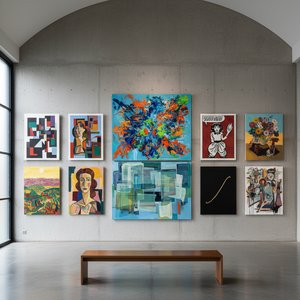
Plongez dans l'univers vibrant des 10 chefs-d'œuvre à l'acrylique qui ont marqué l'histoire de l'art. Découvrez Jackson Pollock, Rothko et autres artistes emblématiques. Reproductions de qualité muséale sur . Explorez la collection !

Plongez au cœur du cubisme avec les 10 portraits emblématiques de Picasso, Braque et Gris. Découvrez l'histoire, la technique & l'impact de ces chefs-d'œuvre. Reproductions d'art de qualité musée sur BuyPopArt.com !


Restez informé(e) des dernières actualités artistiques, des offres exclusives et des idées de décoration.
Parlez-nous de votre projet et nos experts en art vous proposeront 3 suggestions d'œuvres personnalisées.
Laissez-nous sélectionner 3 œuvres rien que pour vous – Gratuit !


 Partager


 Afficher la suite







 L'option verre n'est disponible que pour les dimensions inférieures à 110 cm.