Huile sur toile peinte à la main, avec cadre et dimensions personnalisés, réalisée sur commande par nos artistes. ( Passer au tirage Passer à l'image)





























Choisissez parmi nos formats prédéfinis qui respectent les proportions originales de l’œuvre.

Vous pouvez saisir vos propres dimensions pour l'adapter à un cadre ou à un espace spécifique. Si la taille sélectionnée ne correspond pas aux proportions de l'image d'origine, nous recadrerons l'œuvre ou prolongerons la peinture avec des éléments peints à la main supplémentaires. Une maquette numérique vous sera envoyée pour approbation avant le début de la production.
Veuillez noter que l'aperçu à l'écran ne reflète pas le recadrage ou l'extension réels. Seule la maquette montrera fidèlement la composition finale.
Bien que des tailles personnalisées soient disponibles, nous vous recommandons de sélectionner une dimension dans la liste prédéfinie afin de préserver les proportions d'origine.
Livraison dans le monde entier () en 3 à 4 semaines au lieu des 5 semaines habituelles. (10 août). Aucun compromis sur la qualité.


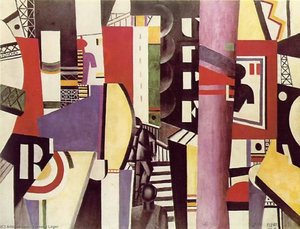
Composition4
Format de la reproduction
Fernand Léger's *Composition 4*, a striking black and white photograph capturing a key example of his modernist oeuvre, offers a compelling glimpse into the heart of an artist profoundly shaped by the burgeoning industrial age. Executed in a style that would become synonymous with his name – a bold synthesis of abstraction and recognizable form – this artwork invites viewers to contemplate the relationship between humanity and machine, a theme central to Léger’s artistic exploration. The image itself presents a carefully arranged tableau: a chair, bottle, cup, bowl, vase, and wine glass coalesce into an abstract composition, their individual identities subsumed within a larger geometric vocabulary. This isn't simply a still life; it’s a deliberate investigation of the visual language emerging from the rapid transformations occurring in France at the turn of the 20th century.
Created by Léger around 1913-1916, *Composition 4* exemplifies the core principles of what he termed “Tubism.” Born from his observations of the mechanized world – locomotives, factory machinery, and urban landscapes – Tubism sought to represent objects not as they appeared in reality but as they were perceived through the lens of industrial form. Léger wasn’t rejecting representation entirely; rather, he was stripping away extraneous detail to reveal the underlying geometric structures that defined these new forms. The repetition of shapes—circles, squares, and cylinders—echoes the rhythmic patterns found in machinery, creating a visual resonance with the dynamism of modern life. This approach directly challenged the prevailing artistic trends of Impressionism and Post-Impressionism, paving the way for further developments in abstract art.
While the photograph captures the essence of the original painting, it’s crucial to understand Léger's technique. He primarily employed oil paint on canvas, often applying thick impasto layers to build up texture and emphasize the three-dimensional qualities of his forms. The stark contrast between black and white in this particular image amplifies these textural effects, highlighting the deliberate physicality of his brushstrokes. Léger’s use of color was initially limited to primary hues – red, yellow, and blue – which he later expanded to include more vibrant tones as his style evolved. This emphasis on materiality—the tangible presence of paint itself—was a defining characteristic of his work, reflecting his fascination with the industrial world's raw materials.
*Composition 4* transcends a mere depiction of objects; it’s imbued with symbolic meaning. The carefully arranged still life can be interpreted as an allegory for humanity’s place within the machine age. The fragmented forms suggest a breakdown of traditional notions of beauty and harmony, reflecting the anxieties and uncertainties surrounding rapid industrialization. Yet, despite this fragmentation, there's also a sense of order and balance, suggesting Léger’s belief in the potential for humans to adapt and thrive amidst technological change. The objects themselves – everyday items elevated to artistic significance – speak to the artist’s desire to find beauty and meaning in the mundane aspects of modern life.
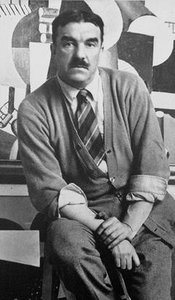
1881 - 1955 , France

Explorez l'élégance du monochrome ! Découvrez comment créer un intérieur sophistiqué et apaisant avec nos conseils d'experts en décoration. Inspirez-vous des dernières tendances et transformez votre espace.
Plongez dans le monde serein du minimalisme avec notre sélection des 10 œuvres d'art les plus emblématiques. Découvrez l'histoire de Mondrian, Malevich et Rothko. Reproductions haute qualité sur BuyPopArt.com – Inspirez votre décoration intérieure !

Plongez dans l'univers révolutionnaire de Kazimir Malevich ! Découvrez les 25 œuvres clés du Suprématisme, de 'Carré Noir' à 'Blanc sur Blanc'. Inspirez votre décoration intérieure avec des reproductions d'art exceptionnelles. Explorez la collection complète sur BuyPopArt.com.
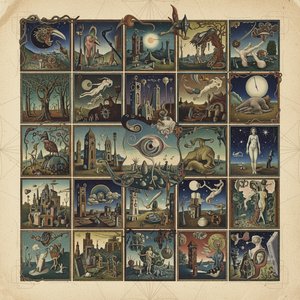
Plongez dans l'univers surréaliste de Max Ernst ! Découvrez les 25 œuvres les plus emblématiques du maître allemand, entre frottage, collage et rêves éveillés. Inspirez votre décoration intérieure avec BuyPopArt : reproductions de tableaux de qualité muséale et collection d'art unique. Explorez la co

Découvrez l'histoire de la nature morte et sublimez votre villa avec des reproductions d'art exceptionnelles. Conseils d'experts, personnalisation sur mesure & qualité garantie par BuyPopArt.


Restez informé(e) des dernières actualités artistiques, des offres exclusives et des idées de décoration.
Parlez-nous de votre projet et nos experts en art vous proposeront 3 suggestions d'œuvres personnalisées.
Laissez-nous sélectionner 3 œuvres rien que pour vous – Gratuit !


 Aperçu en situation
 Envoyer
 Partager
 Détails de l'œuvre

 Télécharger
 Articles similaires
 Radiographie
 Diaporama

 Lire la suite







 L'option verre n'est disponible que pour les dimensions inférieures à 110 cm.