Impressions giclées ou sur toile de qualité musée, avec une production rapide et des finitions au choix. ( Passer à la peinture faite à la main Passer à l'image)





























Choisissez parmi nos formats prédéfinis qui respectent les proportions originales de l’œuvre.

Vous pouvez saisir vos propres dimensions pour vous adapter à un cadre ou à un espace spécifique. Si la taille sélectionnée ne correspond pas aux proportions de l'image originale, nous recadrerons l'œuvre ou étendrons l'image avec une bordure en miroir ou une couleur unie. Une maquette numérique vous sera envoyée pour approbation avant le début de la production.
Veuillez noter que l'aperçu à l'écran ne reflète pas le recadrage ou l'extension réelle. Seule la maquette montrera avec précision la composition finale.
Bien que des tailles personnalisées soient disponibles, nous vous recommandons de choisir une dimension dans la liste prédéfinie afin de préserver les proportions originales.
Livraison dans le monde entier () en 2 semaines au lieu des 4/5 semaines habituelles. (10 août)


Eiffel Tower
Format de la reproduction
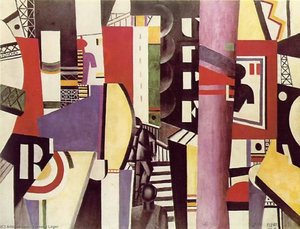
Fernand Léger's “Eiffel Tower,” painted around 1927, offers a captivating glimpse into the artist’s unique vision of the burgeoning modern world. This striking black and white cityscape isn’t merely a depiction of Paris; it’s a carefully constructed tableau reflecting Léger’s fascination with industrial forms and his distinctive approach to Naïve Art – a style he championed that blended elements of Primitivism with a deliberate, almost childlike clarity. The painting immediately draws the eye to the monumental presence of the Eiffel Tower, rendered with a bold, geometric simplification that emphasizes its structural essence rather than romanticized beauty. Léger’s use of flattened perspective and simplified shapes contributes to an overall sense of dynamism, mirroring the rapid changes occurring in urban life during this period.
Léger’s artistic journey began in rural Normandy before he moved to Paris, where he was profoundly influenced by the rise of industrialization. He deliberately rejected traditional academic techniques, opting instead for a style characterized by bold outlines, simplified forms, and a vibrant use of color – though this particular rendition is monochrome, the underlying principles remain consistent with his broader oeuvre. This “Naïve Art” approach wasn’t about creating an illusion of reality; it was about distilling the *essence* of objects and experiences into their most fundamental shapes. The inclusion of smaller towers scattered throughout the scene reinforces this concept – each a self-contained, geometric unit contributing to the overall composition.
The painting’s subject matter—the Eiffel Tower itself—holds significant symbolic weight. Constructed for the 1889 World's Fair, it quickly became an emblem of Paris and France, representing technological progress and modernity. Léger’s interpretation elevates this symbol to something almost archetypal, stripping away extraneous detail to reveal its core structural identity. The lone figure in the painting adds another layer of interest, perhaps a solitary observer contemplating the scale and impact of this new urban landscape. This figure could be interpreted as an individual grappling with the changes brought about by industrialization – a theme central to Léger’s artistic concerns.
Created in 1927, “Eiffel Tower” exemplifies Léger's mature style, firmly rooted in his exploration of Naïve Art. The painting demonstrates a meticulous attention to detail within the simplified forms, showcasing his mastery of line and shape. It’s important to note that Léger was a key figure in the development of Cubism, though he ultimately diverged from its more abstract tendencies, retaining a connection to observable reality. This work reflects the broader artistic currents of the interwar period, a time of rapid technological advancement and social upheaval – themes powerfully articulated by Léger through his distinctive visual language.
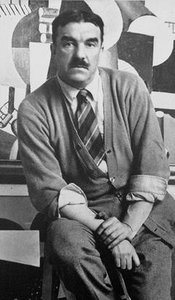
1881 - 1955 , France
Plongez au cœur de l'œuvre inégalable de Goya ! Découvrez 25 chefs-d’œuvre emblématiques, des portraits saisissants aux scènes dramatiques. Explorez la vie et l'art du maître espagnol avec BuyPopArt.com – reproductions d'art de qualité musée et inspirations déco.
Explore the captivating world of vintage art prints! Discover their history, collecting tips & enduring appeal. Expert insights on chromolithography and building a legacy collection with BuyPopArt.

Plongez au cœur du cubisme avec ! Découvrez les 10 chefs-d'œuvre de Picasso, Braque et autres artistes révolutionnaires. Reproductions d'art haute qualité pour une décoration intérieure unique. Explorez la collection sur
Plongez dans l'univers de Katsushika Hokusai avec les 25 œuvres incontournables du maître japonais. Découvrez l'histoire, les techniques d'ukiyo-e et la beauté intemporelle de 'La Grande Vague'. Reproductions tableaux de qualité muséale sur BuyPopArt.com.
Plongez dans l'univers fascinant des 10 plus beaux tableaux noirs de l'histoire de l'art. Découvrez les artistes célèbres, leurs techniques et le symbolisme puissant de ces chefs-d'œuvre intemporels. Inspirez votre décoration intérieure avec !


Restez informé(e) des dernières actualités artistiques, des offres exclusives et des idées de décoration.
Parlez-nous de votre projet et nos experts en art vous proposeront 3 suggestions d'œuvres personnalisées.
Laissez-nous sélectionner 3 œuvres rien que pour vous – Gratuit !


 Aperçu en situation
 Envoyer
 Partager
 Détails de l'œuvre

 Télécharger
 Articles similaires
 Radiographie
 Diaporama

 Lire la suite







 L'option verre n'est disponible que pour les dimensions inférieures à 110 cm.