


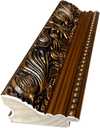
 Acrylique sur toileDécoration muraleRenaissance Revival
 1448
1448 88.0 x 63.0 cm
 National Gallery of Art
Impression giclée ou sur toile de qualité musée, avec une production rapide et des finitions au choix. ( Switch to hand made Painting Switch to Image)
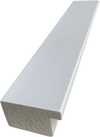
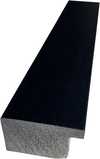
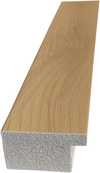
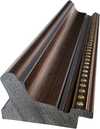
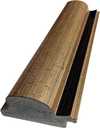
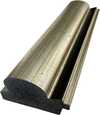
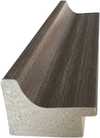
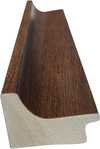
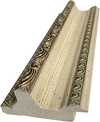
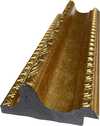
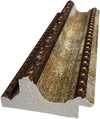
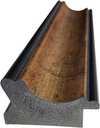
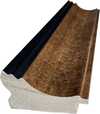
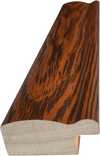
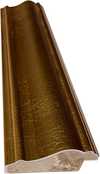
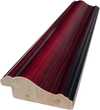
Choisissez parmi nos formats prédéfinis qui respectent les proportions originales de l’œuvre.

Vous pouvez saisir vos propres dimensions pour vous adapter à un cadre ou à un espace spécifique. Si la taille sélectionnée ne correspond pas aux proportions de l'image originale, nous recadrerons l'œuvre ou étendrons l'image avec une bordure en miroir ou une couleur unie. Une maquette numérique vous sera envoyée pour approbation avant le début de la production.
Veuillez noter que l'aperçu à l'écran ne reflète pas le recadrage ou l'extension réelle. Seule la maquette montrera avec précision la composition finale.
Bien que des tailles personnalisées soient disponibles, nous vous recommandons de choisir une dimension dans la liste prédéfinie afin de préserver les proportions originales.
Livraison dans le monde entier () en 2 semaines au lieu des 4/5 semaines habituelles. (30 juillet)


L'Annonciation
Format de reproduction
Early Life & Training: Records indicate Carnevale's formative years were spent in Urbino under the tutelage of Jacopo Veneto, a master known for his innovative use of perspective. This early influence would profoundly shape Carnevale’s artistic style and approach to architectural representation. Venetian painting techniques—characterized by luminous color palettes and meticulous detail—served as a foundational element for Carnevale's subsequent endeavors.
Florence & Alberti’s Influence: Around 1445, Carnevale traveled to Florence where he studied under Antonio Alberti—a pivotal encounter that cemented Alberti's reputation as “the crucible for artistic experiments by ‘the 1425 generation.’” Alberti championed humanist ideals and advocated for the integration of mathematics and geometry into art, principles Carnevale would wholeheartedly embrace. Alberti’s insistence on rational proportions and geometric harmony profoundly impacted Carnevale’s architectural vision.
The Workshop of Lippi: Carnevale’s apprenticeship with Filippo Lippi solidified his understanding of Florentine painting techniques—particularly Lippi’s masterful handling of color and composition. This period witnessed Carnevale honing his skills alongside some of the era’s most celebrated artists, fostering a collaborative environment that nurtured innovation. Lippi's meticulous attention to detail and expressive brushwork undoubtedly influenced Carnevale’s artistic sensibilities.
Return to Urbino & Federico Montefeltro: Returning to Urbino in 1456, Carnevale joined the Dominican Order and became closely associated with Duke Federico Montefeltro—a patron who recognized Carnevale’s talent and commissioned ambitious architectural projects, including the facades of San Domenico Cathedral. Montefeltro’s court served as a crucible for artistic experimentation, propelling Carnevale to the forefront of Urbino’s cultural landscape. The patronage of Federico da Montefeltro allowed Carnevale to explore groundbreaking ideas in design and construction.
Notable Works & Legacy: Carnevale’s surviving paintings—primarily *The Virgin and Temple* altarpiece (circa 1467) and *The Ideal City* (ca 1480–1485)—demonstrate his unparalleled command of architectural perspective and his commitment to humanist ideals. These works stand as testament to Carnevale’s artistic genius—a singular voice amidst the bustling Renaissance, whose enigmatic style continues to captivate audiences today. *The Virgin and Temple*, with its masterful depiction of spatial illusion, exemplifies Carnevale's pioneering approach to perspective—a technique that would later become central to Bramante’s design for St. Peter’s Basilica.
Vasari’s biographical account—though fragmentary—established Carnevale as a figure of considerable renown among Urbino scholars and cemented his reputation for excellence in architectural design. Lomazzo’s dictionary recognized Carnevale as an architect who championed Alberti’s principles, highlighting the convergence of artistic and intellectual pursuits that characterized Carnevale’s life.
Despite the paucity of surviving artworks—and the ongoing debate surrounding their authenticity—Carnevale's influence on Bramante and Raphael is undeniable. His pioneering use of perspective—particularly in *The Ideal City*—served as a foundational element for the architectural grandeur of St. Peter’s Basilica, securing Carnevale’s place among the titans of Renaissance art.

1420 - 1484 , Italie

Plongez dans l'univers spirituel de Fra Angelico avec les 25 œuvres incontournables du maître italien. Découvrez l'histoire, la technique et la beauté intemporelle de ses fresques Renaissance. Reproductions d'art exceptionnelles sur BuyPopArt.com.

Plongez dans l'univers de Botticelli ! Découvrez les 25 œuvres majeures du maître florentin : La Naissance de Vénus, Primavera et bien plus. Histoire, technique & inspiration déco. Reproductions d'art haute qualité sur BuyPopArt.com.
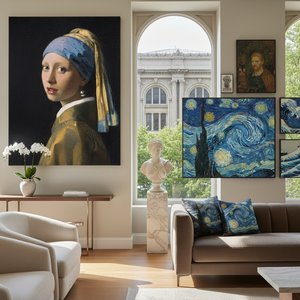
Plongez au cœur du Metropolitan Museum of Art avec notre sélection des 25 œuvres les plus emblématiques. Découvrez l'histoire de Van Gogh, Monet et d'autres maîtres, et trouvez l'inspiration pour une décoration intérieure raffinée. Reproductions de qualité muséale sur BuyPopArt.com.
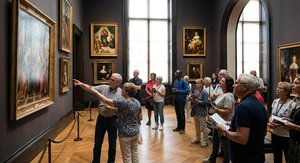
Plongez au cœur de l'Alte Pinakothek, Munich ! Découvrez 25 chefs-d'œuvre de Dürer à Rembrandt. Explorez l'art Renaissance et baroque, leurs couleurs & histoires fascinantes. Reproductions de qualité sur BuyPopArt.com.

Plongez au cœur du MoMA avec les 25 œuvres incontournables de Van Gogh à Warhol. Découvrez l'histoire et la magie de chefs-d'œuvre impressionnistes, cubistes & abstraits. Trouvez votre inspiration déco sur BuyPopArt.com !


Restez informé(e) des dernières actualités artistiques, des offres exclusives et des idées de décoration.
Parlez-nous de votre projet et nos experts en art vous proposeront 3 suggestions d'œuvres personnalisées.
Laissez-nous sélectionner 3 œuvres rien que pour vous – Gratuit !


 Preview
 Partager
 Partager
 Détails de l'œuvre

 Télécharger
 Articles similaires
 Radiographie
 Diaporama
 Afficher la suite
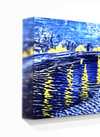
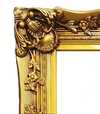
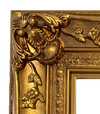
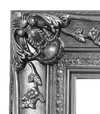
 L'option verre n'est disponible que pour les dimensions inférieures à 110 cm.


