

Huile sur toile peinte à la main, avec cadre et dimensions personnalisés, réalisée sur commande par nos artistes. ( Acheter l'impression Acheter l'image)





























Choisissez parmi nos formats prédéfinis qui respectent les proportions originales de l’œuvre.

Vous pouvez saisir vos propres dimensions pour l'adapter à un cadre ou à un espace spécifique. Si la taille sélectionnée ne correspond pas aux proportions de l'image d'origine, nous recadrerons l'œuvre ou prolongerons la peinture avec des éléments peints à la main supplémentaires. Une maquette numérique vous sera envoyée pour approbation avant le début de la production.
Veuillez noter que l'aperçu à l'écran ne reflète pas le recadrage ou l'extension réels. Seule la maquette montrera fidèlement la composition finale.
Bien que des tailles personnalisées soient disponibles, nous vous recommandons de sélectionner une dimension dans la liste prédéfinie afin de préserver les proportions d'origine.
Livraison dans le monde entier () en 3 à 4 semaines au lieu des 5 semaines habituelles. (12 août). Aucun compromis sur la qualité.


Setting Sun
Format de la reproduction
Frederick McCubbin's "Setting Sun," painted in 1911, isn’t merely a landscape; it’s a profound meditation on the Australian experience – a poignant blend of rugged beauty, melancholic isolation, and the enduring spirit of pioneering life. This iconic work, housed within the Art Gallery of South Australia, offers a captivating glimpse into the Heidelberg School's artistic philosophy and McCubbin’s deeply personal vision of his homeland.
The scene unfolds with breathtaking simplicity: a vast expanse of ochre-colored earth stretches towards a horizon dominated by a fiery sunset. The sky is a swirling tapestry of blues, purples, and oranges – not the vibrant hues of a tropical dawn, but rather the muted, atmospheric tones characteristic of the Australian bush at twilight. A lone tree, silhouetted against this dramatic backdrop, stands as a sentinel, its branches reaching upwards like supplicating arms. The painting’s power lies in its ability to evoke a sense of quiet contemplation and understated drama, capturing a moment suspended between day and night.
McCubbin was a key figure within the Heidelberg School, an artistic movement that sought to capture the essence of Australian life through a distinctly impressionistic lens. Unlike the rigid academic traditions of the time, the Heidelberg artists embraced *plein air* painting – working directly from nature – and employed loose brushstrokes and vibrant colors to convey the immediacy of their observations. “Setting Sun” exemplifies this approach perfectly; McCubbin’s technique is characterized by rapid, confident strokes that suggest movement and light, creating a dynamic sense of atmosphere. The use of broken color—applying small dabs of paint side-by-side rather than blending them—further enhances the painting's luminosity and depth.
The composition itself is carefully considered. McCubbin utilizes a limited palette, focusing on earthy tones and cool blues to create a sense of harmony and balance. The tree’s placement in the foreground anchors the scene while simultaneously drawing the viewer’s eye towards the expansive horizon. Notice how he subtly incorporates details – a hint of distant hills, a suggestion of water reflecting the sunset – without overwhelming the overall mood.
Beyond its aesthetic qualities, “Setting Sun” is rich in symbolic meaning. The vastness of the landscape speaks to the challenges and uncertainties faced by early settlers in Australia, while the solitary tree represents resilience and endurance. The sunset itself—a recurring motif in McCubbin’s work—often symbolizes mortality, transition, or the passage of time. Some art historians interpret it as a reflection on the fading frontier and the changing nature of Australian identity.
Furthermore, the painting can be viewed within the context of McCubbin's own life experiences. He grew up in rural Victoria, working alongside his family in a bakery, and spent much of his life observing and documenting the landscapes of the Australian bush. “Setting Sun” is not simply a depiction of a sunset; it’s an embodiment of McCubbin’s deep connection to the land and his profound understanding of its spirit.
“Setting Sun” possesses a remarkable ability to evoke a range of emotions – from tranquility and awe to melancholy and nostalgia. The painting's muted colors, combined with its evocative composition, create a sense of quiet contemplation that invites the viewer to slow down and appreciate the beauty of the natural world. It’s a work that speaks to our shared human experience—the longing for connection, the acceptance of change, and the enduring power of memory.
Reproductions of “Setting Sun” are highly sought after by collectors and interior designers alike, offering a way to bring this iconic Australian artwork into homes and spaces. Its timeless appeal lies in its ability to transcend specific time periods and cultural contexts, reminding us of the beauty and resilience of both the landscape and the human spirit.
Frederick McCubbin est une figure essentielle de l'histoire de l'art australien, reconnu pour ses contributions au mouvement de Heidelberg et ses représentations évocatrices de la vie australienne. Né dans une famille de boulangers, son enfance fut marquée par des expériences diverses, allant du travail de commis chez un avocat à la livraison de pain avant de se consacrer pleinement à la peinture.

1855 - 1917 , Australie
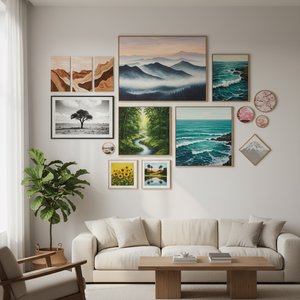
Découvrez les 10 plus beaux paysages de l'histoire de l'art : Monet, Van Gogh et bien d'autres. Explorez leur technique unique et trouvez l'inspiration pour votre décoration intérieure avec BuyPopArt.com. Œuvres exceptionnelles à découvrir !

Plongez dans l'émotion du Romantisme avec les 10 plus beaux paysages de Friedrich, Turner & Delacroix. Découvrez leur histoire et trouvez l'inspiration déco idéale sur BuyPopArt.com !
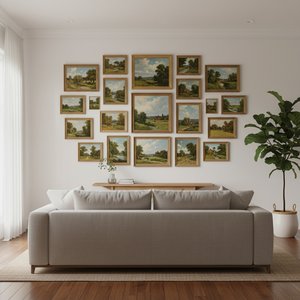
Plongez dans l'univers de John Constable avec les 25 œuvres incontournables du maître anglais. Découvrez l'histoire, la technique et l'émotion derrière ses paysages romantiques. Reproductions de qualité muséale sur BuyPopArt.com.

Explore the history of serene landscape art & discover artists who evoke tranquility. Find the perfect calming artwork for your home with expert guidance from BuyPopArt.
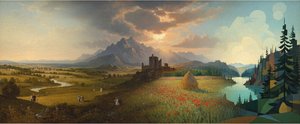
Explorez l'histoire fascinante de la peinture de paysage à travers les chefs-d'œuvre du Romantisme. Découvrez Friedrich, Turner et Aivazovski et laissez-vous inspirer par la beauté sauvage et le sublime. Reproduction d'art de qualité chez BuyPopArt.


Restez informé(e) des dernières actualités artistiques, des offres exclusives et des idées de décoration.
Parlez-nous de votre projet et nos experts en art vous proposeront 3 suggestions d'œuvres personnalisées.
Laissez-nous sélectionner 3 œuvres rien que pour vous – Gratuit !


 Aperçu en situation
 Envoyer
 Partager
 Détails de l'œuvre

 Télécharger
 Articles similaires
 Radiographie
 Diaporama


 Lire la suite







 L'option verre n'est disponible que pour les dimensions inférieures à 110 cm.


