

Huile sur toile peinte à la main, avec cadre et dimensions personnalisés, réalisée sur commande par nos artistes. ( Commander l'impression Télécharger l'image haute résolution)





























Choisissez parmi nos formats prédéfinis qui respectent les proportions originales de l’œuvre.

Vous pouvez saisir vos propres dimensions pour l'adapter à un cadre ou à un espace spécifique. Si la taille sélectionnée ne correspond pas aux proportions de l'image d'origine, nous recadrerons l'œuvre ou prolongerons la peinture avec des éléments peints à la main supplémentaires. Une maquette numérique vous sera envoyée pour approbation avant le début de la production.
Veuillez noter que l'aperçu à l'écran ne reflète pas le recadrage ou l'extension réels. Seule la maquette montrera fidèlement la composition finale.
Bien que des tailles personnalisées soient disponibles, nous vous recommandons de sélectionner une dimension dans la liste prédéfinie afin de préserver les proportions d'origine.
Livraison dans le monde entier () en 3 à 4 semaines au lieu des 5 semaines habituelles. (16 août). Aucun compromis sur la qualité.


Spring
Format de la reproduction
Georges Rouault's "Spring," painted in 1911, is far more than a simple depiction of a forest scene; it’s a profound meditation on humanity – its joys, sorrows, and the quiet dignity found within everyday life. Executed with Rouault’s signature style, immediately recognizable for its stark contrasts and emotionally charged palette, this work offers a window into the artist's deeply felt empathy for the marginalized and suffering, a core tenet of his artistic vision. The painting captures a fleeting moment of rural tranquility, yet it resonates with an underlying sense of melancholy and contemplation – qualities that would become hallmarks of Rouault’s oeuvre.
The composition itself is deliberately un-idealized. There are no heroic figures or grand vistas; instead, we encounter three individuals engaged in seemingly simple activities: one seated, another standing attentively, and a third observing from a distance. A dog lies nearby, adding to the sense of domesticity and companionship. Rouault’s masterful use of dark contours – a technique inherited directly from his apprenticeship with stained glass artisans – frames luminous color fields, creating an almost theatrical effect. This layering of light and shadow isn't merely aesthetic; it serves to heighten the emotional impact of each figure, drawing our attention to their individual expressions and postures.
Understanding Georges Rouault requires acknowledging his unique artistic journey. Born in the immediate aftermath of the Paris Commune, a period of immense upheaval and violence, Rouault's early life was shaped by hardship and a profound sense of loss. This experience profoundly influenced his worldview, fostering a deep compassion for those less fortunate. His apprenticeship as a glass painter from the age of fourteen proved formative, instilling in him an appreciation for vibrant color and precise execution – skills he would later translate to canvas with remarkable power.
Rouault’s fascination with stained glass extended beyond mere technical skill; it was deeply intertwined with his spiritual seeking. The luminous quality of the glass, its ability to transform light into something ethereal, mirrored his own desire for transcendence. This influence is readily apparent in “Spring,” where the use of dark outlines and intense color fields evokes a sense of sacredness, reminiscent of medieval religious art. His mother’s devout Catholic upbringing further solidified this spiritual connection, shaping his artistic themes and fueling his commitment to portraying the dignity of ordinary people.
While seemingly straightforward, “Spring” is rich in symbolic potential. The figures themselves – a seated individual, perhaps representing contemplation or rest; two standing ones, possibly engaged in conversation or observation – invite interpretation. The dog, a traditional symbol of loyalty and companionship, adds to the painting’s sense of warmth and connection. Rouault wasn't interested in simply recording a scene; he was striving to capture an *emotion*, a feeling of quiet beauty amidst the complexities of human existence.
The muted color palette – dominated by browns, greens, and ochres – contributes significantly to the painting’s melancholic mood. However, strategically placed bursts of brighter hues – particularly in the figures' clothing – draw our eye and emphasize their presence. This careful manipulation of color creates a dynamic tension between darkness and light, reflecting the inherent duality of human experience. “Spring” is not a celebration of springtime itself; it’s an exploration of the human condition—a poignant reminder of life’s fleeting beauty and enduring sorrows.

1871 - 1958 , France

Plongez dans l'univers de Georges Braque avec les 25 œuvres incontournables du cubisme. Découvrez l'histoire, les techniques et l'impact de ce maître de l'art moderne. Reproductions d'art exceptionnelles sur BuyPopArt.com.

Plongez dans l'univers lumineux de Georges Seurat ! Découvrez les 25 œuvres majeures du pointillisme, de 'Un dimanche après-midi à l'Île de la Grande Jatte' aux 'Poseuses'. Reproductions d'art exceptionnelles et inspiration déco sur BuyPopArt.com.

Plongez au cœur du Fauvisme avec les 10 œuvres majeures de Matisse, Derain et Vlaminck. Découvrez l'histoire, la technique et l'impact émotionnel de ces chefs-d’œuvre colorés. Reproductions d'art exceptionnelles sur BuyPopArt.com.

Plongez au cœur du Fauvisme avec ! Découvrez les 10 chefs-d'œuvre de Matisse, Derain et Vlaminck qui ont révolutionné l'art. Couleurs vives, émotion pure : trouvez votre reproduction idéale pour une décoration intérieure unique. Explorez la collection sur
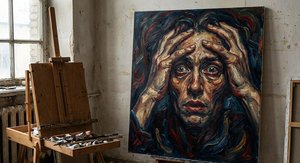
Explorez l'Expressionnisme Figuratif : ses origines, artistes clés (Kirchner, Die Brücke), thèmes puissants et impact durable sur l'art. Découvrez des reproductions de haute qualité sur BuyPopArt.


Restez informé(e) des dernières actualités artistiques, des offres exclusives et des idées de décoration.
Parlez-nous de votre projet et nos experts en art vous proposeront 3 suggestions d'œuvres personnalisées.
Laissez-nous sélectionner 3 œuvres rien que pour vous – Gratuit !


 Aperçu en situation
 Envoyer
 Partager
 Détails de l'œuvre

 Télécharger
 Articles similaires
 Radiographie
 Diaporama

 Lire la suite







 L'option verre n'est disponible que pour les dimensions inférieures à 110 cm.


